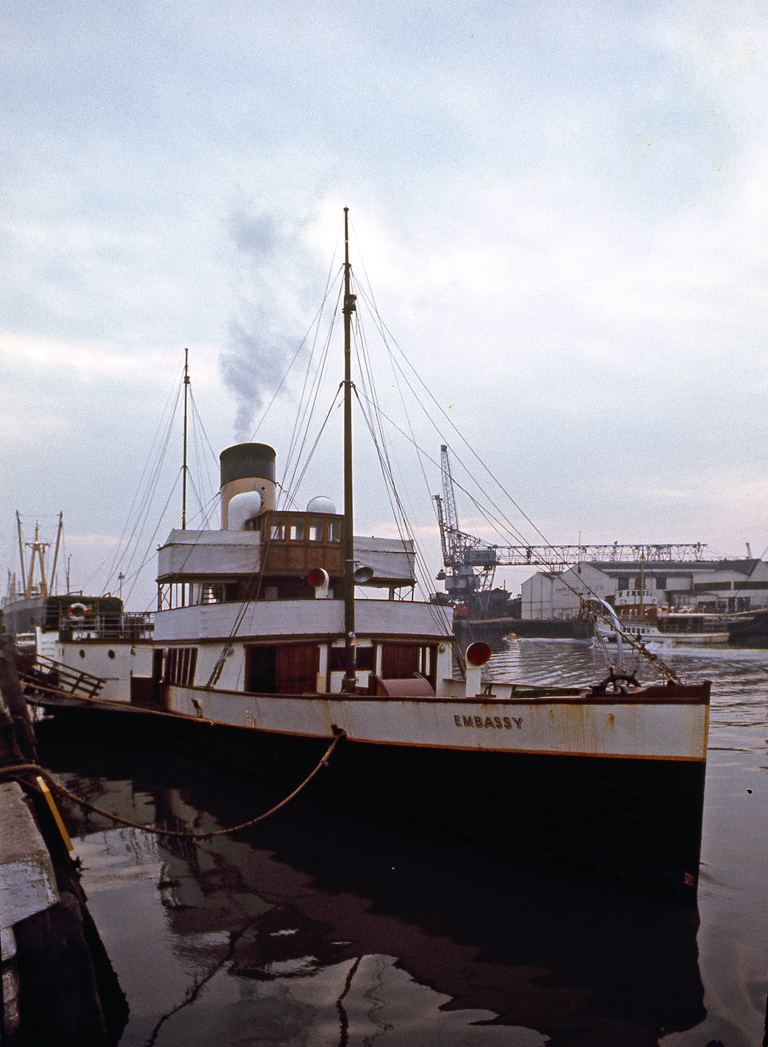
Embassy is mostly remembered for her two decades after WW2 based at Poole each summer running excursions from Bournemouth to Swanage and the Isle of Wight. However that is not the schedule for which Cosens bought her second hand in 1937. So why did they buy her? And how did the purchase come about?
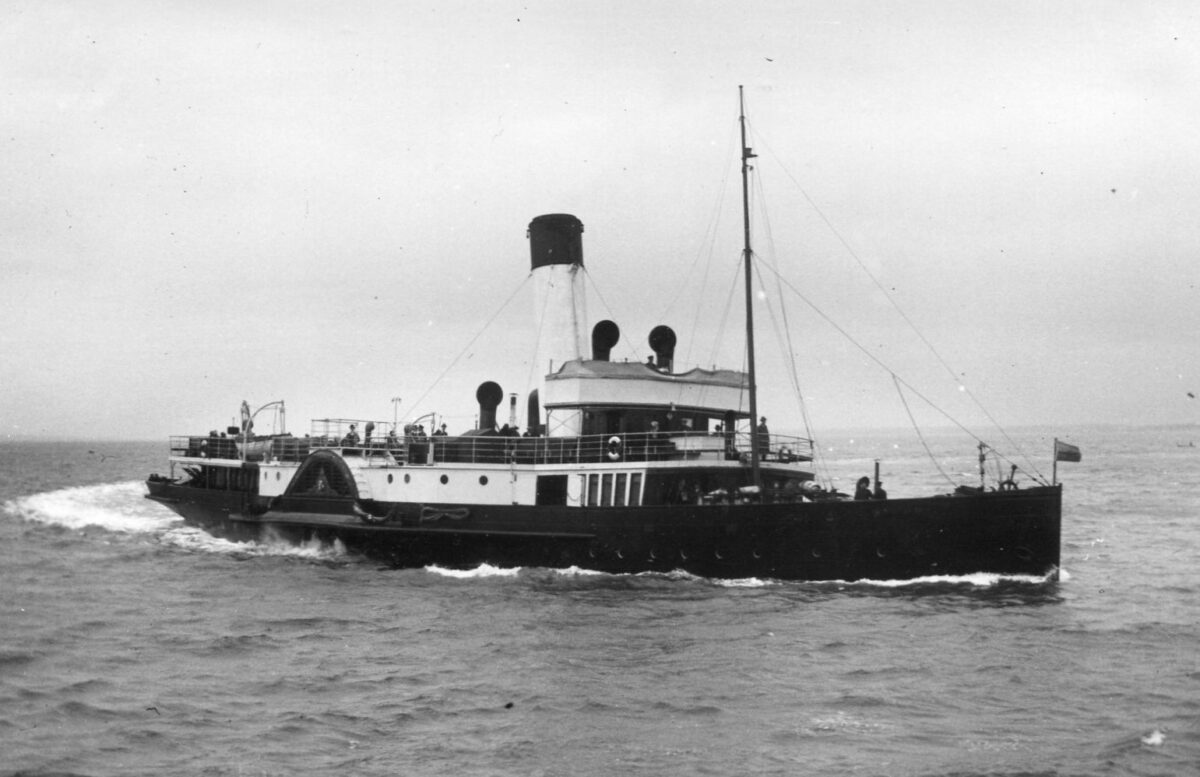
Ships are generally built for a design life of 25–30 years, after which the need for expensive structural renewal escalates sharply. It was therefore the general policy of the railway companies to sell off their ships as life expired when they reached that sort of age.
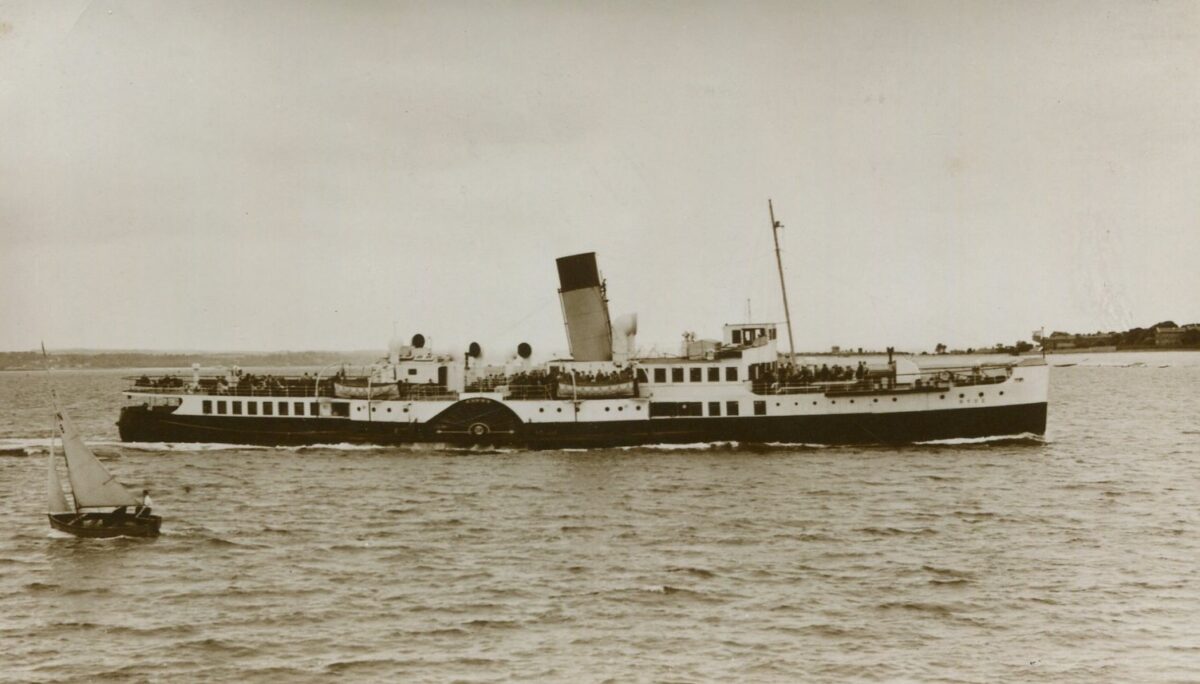
Duchess of Norfolk, built in 1911, was withdrawn after 26 years and replaced on the Portsmouth–Ryde run by Ryde, freshly built by Denny on the Clyde.
Of course ships can be kept going for longer than 25/30 years but that inevitably involves spending money. For example the Royal Navy often get 40 years out of their warships by giving them a “Mid-Life Rebuild”. After 20 years in commission they take a ship out of service, usually for about 18 months, strip out and renew steelwork and woodwork as necessary, replace all the pipework and re-wire her completely. And that gives them another 20 years of service.
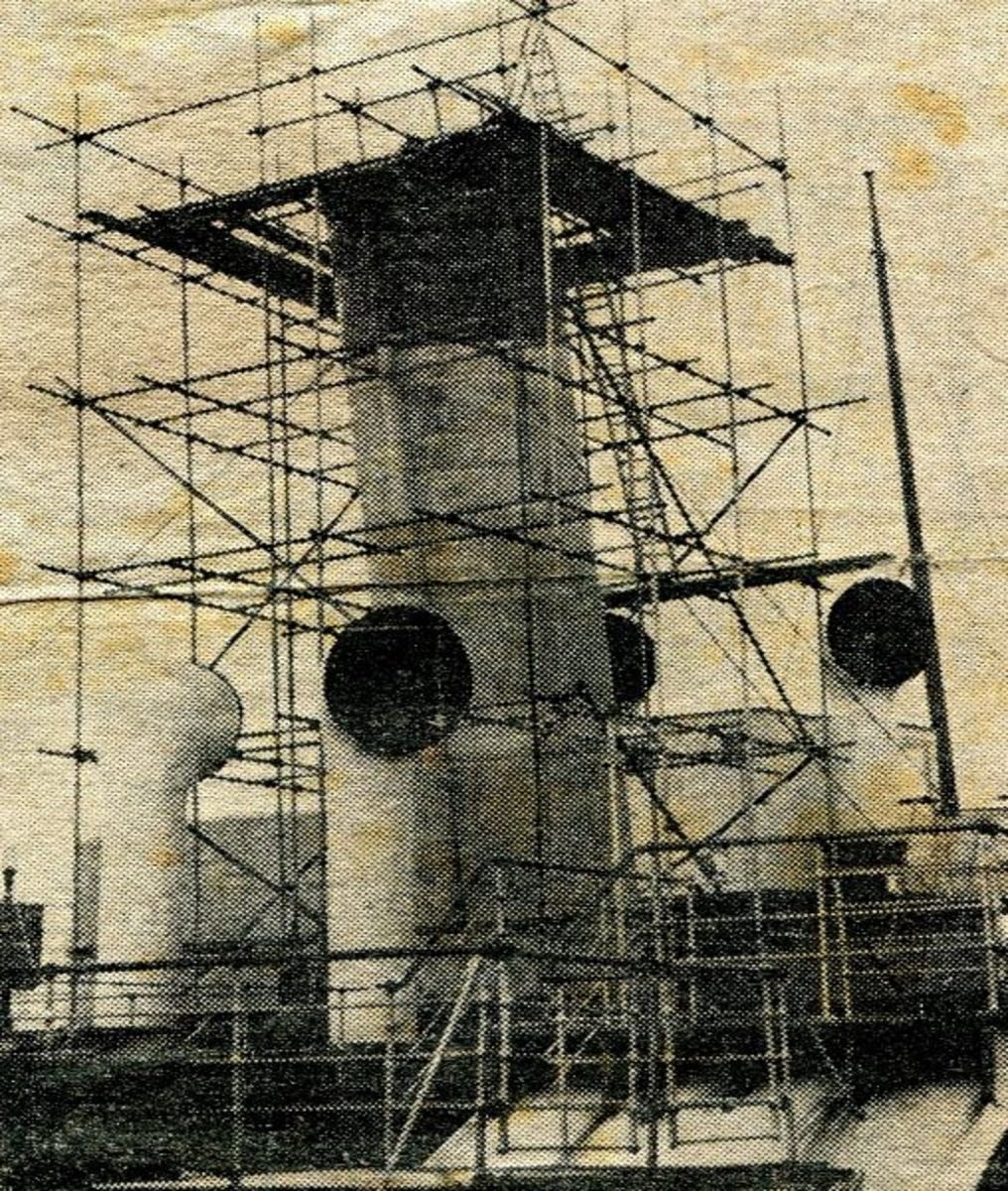
Cosens had another way. They achieved longevity through sustained, and often incremental, investment — a truth that runs through the whole history of their paddle steamers at Weymouth and Bournemouth. Apart from before the First World war when their level of business had supported building new paddle steamers specially for their services, by the 1930s Cosens’ seasonal excursion trade no longer generated sufficient revenue to do this. By then their whole fleet was life-expired by normal standards with their oldest, Premier, having clocked up over 90 years of service by 1936.
They kept their ships going by doing structural renewal work on them piecemeal every year as necessary. For example, one winter a steamer might need some re-decking, another a new inner funnel, another the replacement of a few hull plates and so on. To this the travelling public was largely oblivious tending to think that the lovely paddle steamers on which they sailed each summer went on for ever and laid up each winter just for a fresh lick of paint.
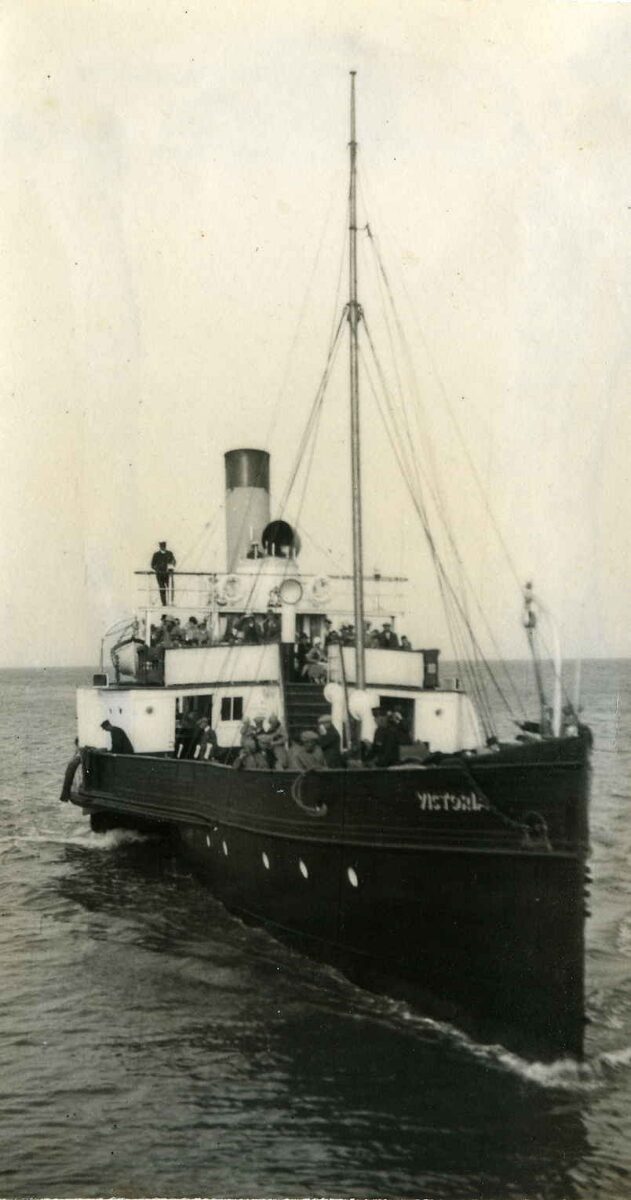
By 1936 their Victoria – which had been built in 1884 and was 52 years old – was still their main long distance excursion steamer at Weymouth. For this, her age, small size and out of date amenities meant that she was increasingly less suited to changing tastes with her distinct lack of covered accommodation and bygone era appearance.
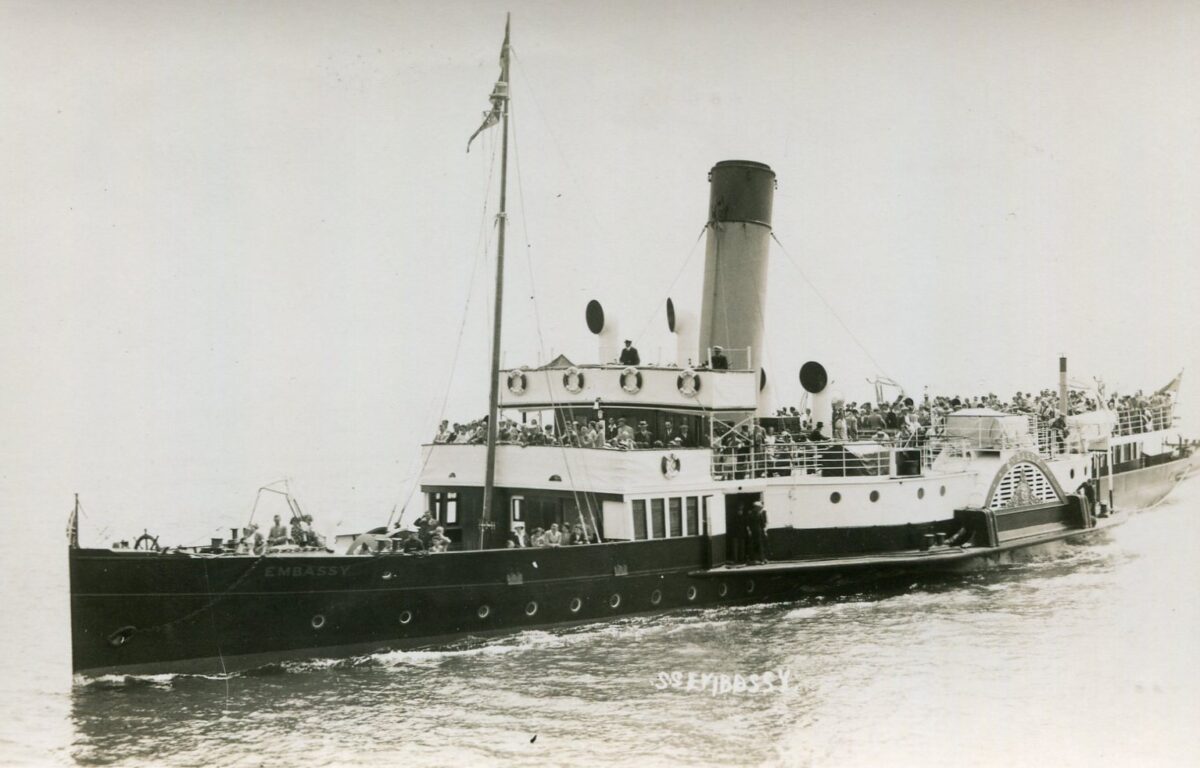
At that point Cosens noticed that the Southern Railway had put their Duchess of Norfolk up for sale at a scrapyard price. Here, suddenly, was a chance to acquire a comparatively modern ship for a fraction of the cost of building new. They moved quickly. The ship was bought, renamed Embassy, and sent to Southampton for dry‑docking and preparation for her first season. But when the Board of Trade surveyor arrived, the mood changed. Embassy might have been modern by Cosens’ standards, but she was still a 26‑year‑old much worked ex railway ferry — and the surveyor was not impressed. He insisted on some interim work before he agreed to renew her Passenger Certificates for sea-going work and then only until September that year on the strict understanding that major structural work would be necessary during the following winter.
The interim work dragged on at Southampton far longer than Cosens expected. Embassy did not reach Weymouth until the last week of July 1937 — with only five peak weeks of the season still to run — and only then could she be opened to the public and make a start.
The plan was for her to take over some – but not all – of Victoria’s long distance cruises with day trips offered from Weymouth particularly to Swanage and Bournemouth but also further afield – when the tides were helpful – to Ventnor, Shanklin, Yarmouth, Cowes, Southampton Docks to view the great liners and westwards to Torquay. When the tides were not helpful she was sometimes rostered for “Morning Coffee Cruises” and “Afternoon Tea Cruises” to Portland Bill and/or the Shambles Lightship.
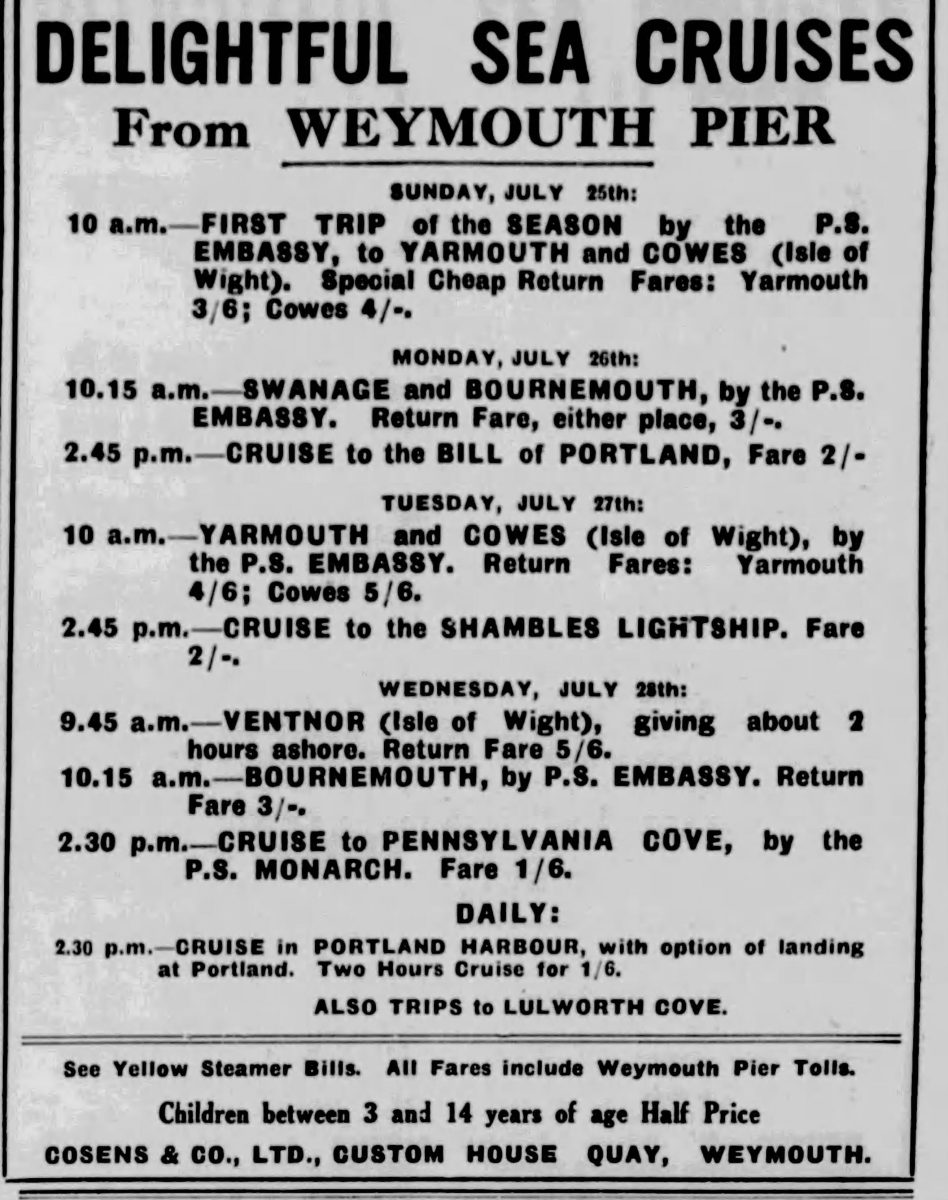
While Cosens’ Bournemouth steamer notices generally indicated which of their ships was running which trip this had not generally been the case at Weymouth. However they wanted to draw their customers’ attention to the new Embassy so her trips were specifically flagged up. As you can see in this ad from the Dorset Echo her first public sailing was on Sunday 25th July away from Weymouth for Yarmouth and Cowes. On Monday 26th she was advertised for Swanage and Bournemouth; on Tuesday 27th to Yarmouth and Cowes; and on Wednesday 28th to sail directly from Weymouth to Ventnor; on Thursday 29th for a day trip to Cowes or “Grand Cruise Round Portsmouth Harbour”; on Friday 30th to Torquay; and on Saturday 31st to Cowes for 2 hours ashore.
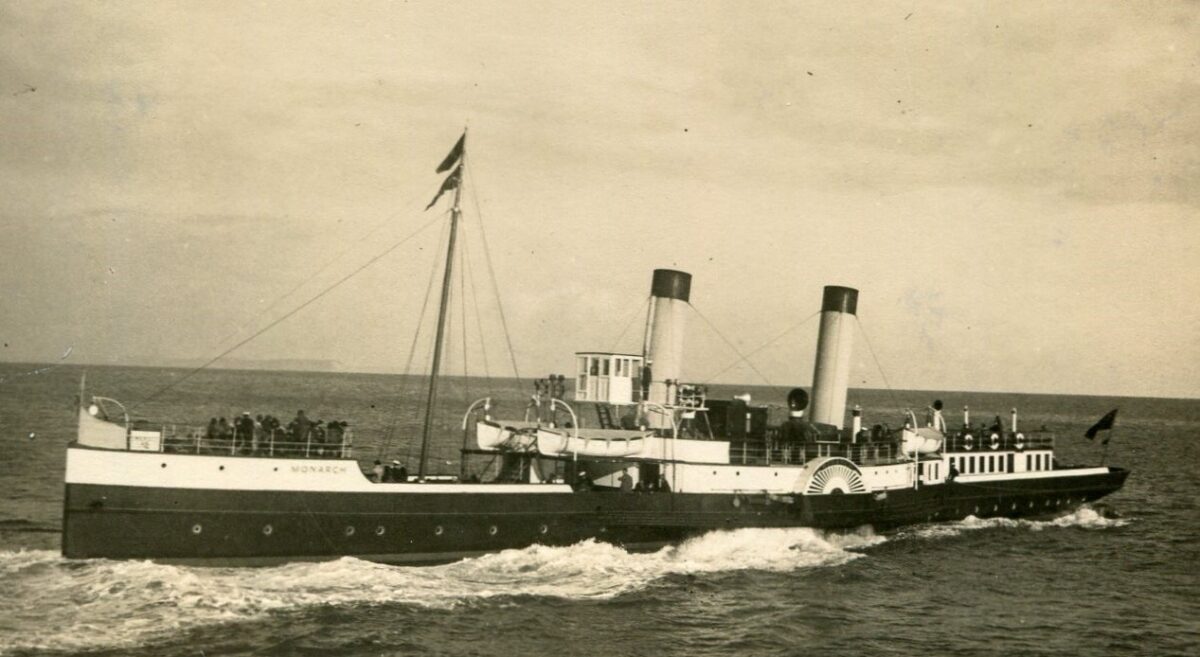
This ad also refers to Monarch running a 2.30pm “Cruise to Pennsylvania Cove”. Monarch was based at Bournemouth and most often ran on the Swanage service but she did longer trips sometimes including on this day from Bournemouth to Weymouth from where she ran this afternoon trip. On some Wednesdays later in the season her afternoon return to Bournemouth was advertised as out on Monarch and back on Embassy returning to Weymouth from her day trip to Bournemouth in the morning.
There were special charters for Embassy that season as well including to the Dorset Echo Social Club on 10th August on which almost 600 sailed. A report of the event said that she was ” roomy and spacious”. And on 26th to Weymouth Choral Society for which the paoper said “Fun waxed furiously with various deck competitions.”
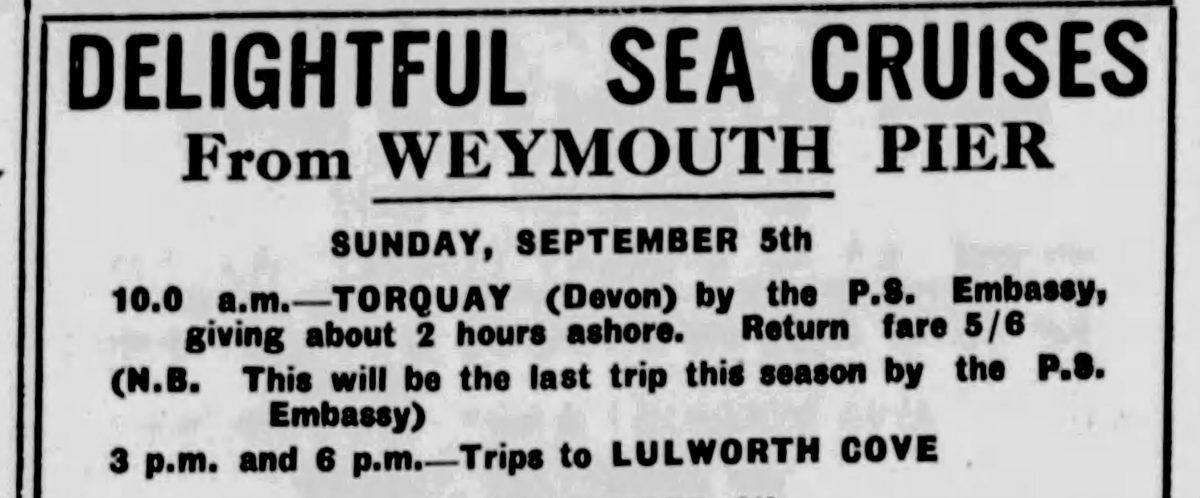
Embassy’s last trip of the 1937 season was on Sunday 5th September to Torquay after which she steamed off to Southampton for the extensive renewals required by the Board of Trade to keep her in ticket for further service. This additional work cost Cosens another 25% on top of what they had already paid to buy her from the Southern Railway.
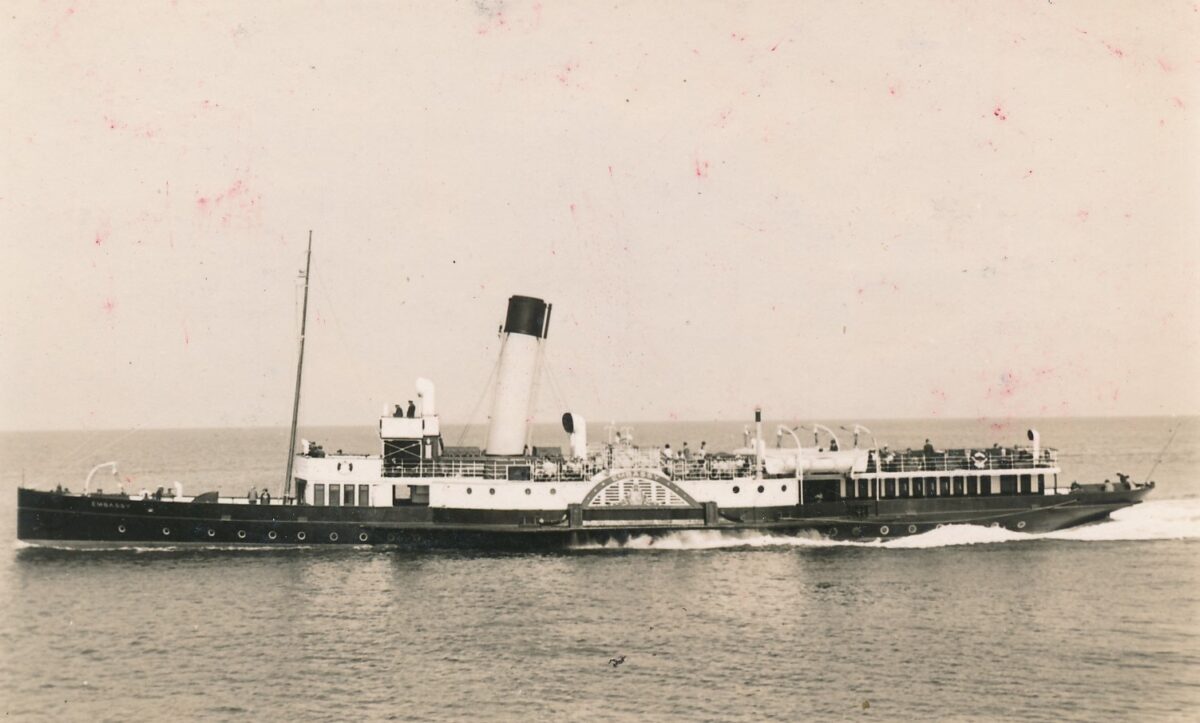
Embassy continued on a similar schedule from Weymouth for 1938 and 1939
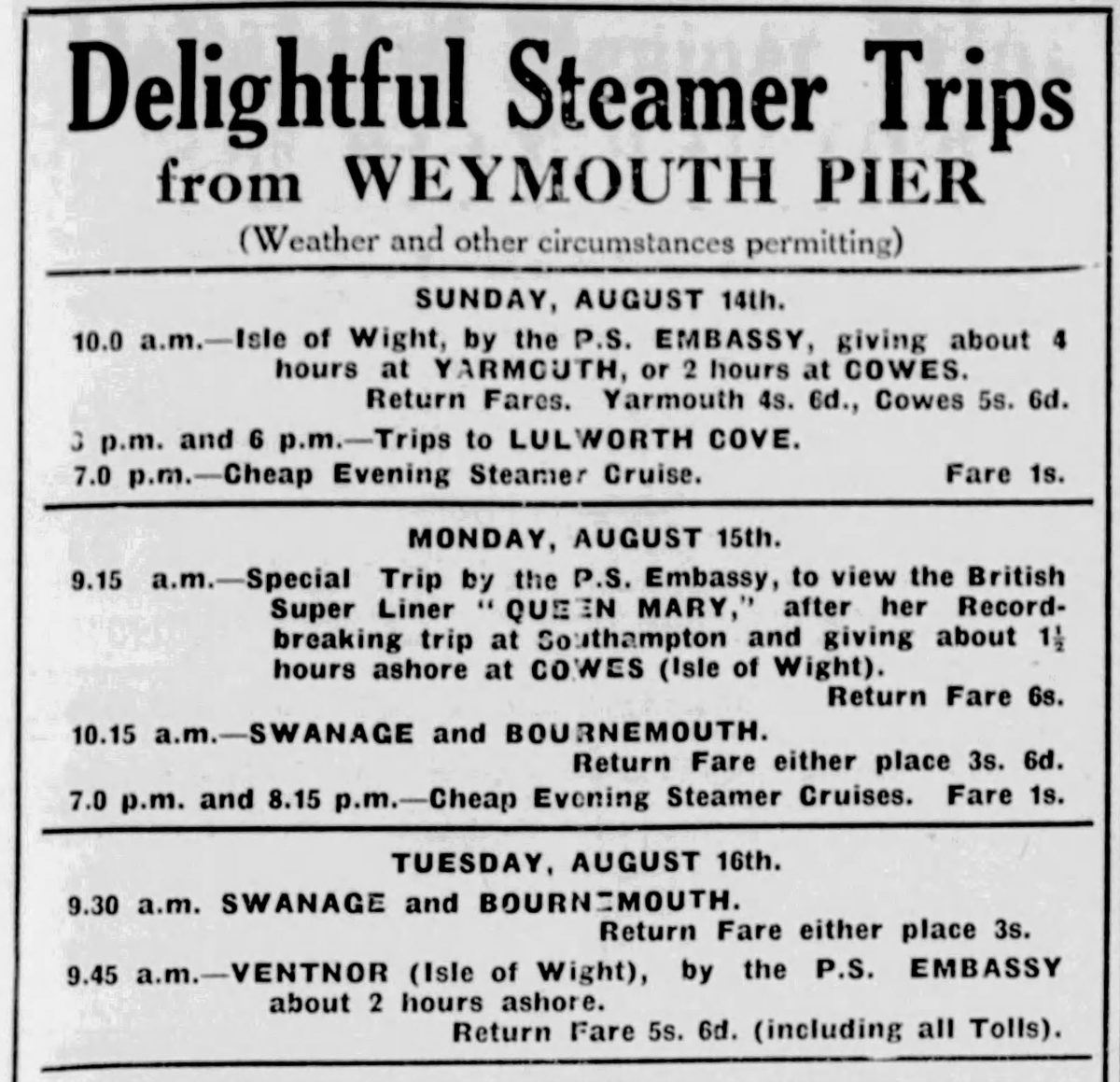
For example in this week on Sunday 14th August 1938 she ran from Weymouth to Yarmouth and Cowes; on Monday 15th August to Southampton to view the “super liner Queen Mary after her record breaking trip” with time ashore at Cowes; and on Tuesday 16th August from Weymouth to Ventnor.
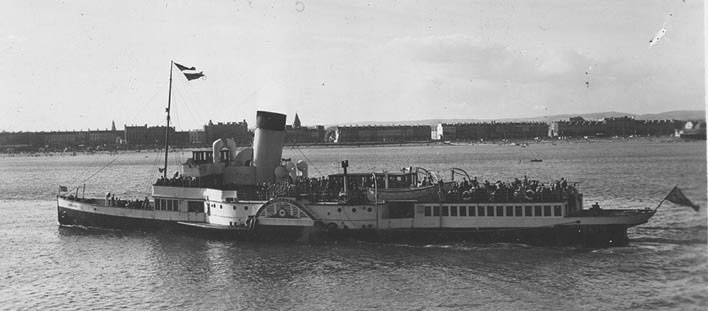
After the war, and after another expensive rebuild which transformed her appearance almost out of all recognition, Embassy spent most of her summers based at Poole running from Bournemouth and Swanage but she did spend the peak weeks of the 1949 season once again at Weymouth during which she revived some of her pre-war trips including to Torquay.
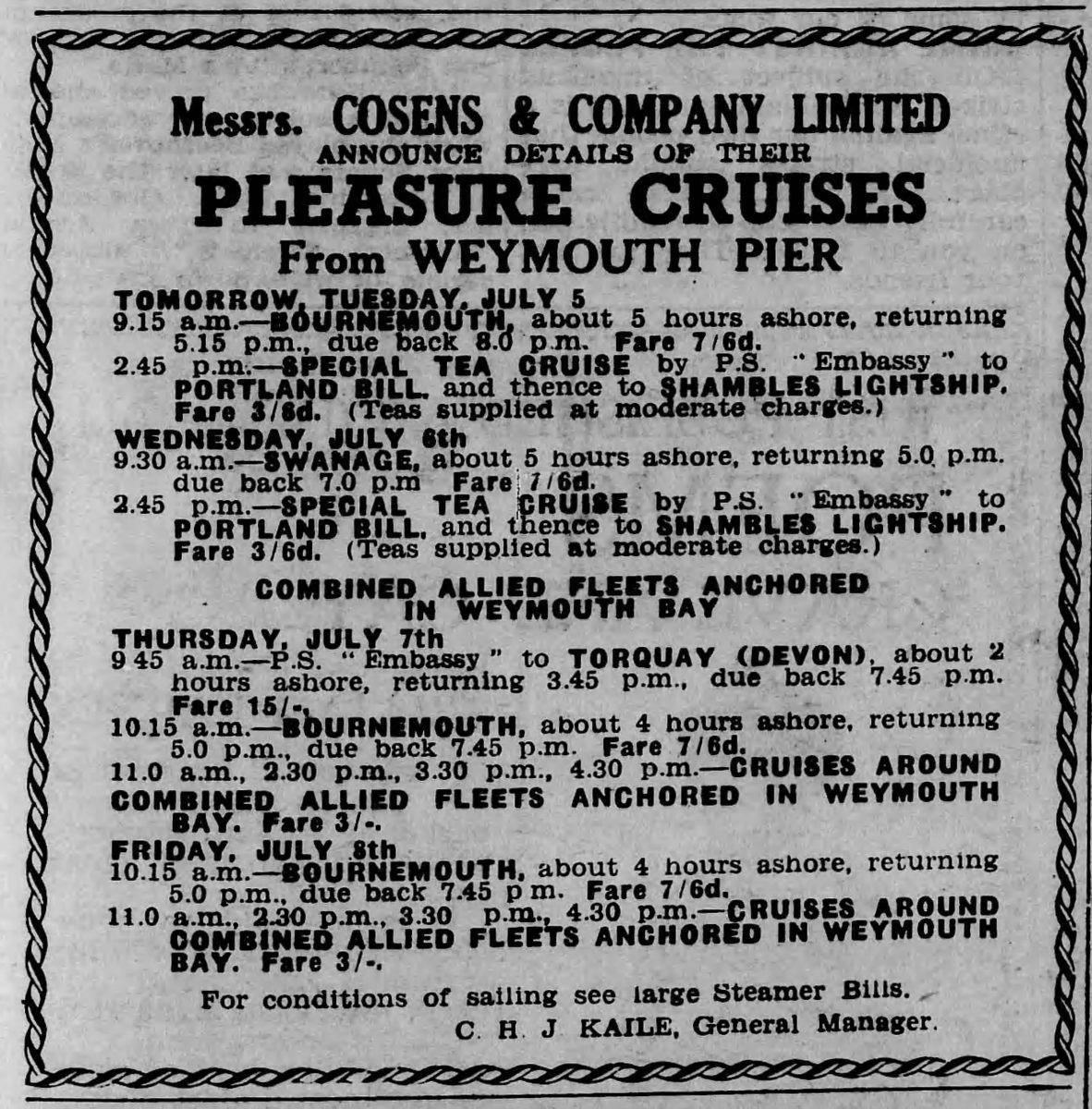
In this week she is advertised for a 2.45pm “Special Tea Cruise to the Bill of Portland and thence to the Shambles Lightship” on Tuesday 5th and Wednesday 6th July and for a day trip to Torquay on Thursday 7th July 1949.
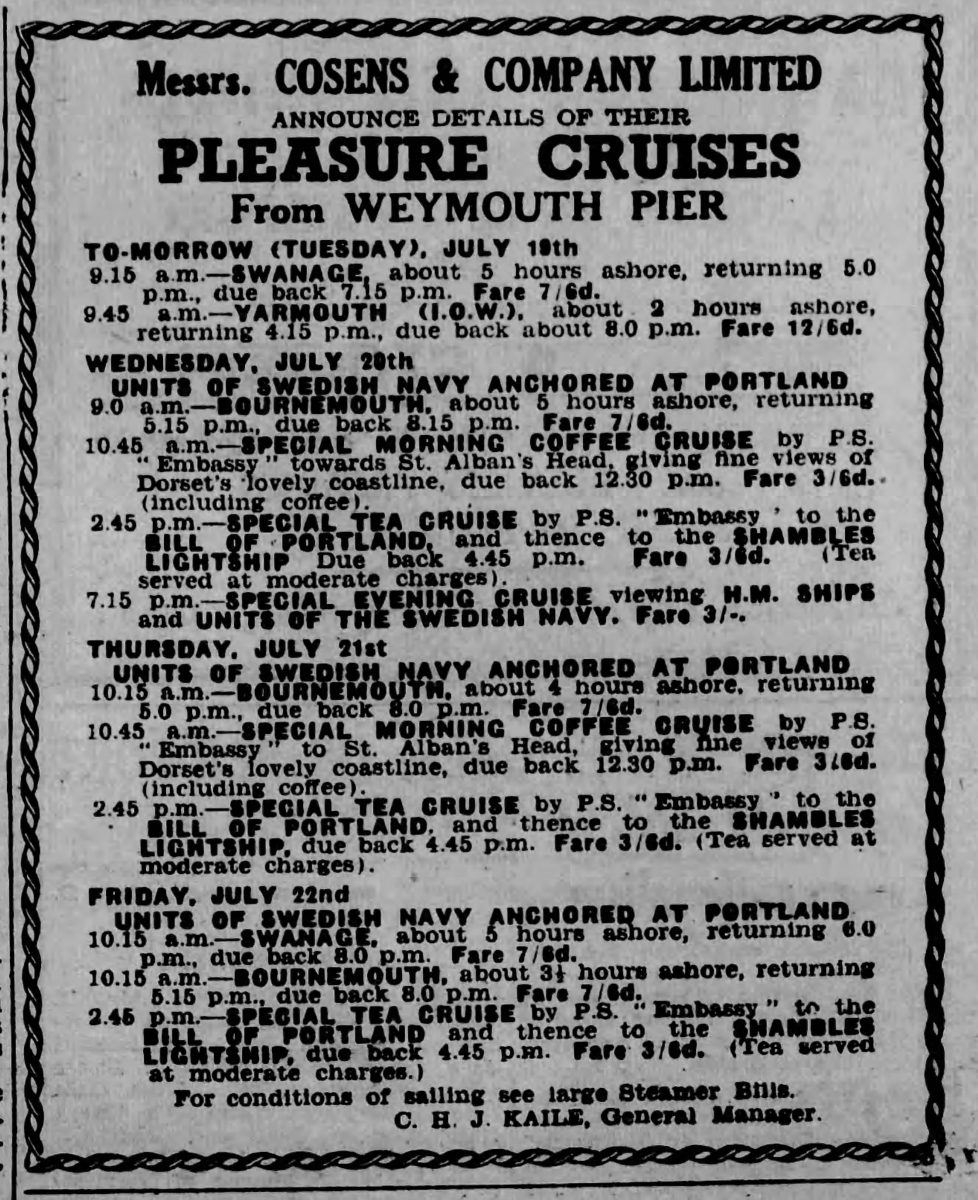
In the week of the Swedish Navy’s visit to Portland, Embassy was rostered for a 10.45am “Special Morning Coffee Cruise” on Wednesday and Thursday, and a 2.45pm “Special Tea Cruise to the Bill of Portland and thence to the Shambles Lightship” on all three days from Wednesday to Friday. Her 1949 programme contained many such short speciality trips. The roster this season is also inconsistent in naming which ship operated the longer excursions: for example, it is not stated which paddle steamer ran the Cowes trip on Sunday 31st July. Perhaps Cosens were hedging their bets, allocating either the smaller Consul or the larger Embassy depending on how bookings looked.
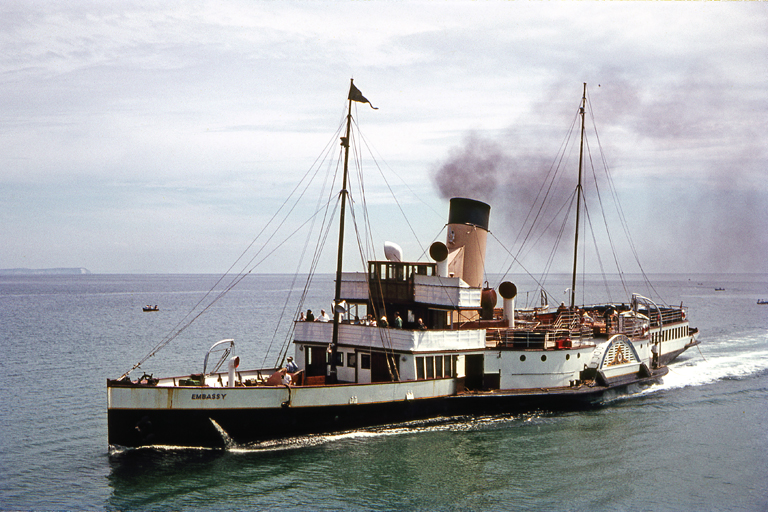
After that, and for the remainder of her career, Embassy was based at Poole and, from the late 1950s, settled into a routine roster offering trips encompassing Poole, Swanage, Bournemouth, Totland Bay and Yarmouth, Isle of Wight, with only the occasional excursion beyond. This was a very different pattern of sailings from the one Cosens had envisaged when they bought her in 1937 for long‑distance excursions from Weymouth to Swanage, Bournemouth, Shanklin, Ventnor, Yarmouth, Cowes, Portsmouth Harbour, Southampton Docks and even Torquay.
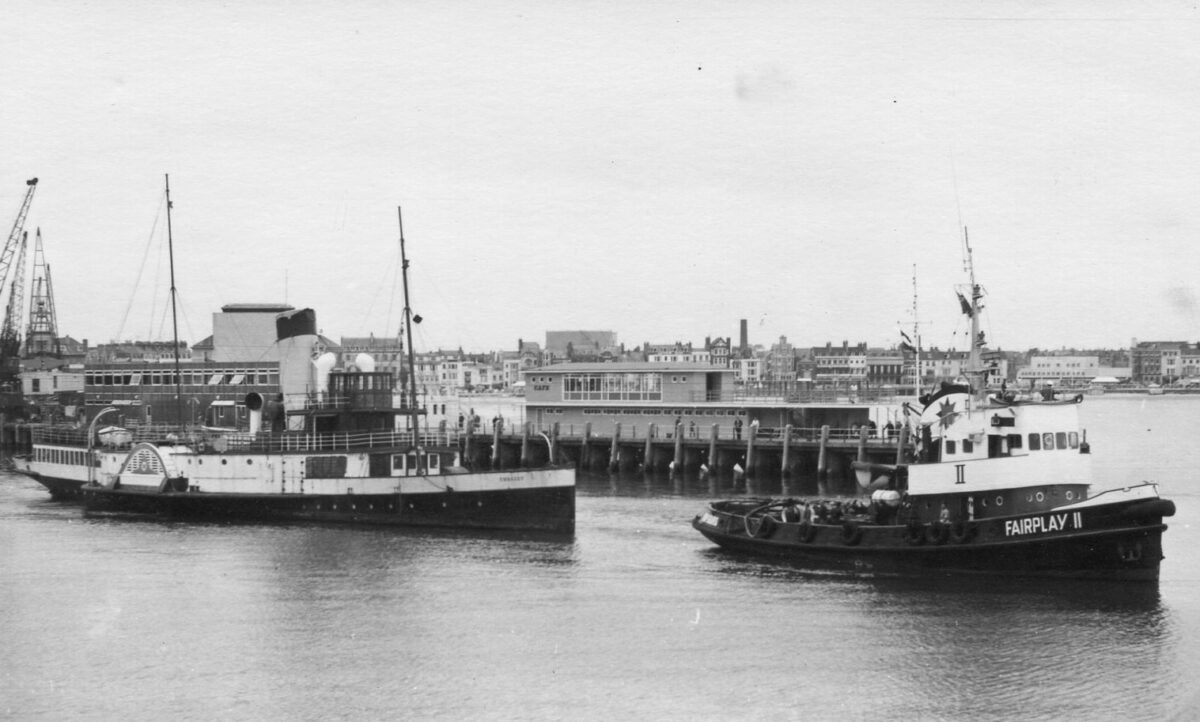
1966 was Embassy’s last season. She was towed away to be scrapped in Belgium the following May. She had a career of 55 years made possible by the major – and expensive – structural repairs and renewals carried out over the decades by, or paid for by, Cosens. Effectively this gave Embassy an extra thirty years of life beyond her original twenty‑six‑year career with the railway at Portsmouth — a remarkable extension for a ship never designed to last so long.
Press cuttings courtesy of the Dorset Echo
Kingswear Castle returned to service in 2026 after the second part of a major rebuild which is designed to set her up for the next 25 years. The Paddle Steamer Kingswear Castle Trust is now fund raising for future rebuilds. You can read more and how you can possibly help here.
John Megoran