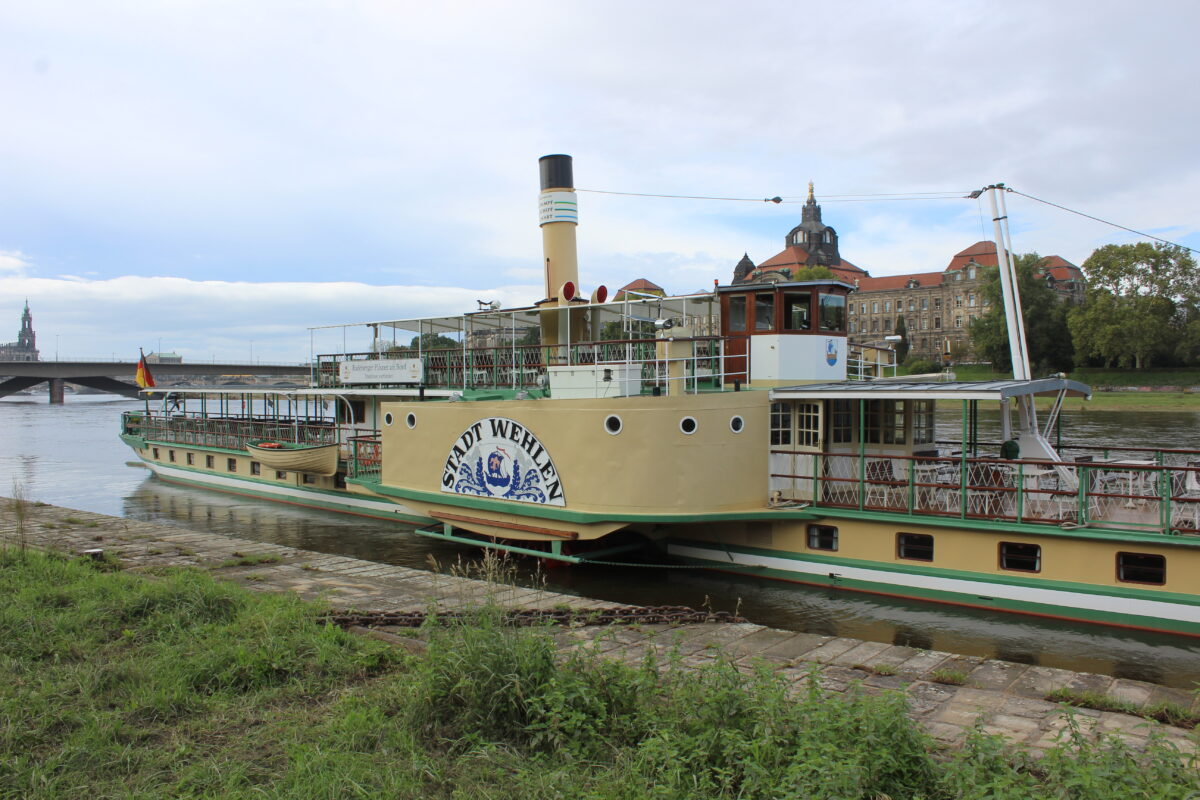
Some paddle steamers, like Stadt Wehlen and others based at Dresden, were built with flat‑sided and decorated paddle boxes without venting through freeing ports because the Elbe offers no conditions under which water could be forced up into them producing destructive water pressures.
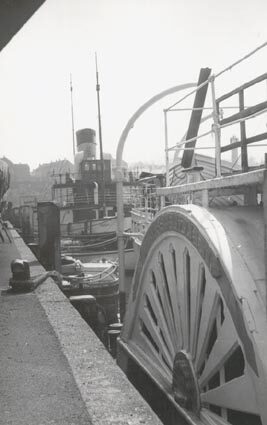
All sea-going paddle steamers had some sort of venting to release the pressure when solid sea-water was forced up into the paddle boxes, and allow excess water to escape, as the steamers pitched and rolled in a seaway. Most often the venting was fan shaped as in this picture of the paddle box of Princess Elizabeth.
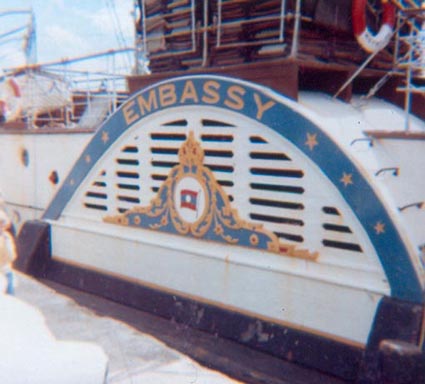
Some had horizantal venting as in this picture of Embassy.
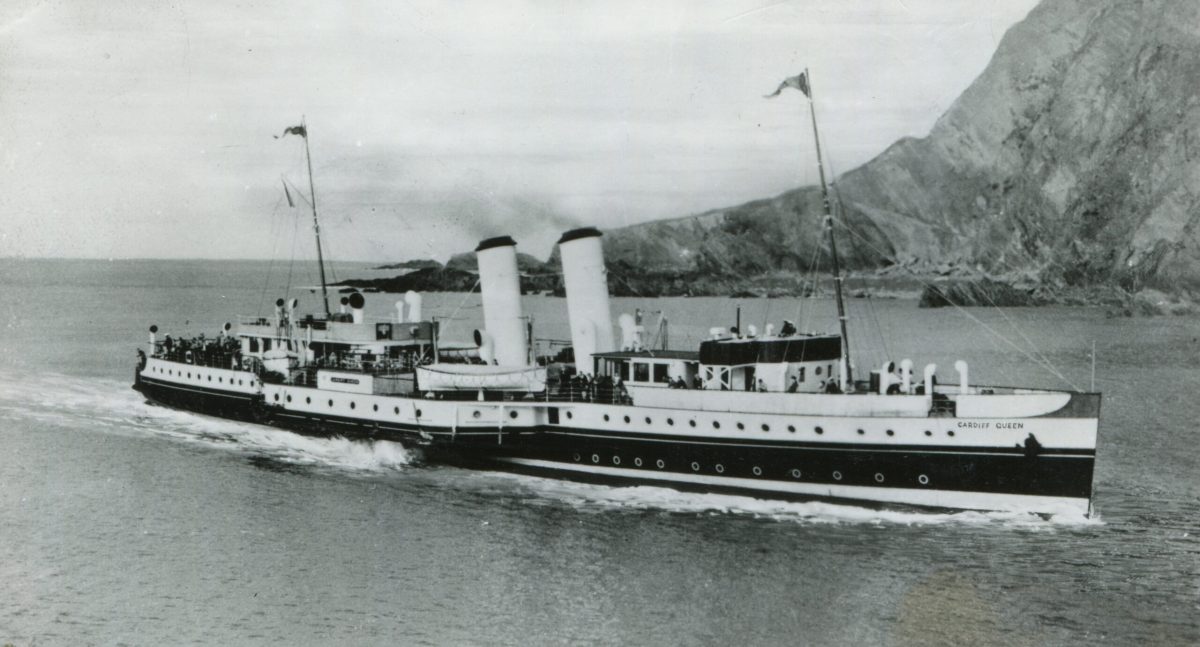
A few like Cardiff Queen had concealed venting in the shape of portholes. So from a distance they didn’t look quite like a paddle steamer at all. However those on Cardiff Queen, and her quasi sister Bristol Queen, were not that big and, as a result, their paddle boxes tended to become choked in serious weather. This could be particularly troublesome on the run from Swansea to Ilfracombe where the prevailing SW wind and sea were on the starboard bow out and the port quarter back which induced a corkscrewing motion — alternately burying each sponson and forcing solid water up into the paddle boxes. Water trapped in the box increases resistance on the floats, momentarily reducing rotational speed of the paddle wheels.
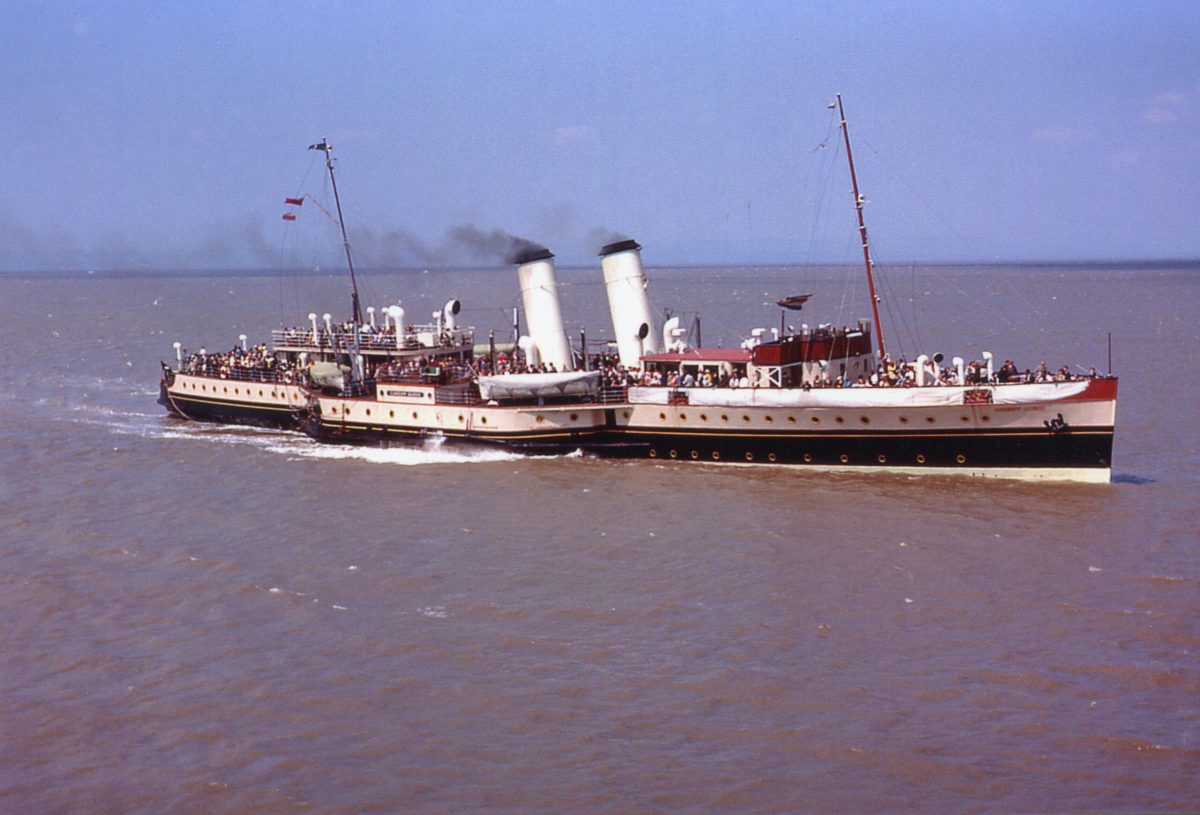
To address this issue P & A Campbell cut two more freeing ports into each of the paddle boxes of both Cardiff Queen and Bristol Queen to provide additional vents to help alleviate this situation. You can see the two extra freeing ports at the top of the paddle box in this picture of Cardiff Queen either side of her name banner.
The precise date of this modification is unclear, but it was certainly before 1962 as I have a picture of Bristol Queen in the Weymouth Backwater that year and she had her extra two each side by then.
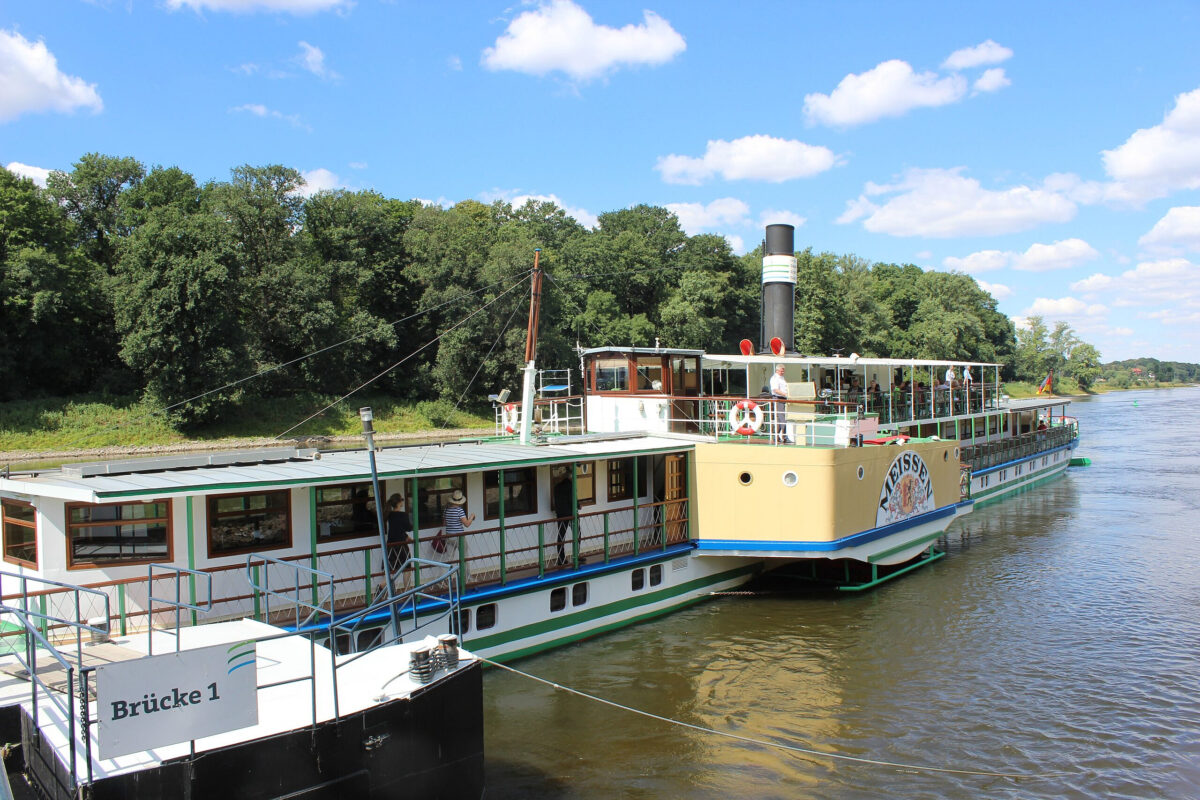
Untroubled by any threat of serious water ever being driven up into them, the broad, unbroken faces of the Dresden paddle‑box sides offer an ideal canvas for elegant ornamentation, perfectly exemplified in the decoration carried by Meissen.
Kingswear Castle returned to service in 2026 after the second part of a major rebuild which is designed to set her up for the next 25 years. The Paddle Steamer Kingswear Castle Trust is now fund raising for future rebuilds. You can read more and how you can possibly help here.
John Megoran