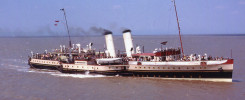
Sixty years have now passed since Embassy left Weymouth for the last time, yet she remains one of those ships whose presence lingers long after the vessel herself has gone. For more than half a century she carried holidaymakers, day‑trippers and families along the South Coast, quietly becoming part of the rhythm of summers that now feel very far away. To those who sailed on her — and to many who simply watched her come and go — she was never just a paddle steamer. She was a familiar shape on the horizon, a dependable companion in an age when excursion steamers were still woven into everyday life. This is the story of her long career, her final years, and the mark she left on those who knew her.
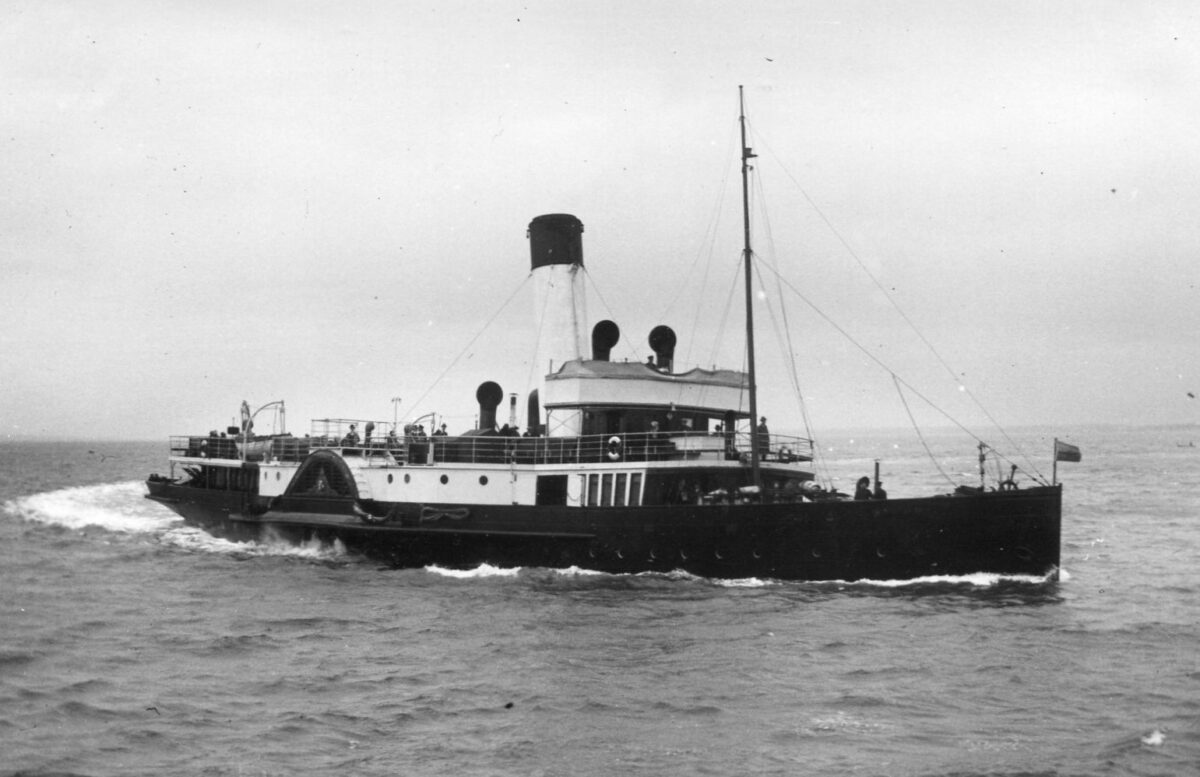
Embassy began life as the Duchess of Norfolk, built in 1911 for the Joint Railway’s year‑round Portsmouth–Ryde service and for the summer sailings from Portsmouth and Southsea to Ryde, Sandown, Shanklin and Ventnor.
Ships are generally designed for a working life of 25–30 years, after which they are expected to be scrapped. There are sound economic reasons for this: steel corrodes, wood rots, and pin‑holes develop in pipework so that when you try to pump the bilges the pump draws air instead of water. And so on. For railway‑owned ships, the policy was simple — sell them once they reached that age. By 1937 the Duchess of Norfolk was 26, so the railway put her up for sale.
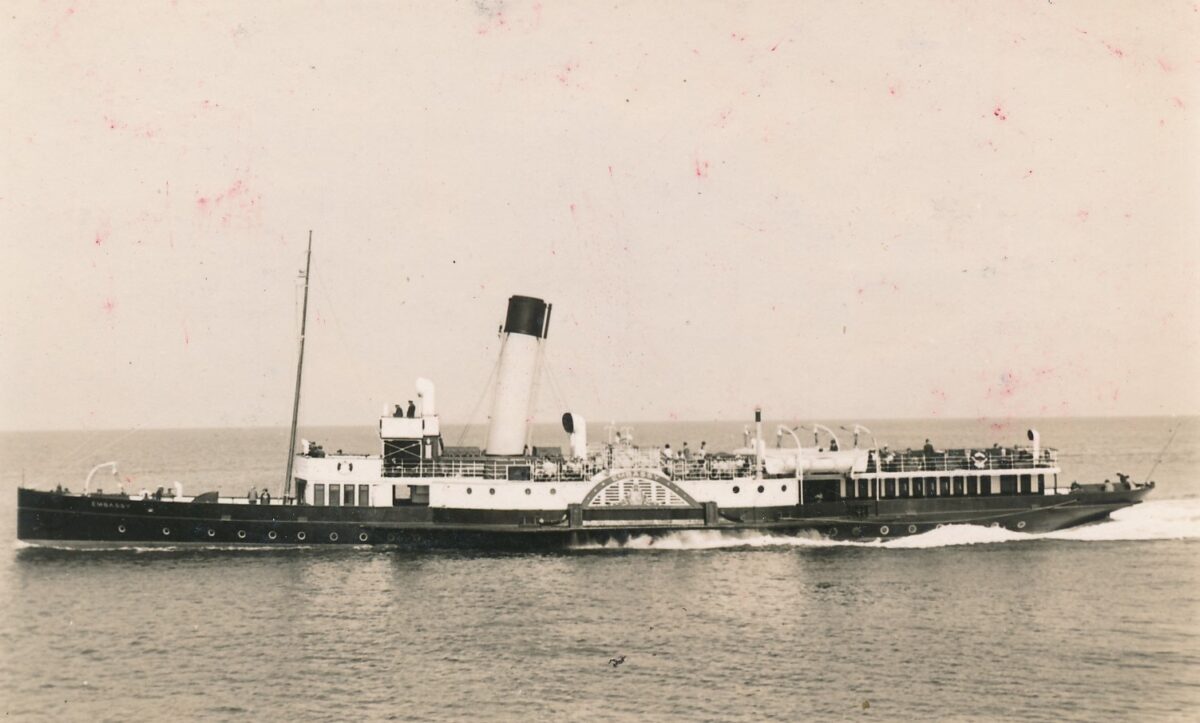
Cosens, based at Weymouth, ran an elderly fleet of excursion paddle steamers which they kept going well beyond their design life by virtue of owning their own ship repair yard. There they could renew steelwork and timber at cost price and keep their steamers running. When they saw the Duchess for sale — a relative spring chicken compared with some of their fleet — they bought her.
Pre‑war Cosens Service
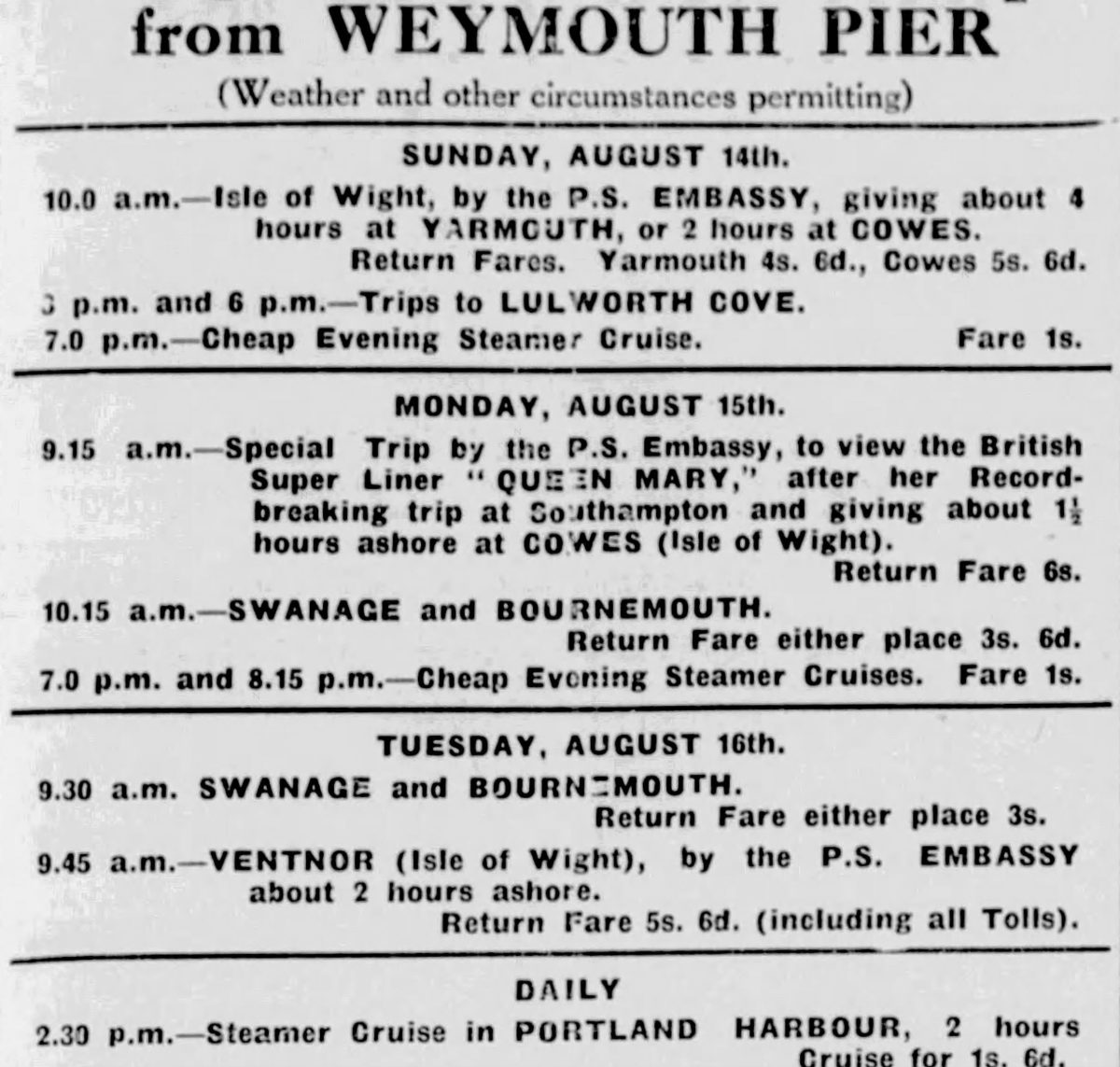
This press advertisement for the newly renamed Embassy gives a flavour of her early Cosens work. That week in August 1938 she was rostered:
- Sunday 14 August — 10am from Weymouth to Yarmouth and Cowes
- Monday 15 August — 9.15am “Special Trip to view the British Super Liner Queen Mary at Southampton after her record‑breaking voyage”, with time ashore at Cowes
- Tuesday 16 August — 9.45am day trip to Ventnor
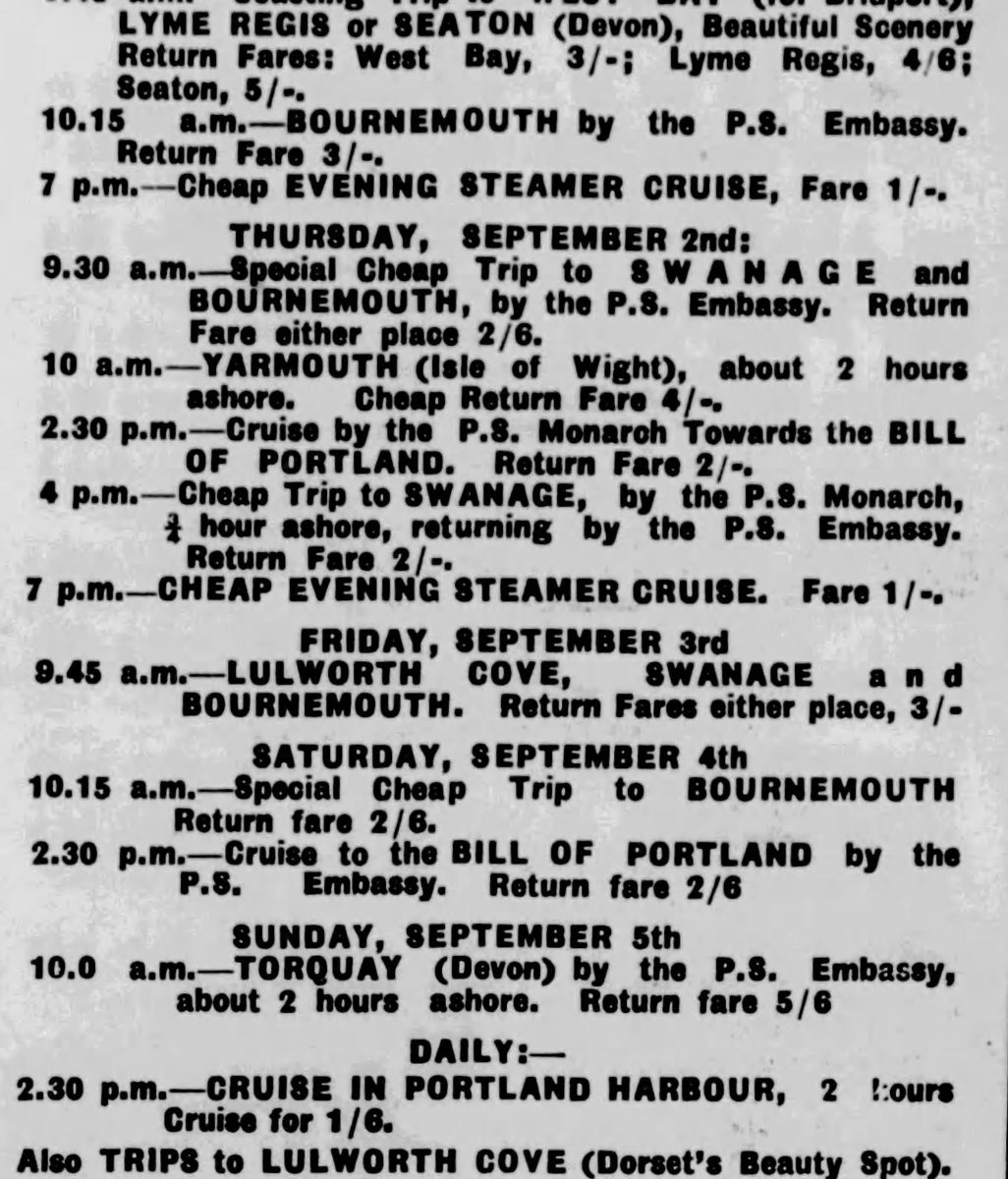
- Wednesday 1 September — 10.15am to Bournemouth
- Thursday 2 September — 9.30am to Swanage and Bournemouth
- Saturday 4 September — 2.30pm afternoon cruise to the Bill of Portland
- Sunday 5 September — 10am day trip to Torquay
A lot of the literature on South Coast paddle steamers gives the impression that the twin‑funnelled Monarch ran almost exclusively on the Bournemouth/Swanage service after the First World War. That is largely true, but not entirely. As this advertisement shows, on Thursday 2 September she was scheduled to come down from Bournemouth to Weymouth to run a 2.30pm trip to the Bill of Portland before returning at 4pm. Passengers were even offered the option of sailing out on Monarch at 4pm and returning on Embassy later.
War Service and Rebuild
Then came the war. Embassy became a minesweeper and was renamed HMS Ambassador.
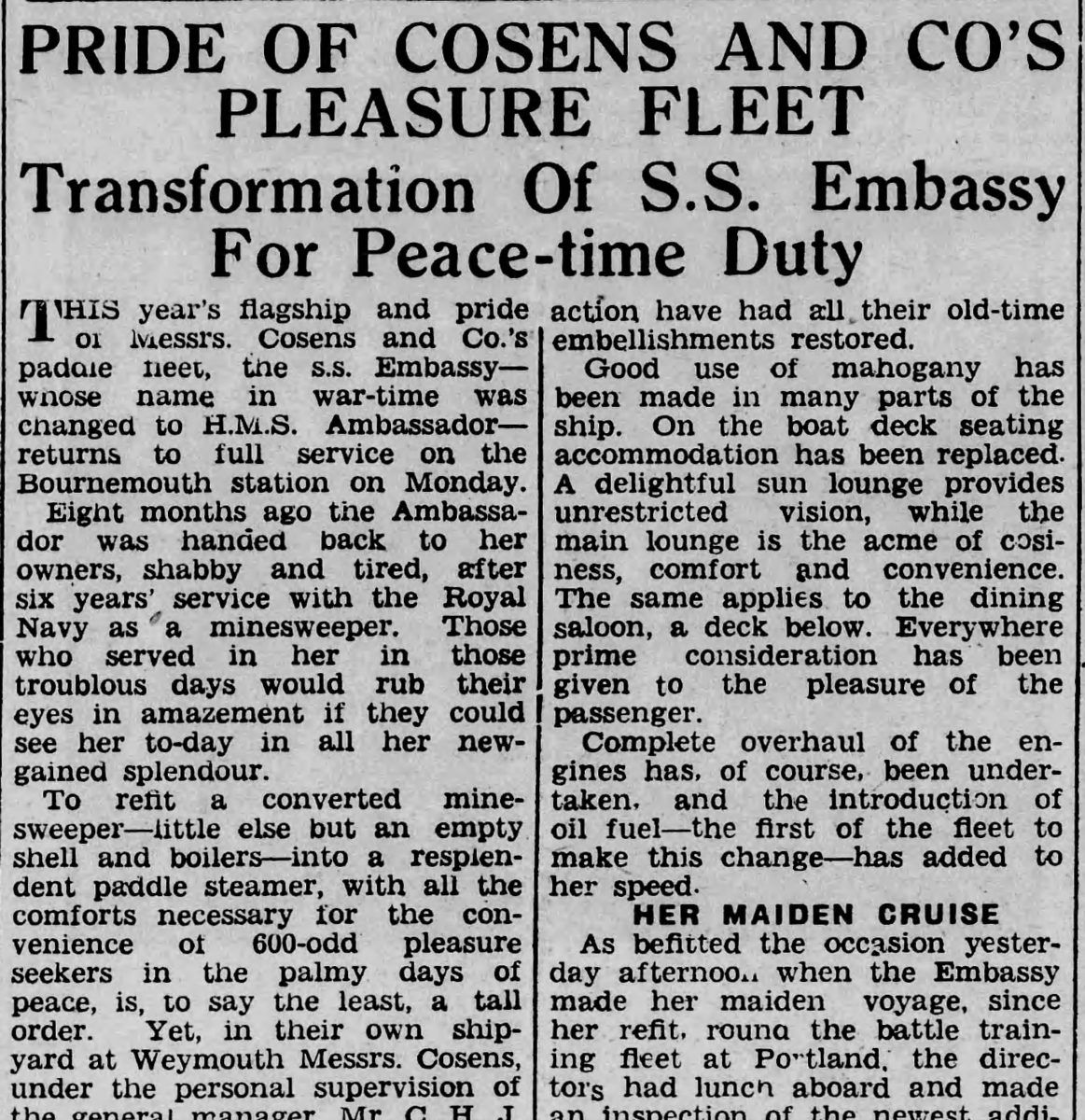
She returned to Weymouth after the war in very poor condition, as the press cutting shows. It noted:
“To refit a converted minesweeper — little else but an empty shell and boiler — into a resplendent paddle steamer, with all the comforts necessary for the convenience of 600 odd pleasure seekers is, to say the least, a tall order.”
But Cosens did it. Steelwork was renewed, new decks were laid, and the saloons were refitted with much mahogany. She was also to be converted from coal to then‑cheap oil fuel.
All was completed except the oil conversion by the end of August, so Embassy returned to service for the last few weeks of the season still sporting her old thin coal‑fired funnel. The following winter she received a new, larger, modern funnel when the work was finished.
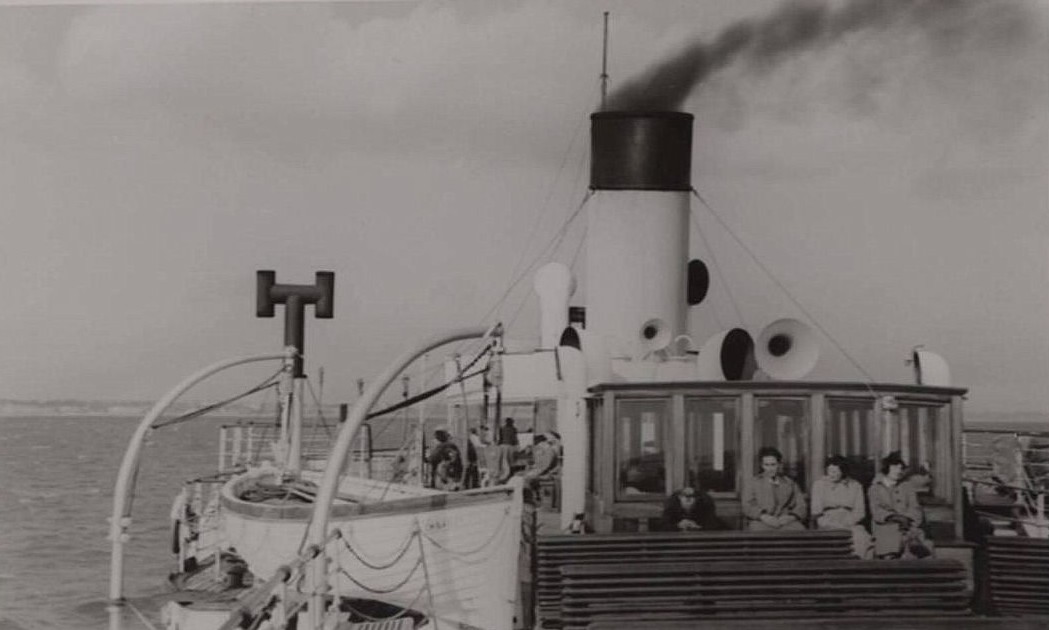
And here is a thing: we like paddle steamers to look old‑fashioned, relics from a bygone age. After the war, the mood of modernity was beginning to take hold and Cosens wanted their boats to look up‑to‑date. Compare Embassy’s profile before and after the war — you could be forgiven for thinking she was a different vessel. This photo shows the large deckhouse fitted after the war. It came to be seen as a mixed blessing: it took up a lot of deck space and added windage, which didn’t help manoeuvring. It was removed by 1957.
Post‑war Service
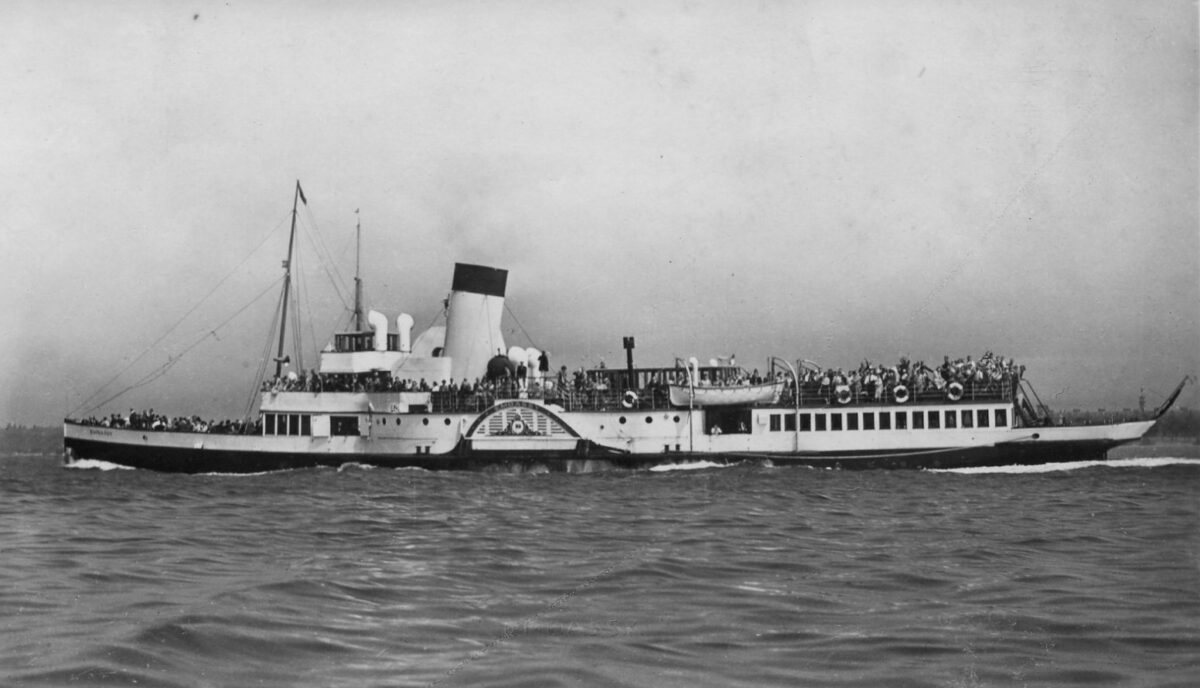
In 1947 Embassy took the longer trips from Bournemouth, but the arrival of the newly refurbished Emperor of India in 1948 made her slightly surplus to requirements.
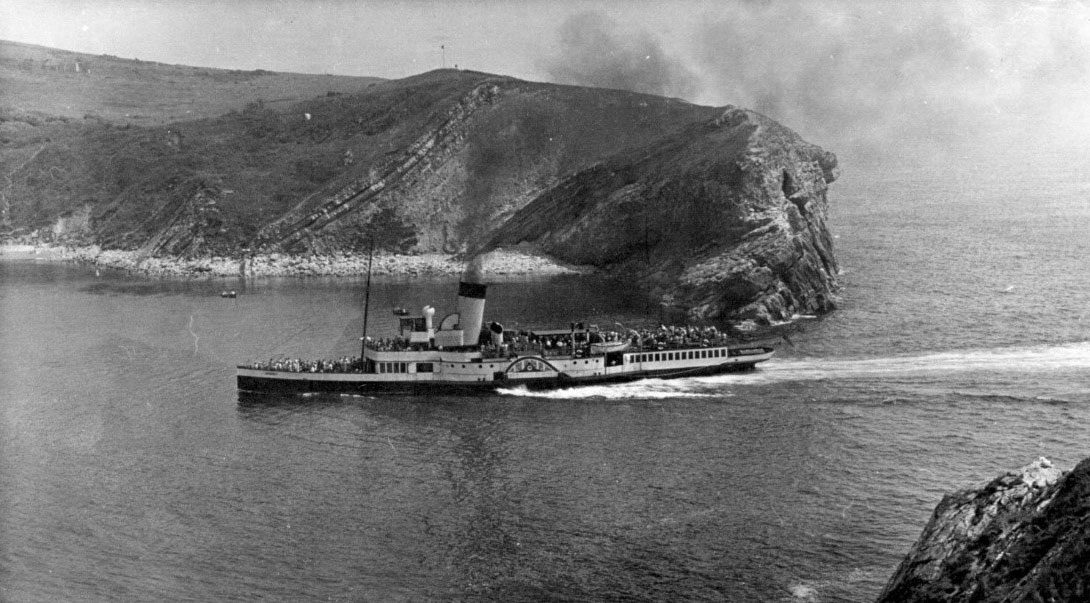
She continued to run between Bournemouth, Swanage and the Isle of Wight, but she also took some longer coastal cruises without calling anywhere. For example, she ran trips to Lulworth Cove, actually going into the Cove — weather permitting — but not landing. She had a bow rudder, and there were concerns that putting her bow onto the beach might damage it. Sometimes she was advertised to take passengers to Lulworth from Bournemouth, but on those occasions passengers transferred to Consul at Swanage for the onward journey.
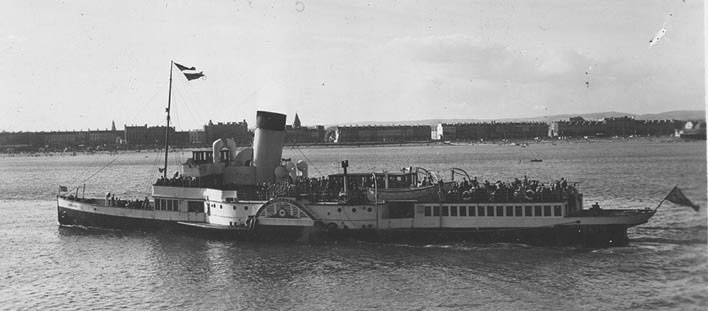
With a rebuilt Consul returning to service in 1949, Cosens had too many paddle steamers. As an experiment, Embassy was tried as the long‑distance excursion steamer at Weymouth during the peak weeks of 1949. She revived some of her pre‑war trips, including to Torquay, but this didn’t last. For 1950 Cosens withdrew their ancient Monarch (then over 60 years old) and returned Embassy to Bournemouth to run alongside the Emperor.
In 1951 Red Funnel withdrew from Bournemouth, leaving excursions entirely in Cosens’ hands. They were now a ship short, so they bought another Portsmouth Railway paddle steamer, Shanklin, – then 26 years old – which they renamed Monarch She joined Emperor, Embassy and sometimes Consul.
Generally two paddle steamers ran on the Swanage service and two to the Isle of Wight, with one of them extending to Cowes, Ryde, Southsea, Southampton, the east coast piers of the Isle of Wight and westward to Weymouth. Although Emperor sometimes took the long day trips, they increasingly became the preserve of Embassy, which was smaller and more economical to run on high‑cost day excursions.
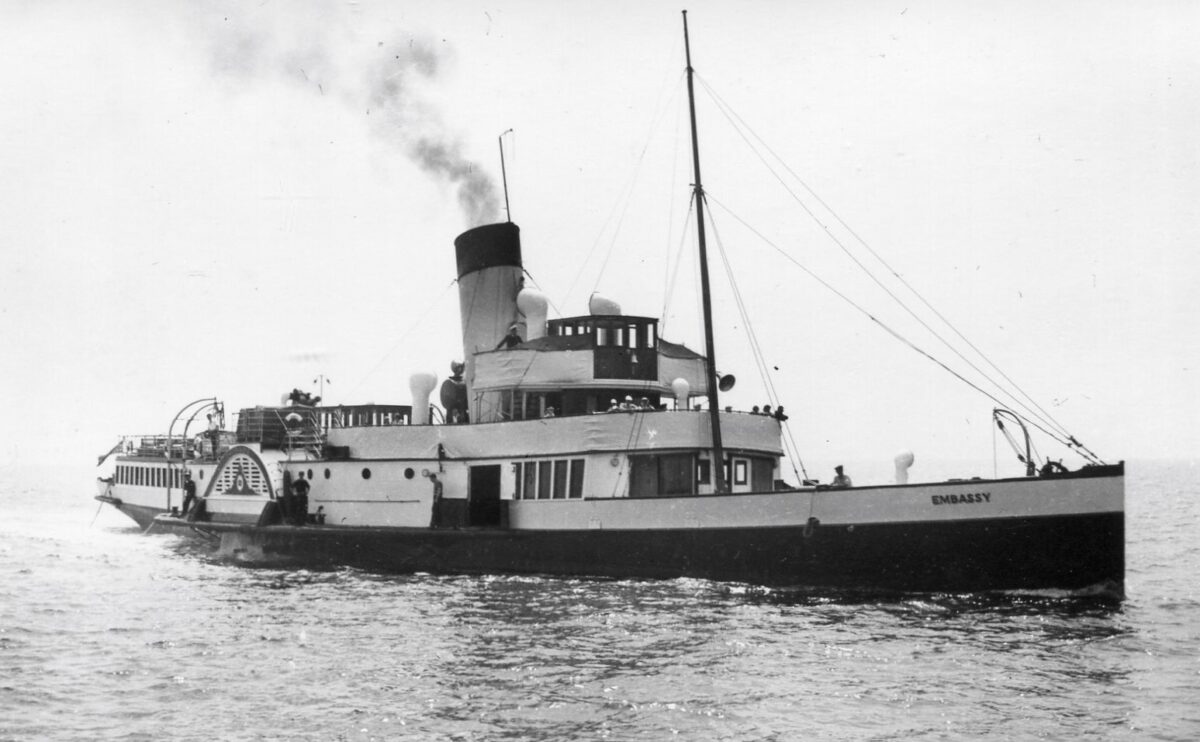
There were some good years in the 1950s. 1955 was a cracker — flat calms, sunshine, and crowds eager to get afloat. Some less so: there was a lot of wind and rain in 1956. Beneath that, it was increasingly clear that keeping elderly tonnage in service in a declining market, with rising labour and operating costs, was not sustainable. One after another steamer was withdrawn: Victoria in 1952, Empress in 1955, Emperor of India in 1956, the second Monarch in 1960, and Consul in 1962.
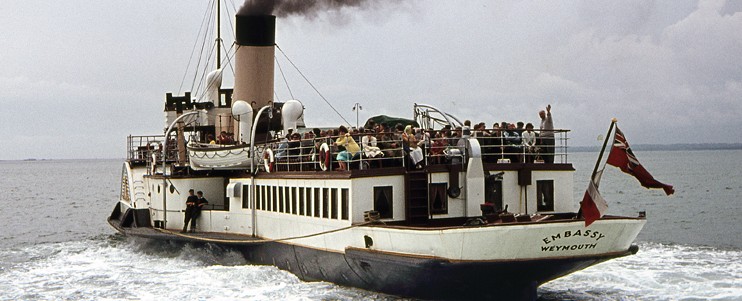
After that Embassy was essentially on her own, although she faced unwelcome competition — first in 1961 from Swanage Queen and then in 1962 from Princess Elizabeth.
Personal Memories

I sailed aboard Embassy quite a lot with my Dad in the 1960s. It was so exciting being aboard, watching what was going on, finding out how everything worked.

I loved watching Chief Engineer Alf Pover handle the levers and gradually worked out what they were all for.
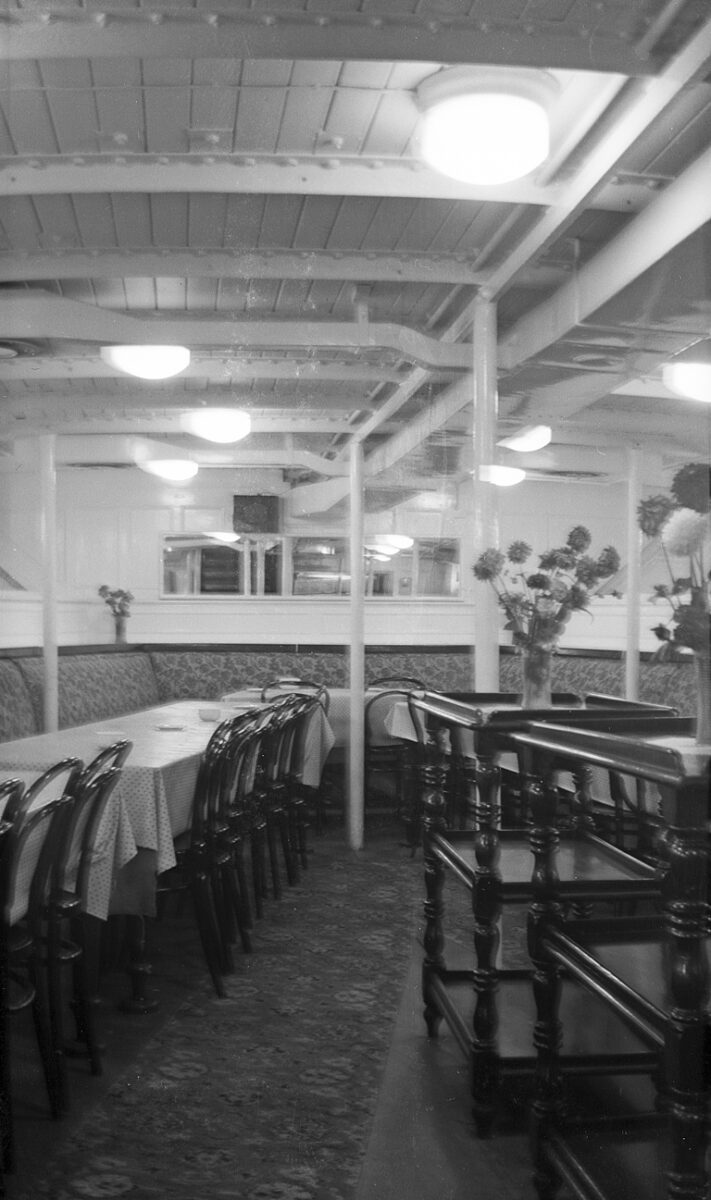
We never dined aboard — hardly anyone did in those later years. Embassy’s schedule in her later years – running either on the Swanage service or connecting Bournemouth with Totland Bay and Yarmouth – meant passengers were rarely aboard at mealtimes. Most bought food ashore or brought their own lunchboxes.
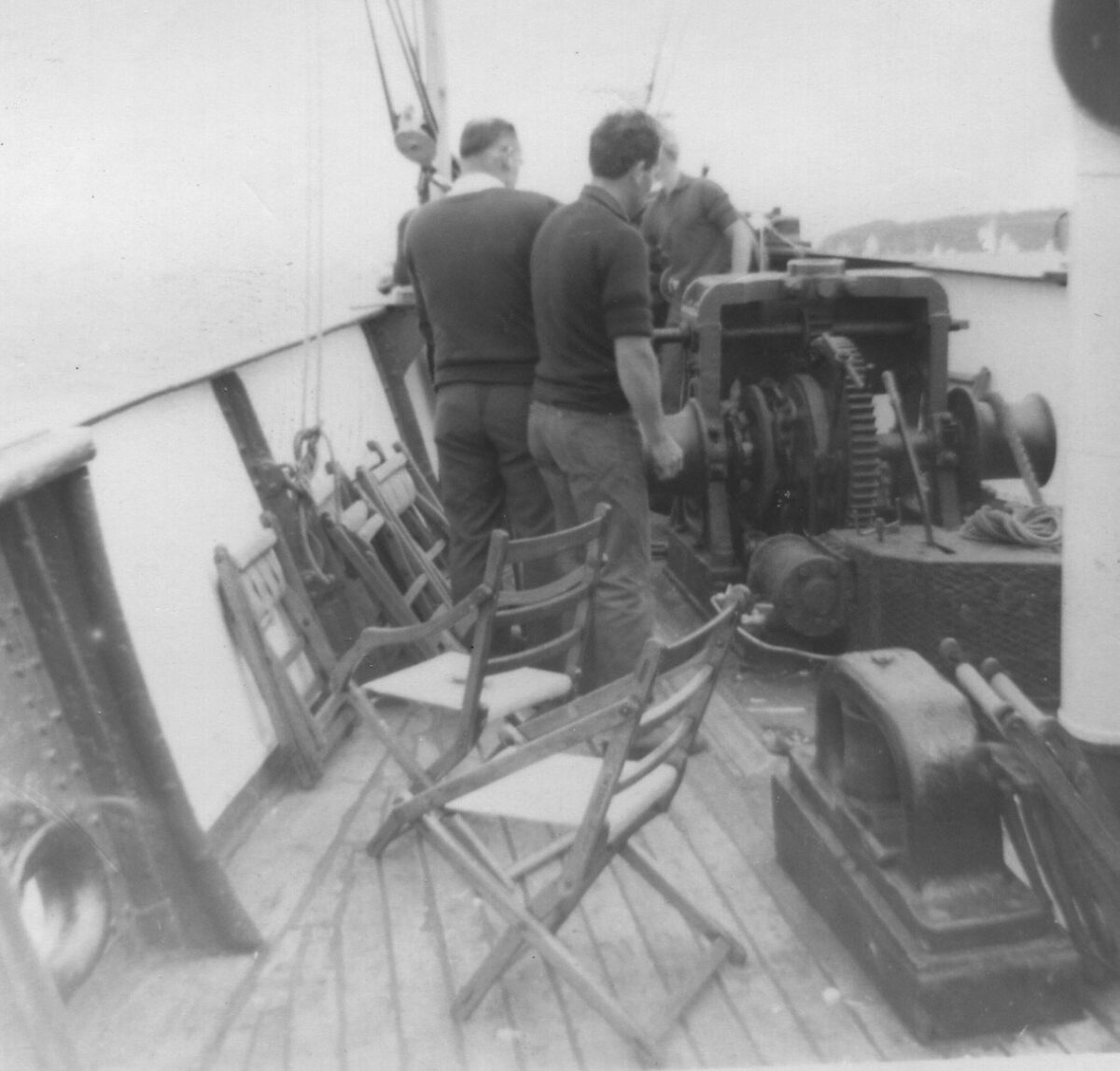
It was such fun watching everything. I had never seen a ship drop anchor before this day on Embassy when, having landed passengers at Cowes, we anchored in the Roads to watch the yachts fly by in the regatta.
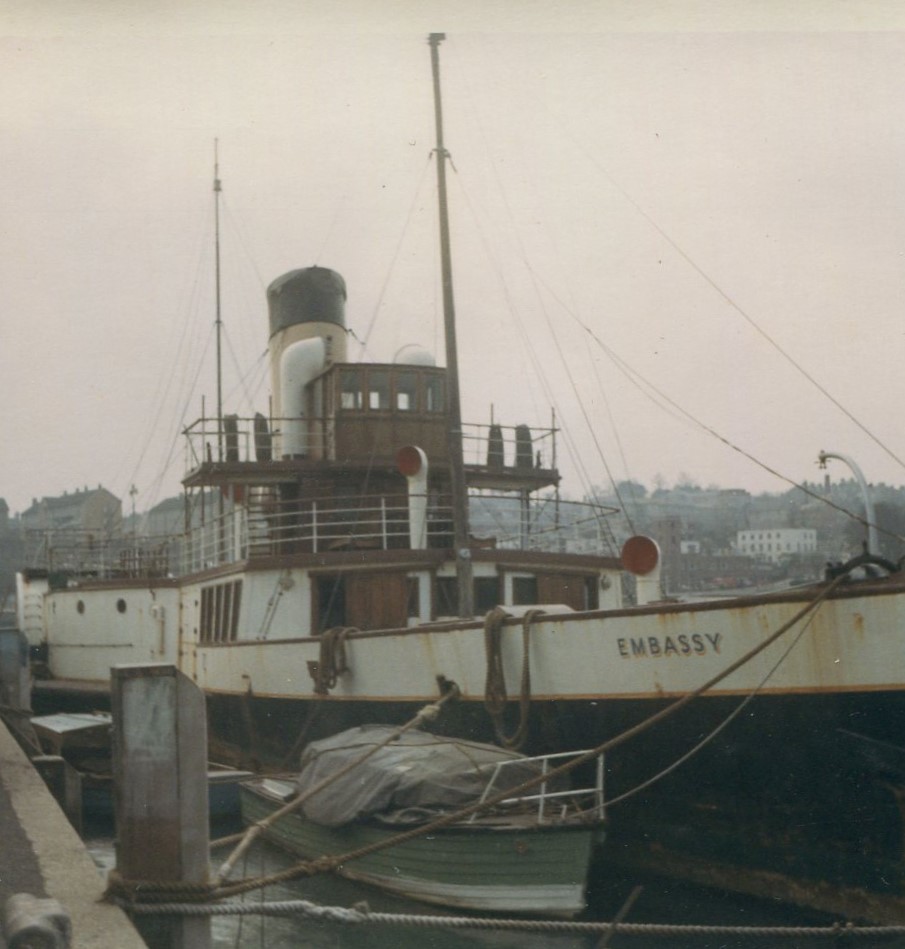
Here are a few colour pictures of Embassy in her last years from the PSPS archive.
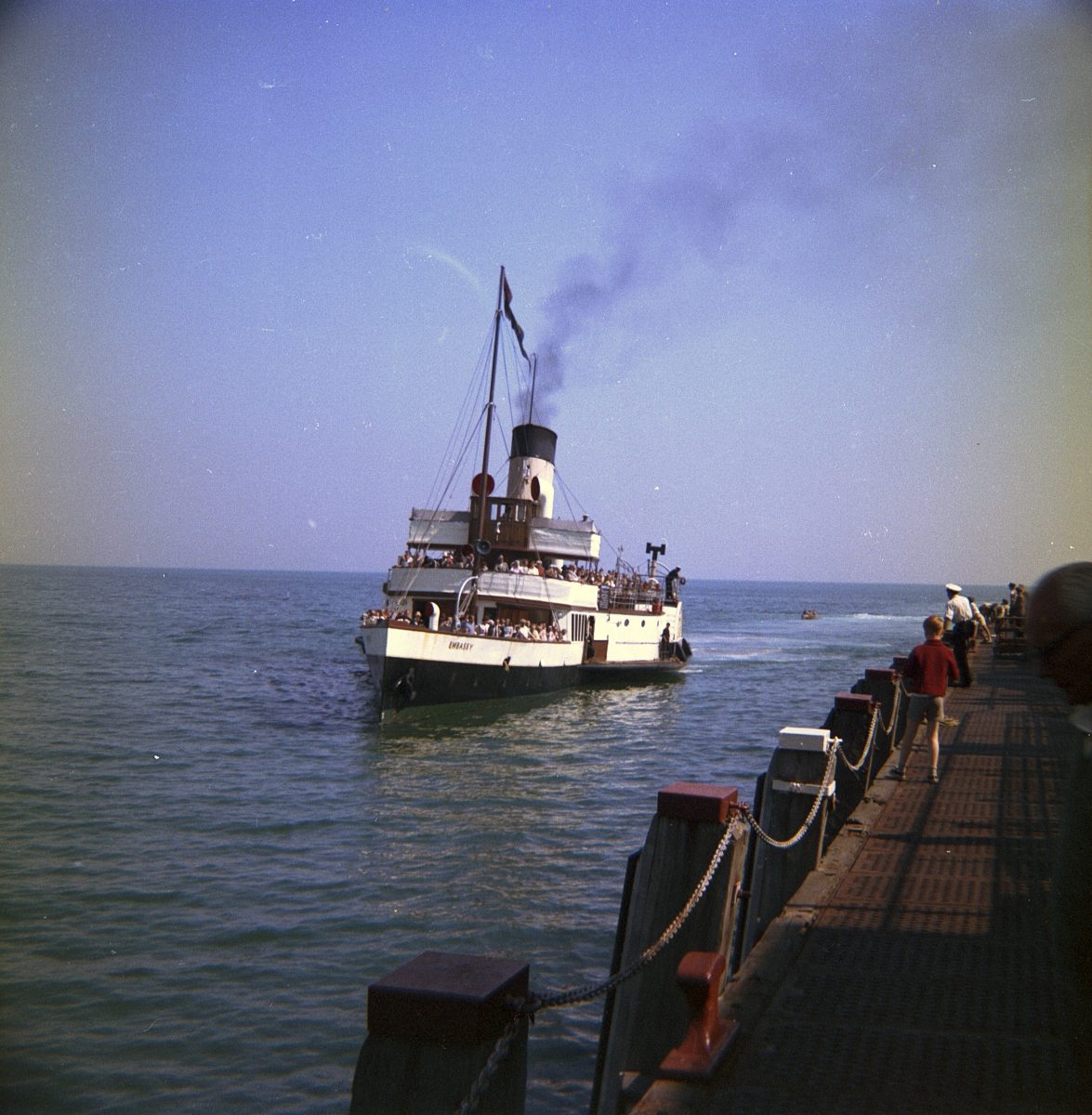
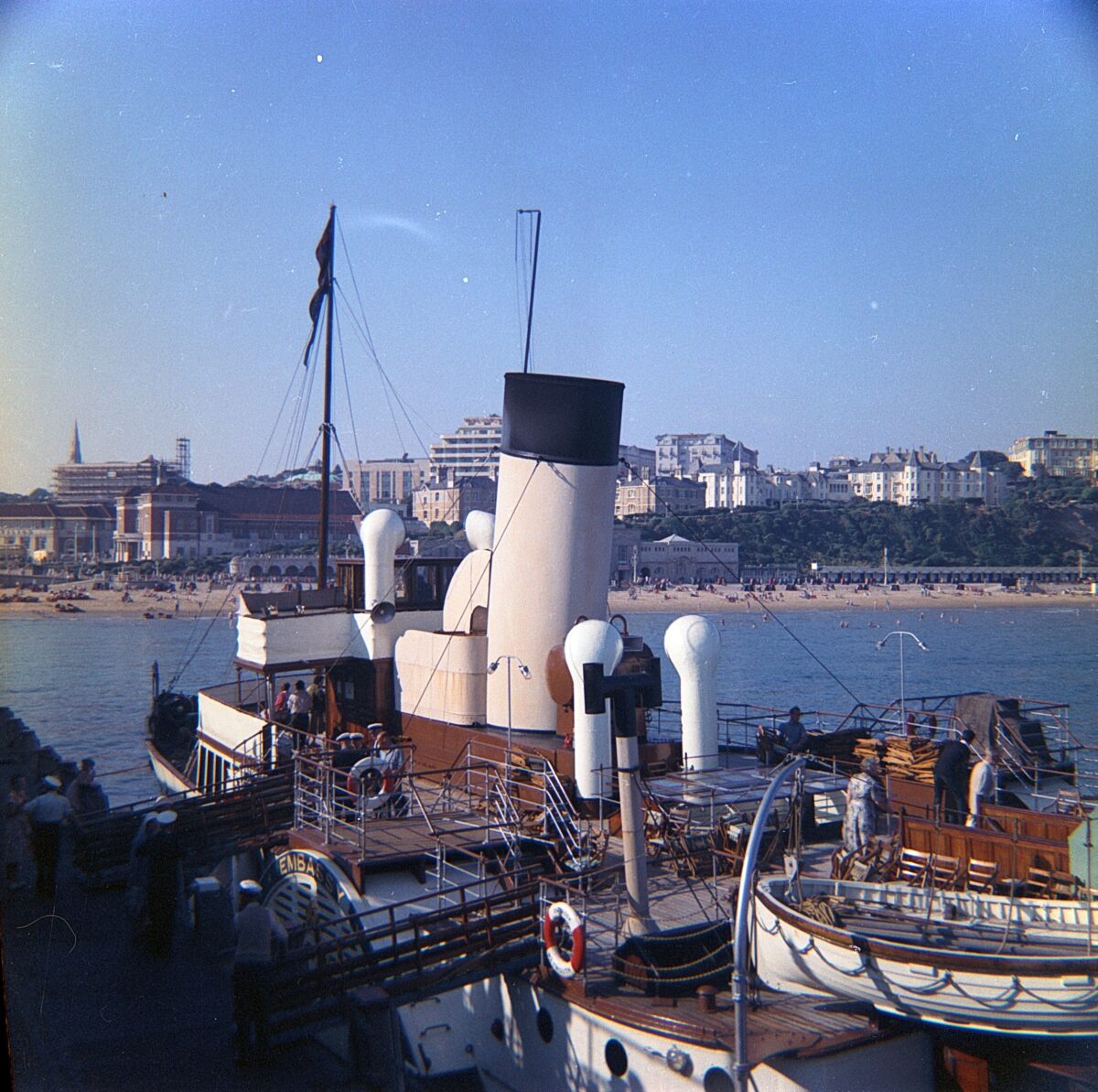
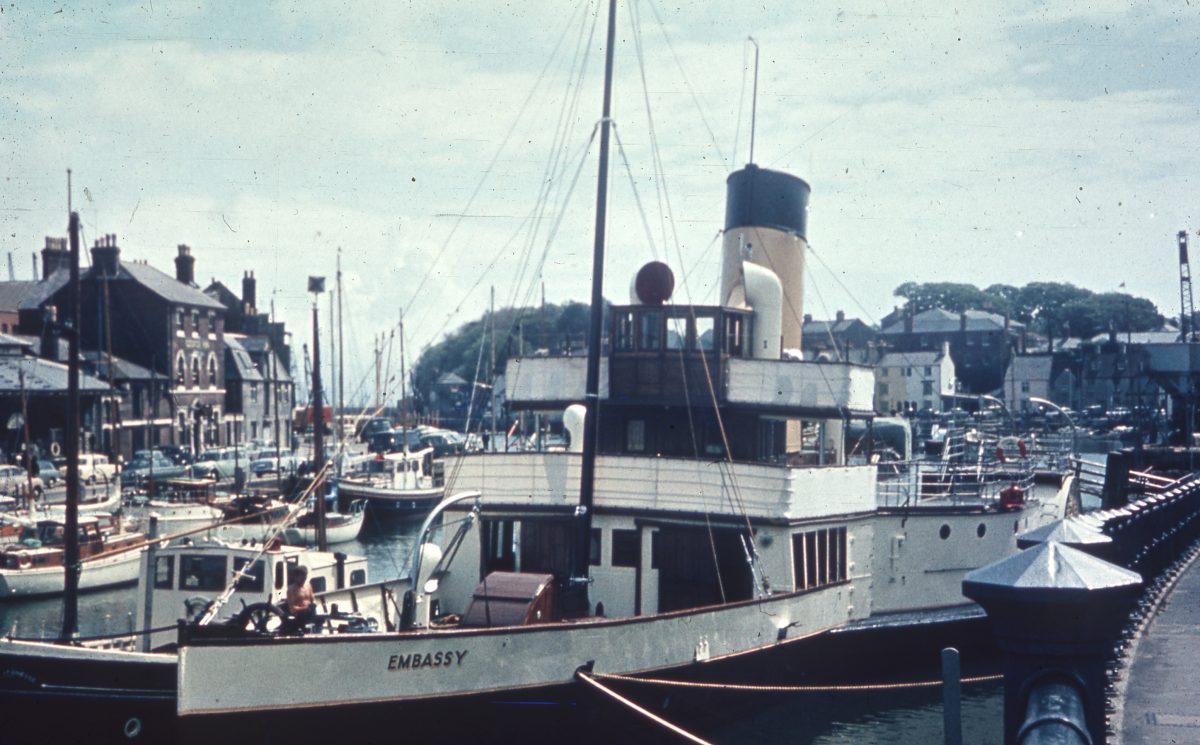
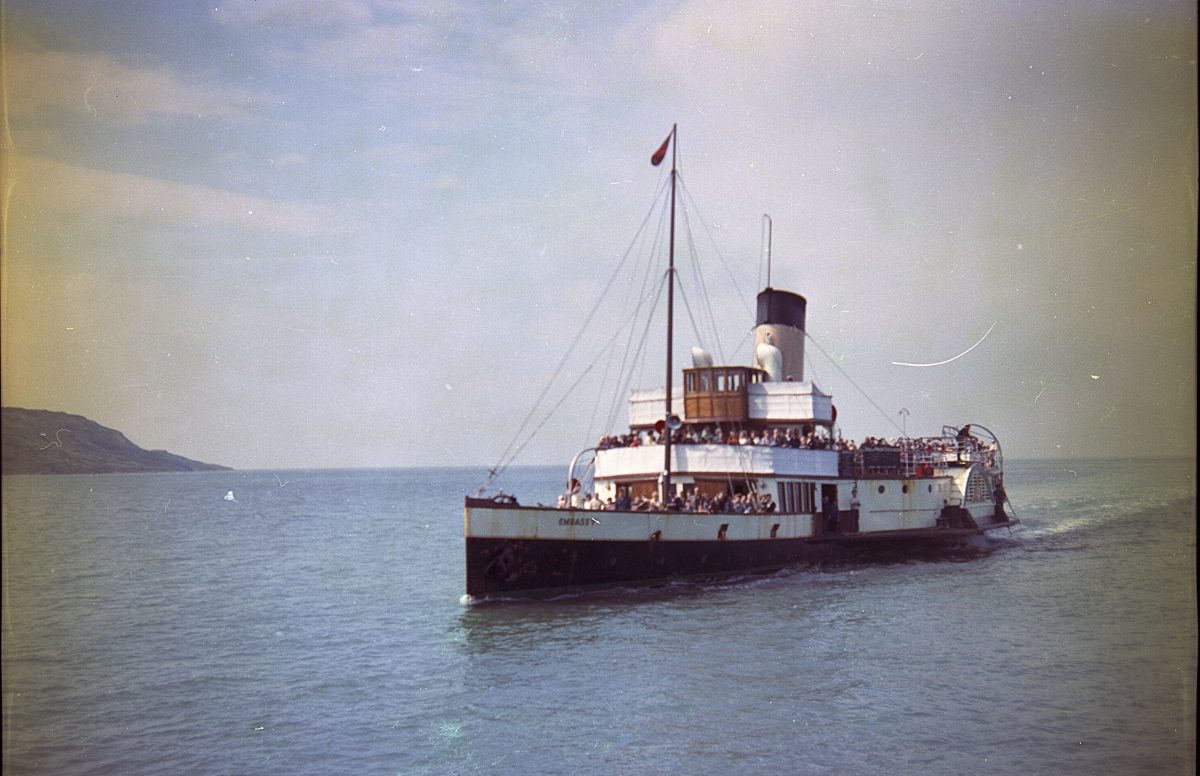
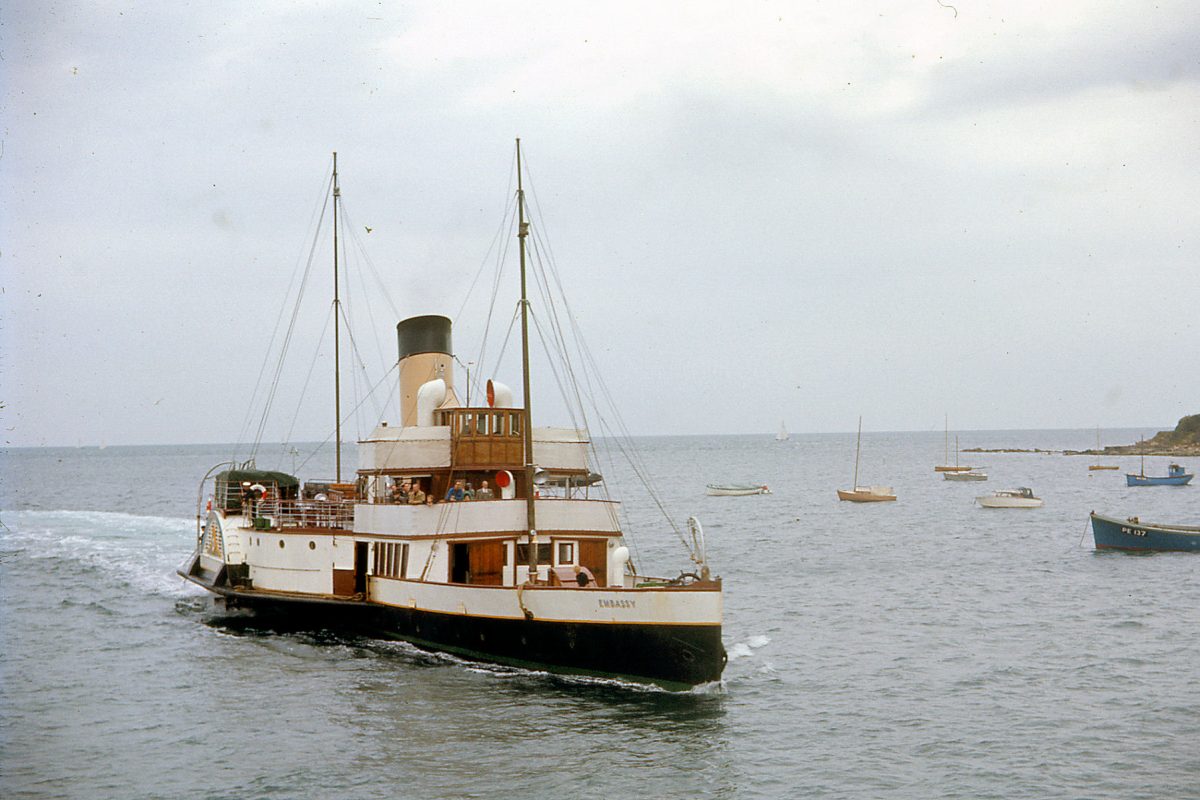
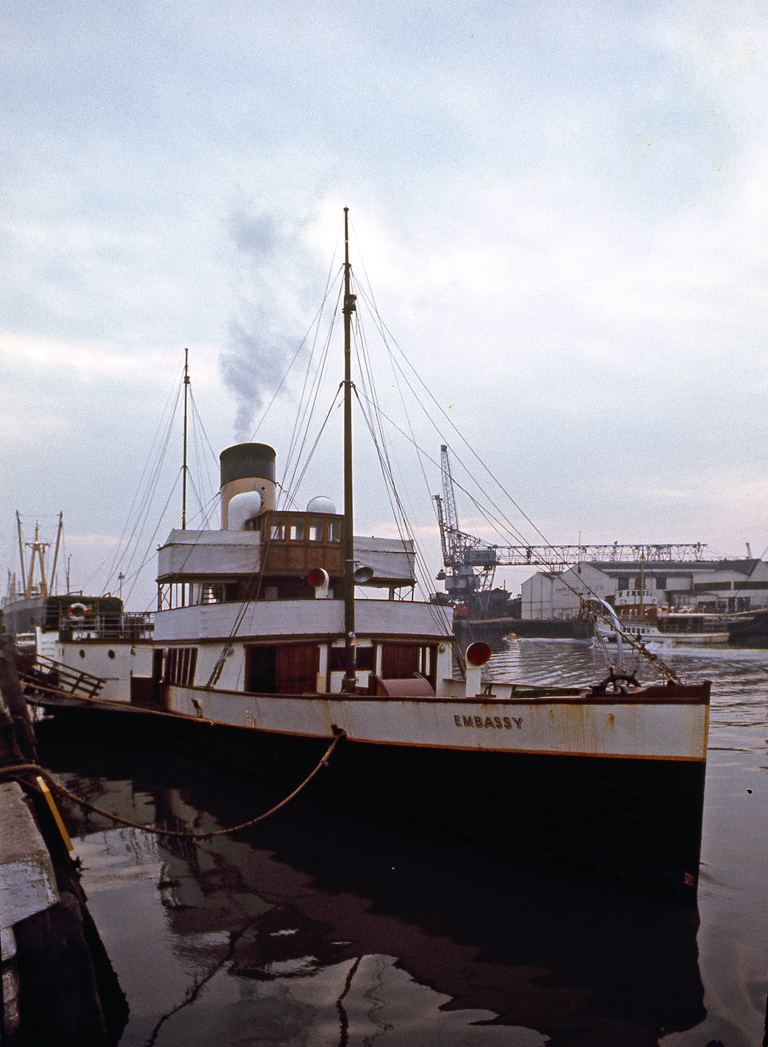
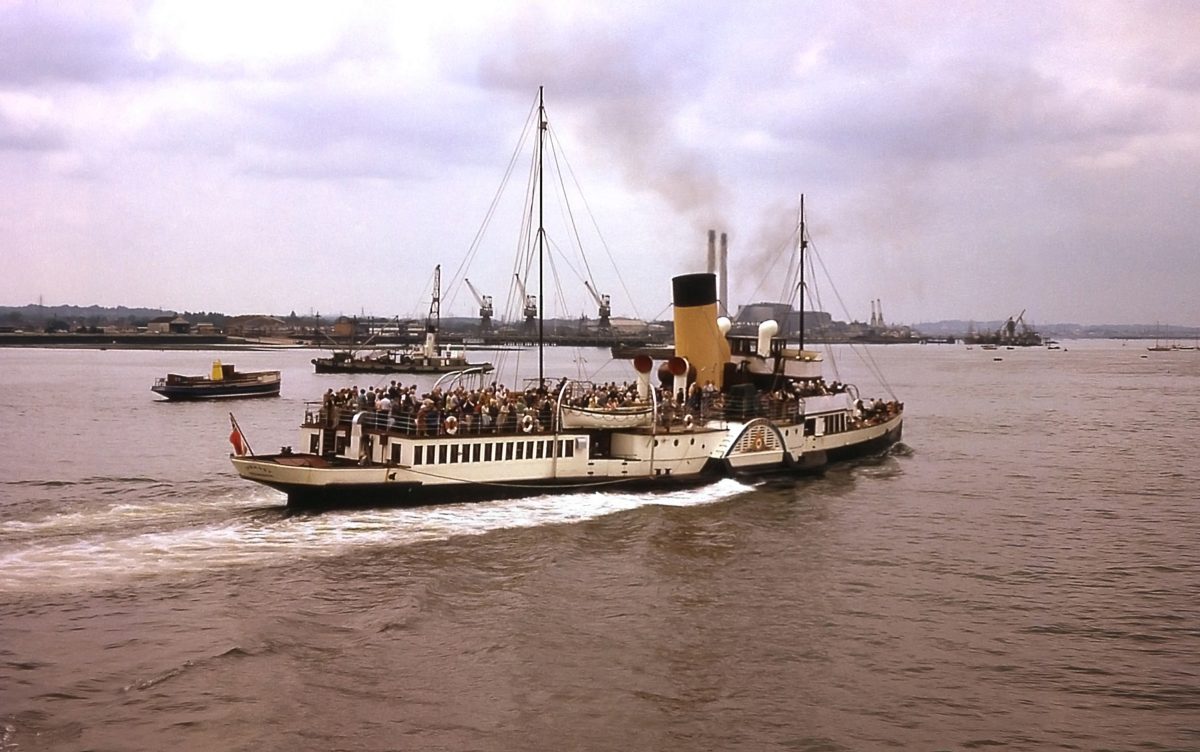
1966 and the End
1966 was not a good season. There was a national seamen’s strike, although Embassy had a dispensation to sail. The weather was poor. Then on 28 July, while doing an emergency stop for a yacht off Milford‑on‑Sea, one of the arms of the port paddle wheel fractured. Embassy anchored and was later towed back to Poole. A repair was made and she returned to service, but falling passenger numbers and poor weather compounded the difficulties — not helped by the sinking of the unlicensed passenger boat Darlwyne on 31 July in Cornwall, which drew lurid and often ill‑informed media comment. Embassy finished her season on 22 September and was put up for sale through Tony McGinnity’s agency.
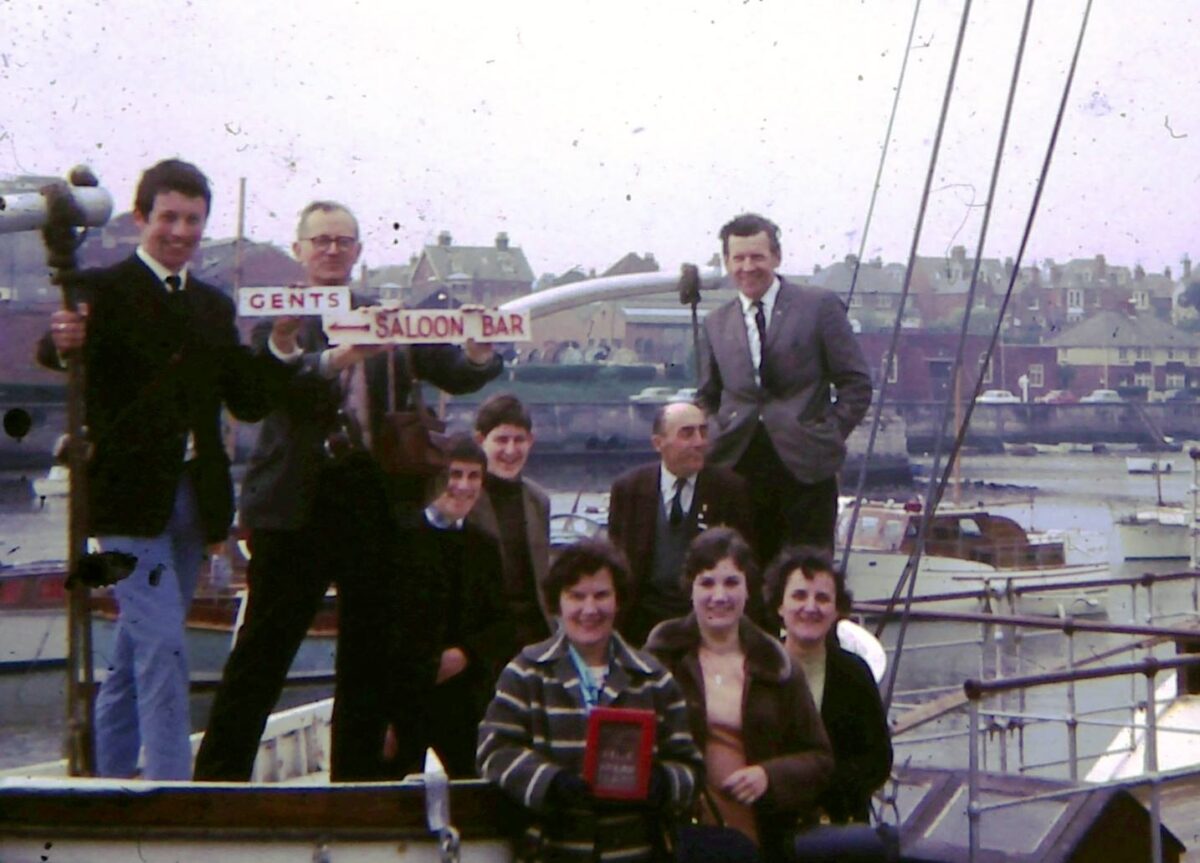
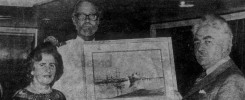
The PSPS visited Embassy in the Backwater at Weymouth shortly before she left for the scrapyard in Belgium in May 1967. This photo shows Richard Green, who was in the same year as me at Weymouth Grammar School, and Peter Lamb, whom I had got to know through Mrs Pritchard and the Wessex Branch meetings. Jack Surfleet sometimes gave me a lift to PSPS meetings in Bournemouth.
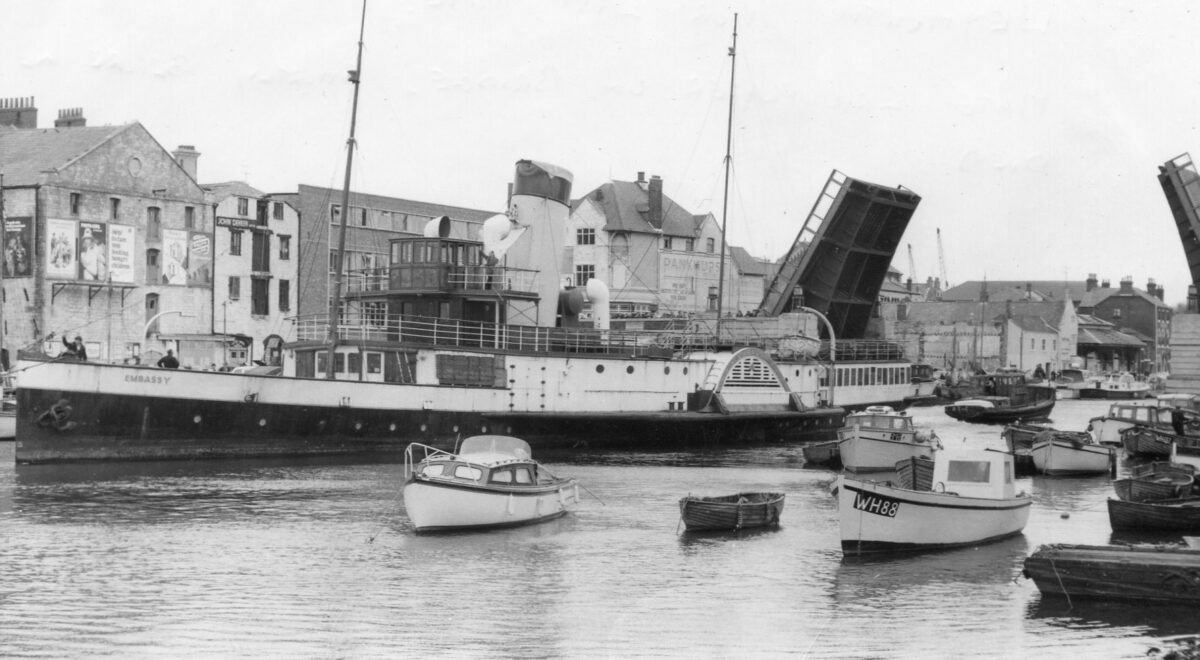
On the bridge, in command for her last tow through the Town Bridge, was her last Chief Officer, Eric Plater. He joined Cosens after the war and very sadly died in the summer of 1967 aged 56, at what should have been the height of the Bournemouth season.
Her last Chief Engineer, Alf Pover, died in a fire at his home in Weymouth in 2005 aged 90.
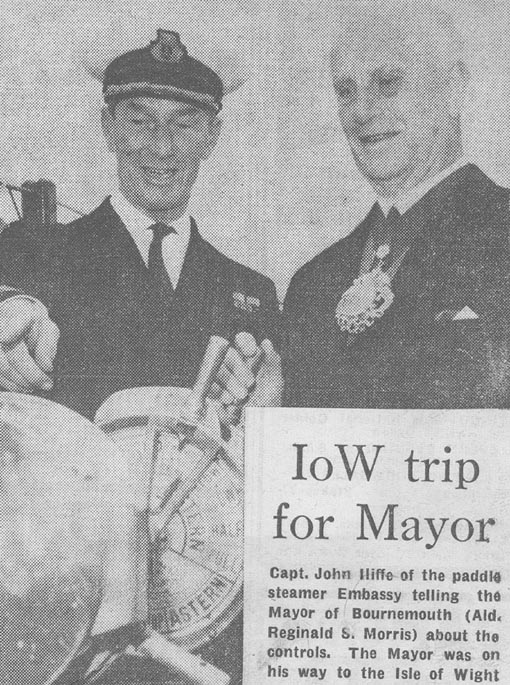
Her last master, Capt John Iliffe, died in 2002, also aged 90.
I was fifteen when Embassy was withdrawn. She played a huge part in my childhood, as she did in the lives of so many others over her long career. I even built a ramshackle backyard replica of her, complete with a real engine‑room telegraph bought in a second‑hand shop in Weymouth with my pocket money. I added a chart table, charts, and a book on coastal navigation and taught myself how to use them. It was Embassy that fuelled my interest in all things nautical. Without the propulsion she gave me, I might never have spent so much of my later life with another paddle steamer not a million miles from this parish. So thank you, Embassy. You may be long gone, but you are not forgotten.
Kingswear Castle returned to service in 2026 after the second part of a major rebuild which is designed to set her up for the next 25 years. The Paddle Steamer Kingswear Castle Trust is now fund raising for future rebuilds. You can read more and how you can possibly help here.
John Megoran