Among the Weymouth Channel Island officers of the post‑war years, Capt Escudier was not one of the loud ones. He was one of the steady and highly competent ones — the kind of man a fleet quietly depends on.
Arthur John Escudier was born in 1918. He went to sea in 1934 serving with the Royal Fleet Auxiliary. He married Mary Morse in Cardiff at the height of the war in 1943. By the 1950s he was looking for a job where he could be close to home to start and help bring up a family.
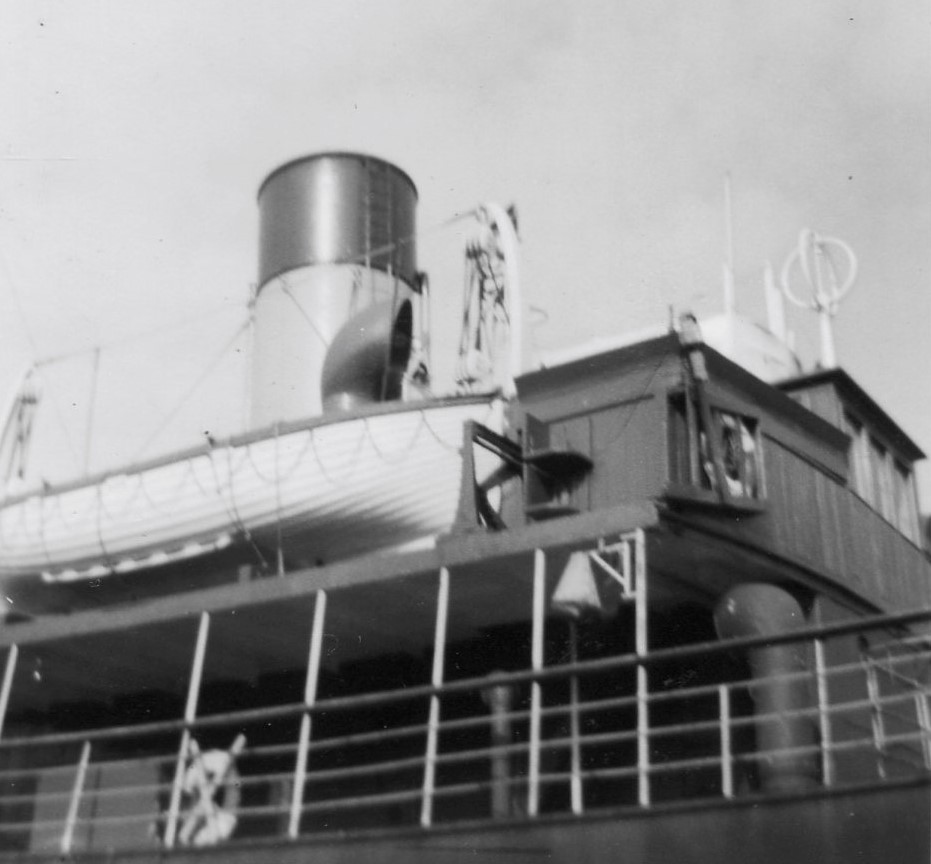
He applied to join the British Railways Weymouth Channel Island service and was appointed second mate of the cargo ship Roebuck in 1954. His early years at Weymouth were not without incident — one of them involving a pair of trousers, a wandering youth, and the local magistrates’ court (see Tiny Point of Detail 1 below).”
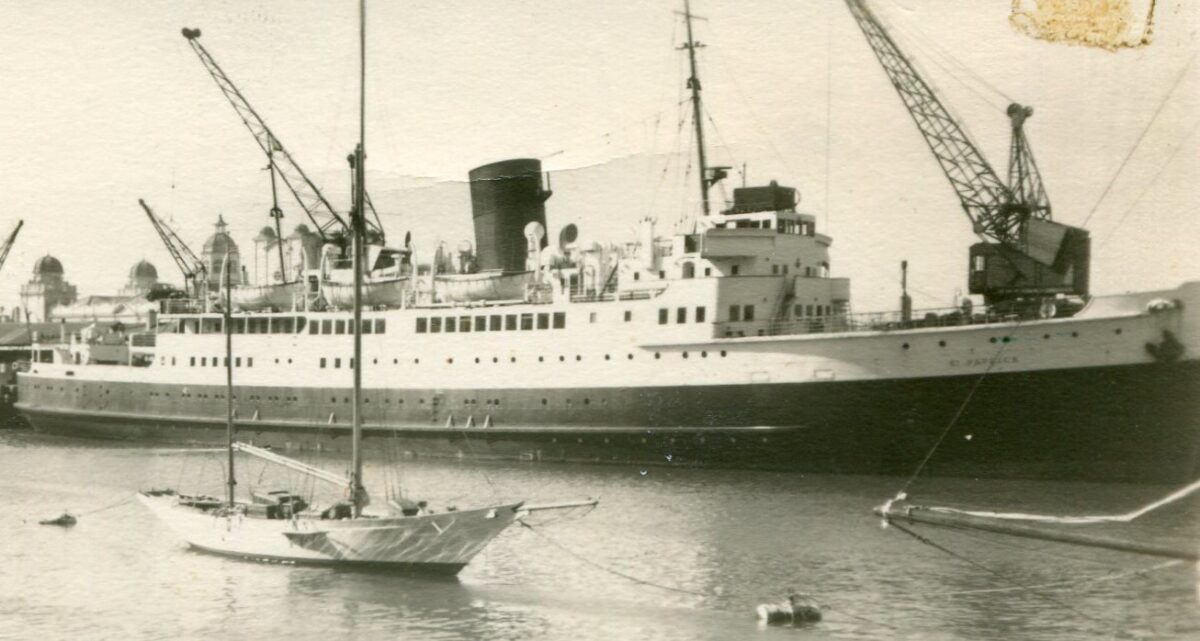
At that time the Railways fleet at Weymouth comprised three mail boats: St Patrick (1948), St Helier (1925) and St Julien (1925) plus the cargo ships Sambur (1935) and Roebuck (1925) augmented from time to time by one or other of the Southampton based Railway ships and other tonnage chartered in to help with the cargo at really busy times like shifting Channel Island tomatoes, potatoes and flowers.
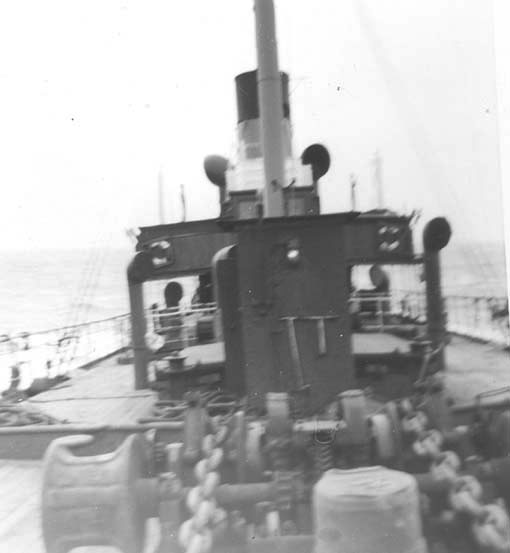
Whatever their rank with their previous employers, new entrants to the railway service started as second mate on the cargo ships and progressed to second mate on the mailboats, then mate on the cargo boats, mate on the mail boats, relief master on the cargo ships, relief master on the mail boats and finally permanent master on the mailboats. How long this progression took depended very much in waiting on dead men’s shoes. Some hit it lucky and were made up early. Others were not so lucky and the years rolled on and on before they gained any significant promotion.
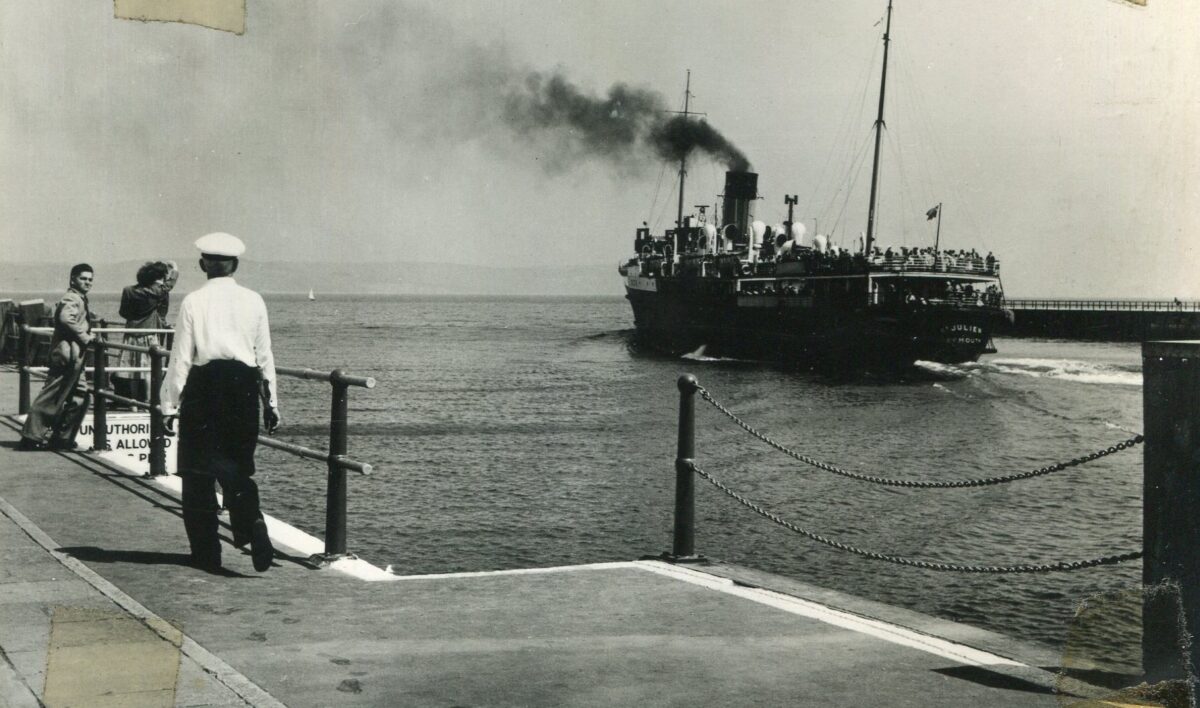
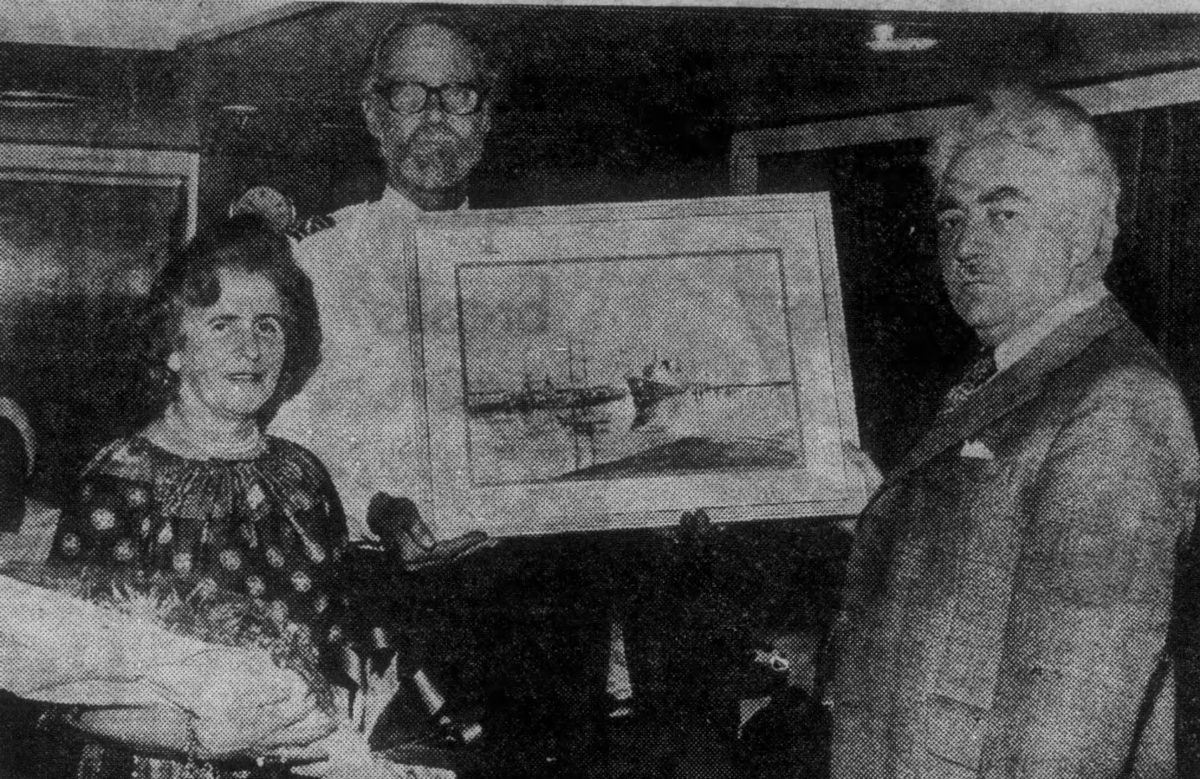
We know that Arthur had become a mailboat mate by 1960 from a report in the Dorset Echo of the last voyage of the St Julien. Next to a picture of her master Capt Goodchild there is one of Arthur with the comment next to it that “masters need people they can trust. People like Chief Officer Arthur Escudier.”
Then as the 1960s progressed prospects for promotion were on the wane. In 1963 St Patrick was transferred first to Southampton and then to Dover. In 1964 Sambur was sold for scrap and then Roebuck to a similar fate the following year. And, with a major cargo contract lost to Commodore Shipping, those two were replaced at Weymouth by just one: Winchester transferred from Southampton. For ambitious officers like Arthur, this contraction meant years of stalled promotion and the constant fear of redundancy.
In 1960 the Weymouth railway fleet numbered five ships. By 1965 that was just three. It was even worse at Southampton where the railway pulled out of all passenger services to the Channel Islands, Le Havre and St Malo. Some of the officers transferred elsewhere in the railway fleet particularly to Newhaven and Dover. Many more were made redundant. The last three Southampton masters: Captains Caws, Picot and Creed transferred to Weymouth in 1966, coming in above Arthur in the pecking order as they were already masters. However they did bring the last two Southampton cargo boats Elk and Moose with them. So the Weymouth fleet was now back up to five ships.
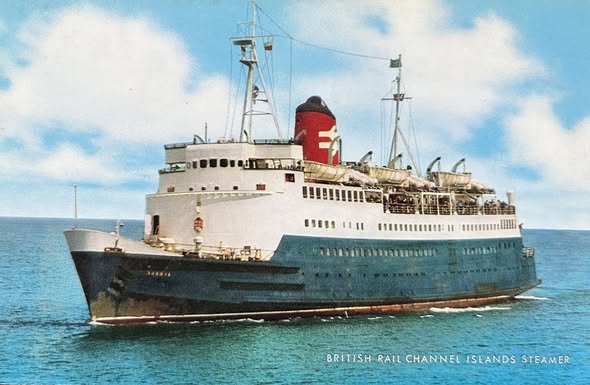
I first met Arthur in 1967 when I got a summer job in my school holiday as a deck boy on the Sarnia. Then her permanent master was Capt Harry Walker relieved by Capt Byron (Bernie) Caws and occasionally by Capt Bernard Picot all of whom had joined the railway service just after the war. For 1966 there was an increase in the frequency of the mailboat service with overnight sailings being rostered on Wednesdays, Fridays and Saturdays and that brought promotion prospects as more crew were needed to cover the extra sailings.
The officers worked two trips on and one trip off. Because the roster was tight and seniority finely balanced, Arthur alternated between mate and second mate depending on who else was available. As he had been with the railway for more than ten years by this time and was seen as master material usually when he was sailing as mate Capt Walker let him get in practice at taking Sarnia away from the the berths. So one trip he would be on the bridge tweaking the telegraphs. The next he was back aft in charge of the mooring gang.
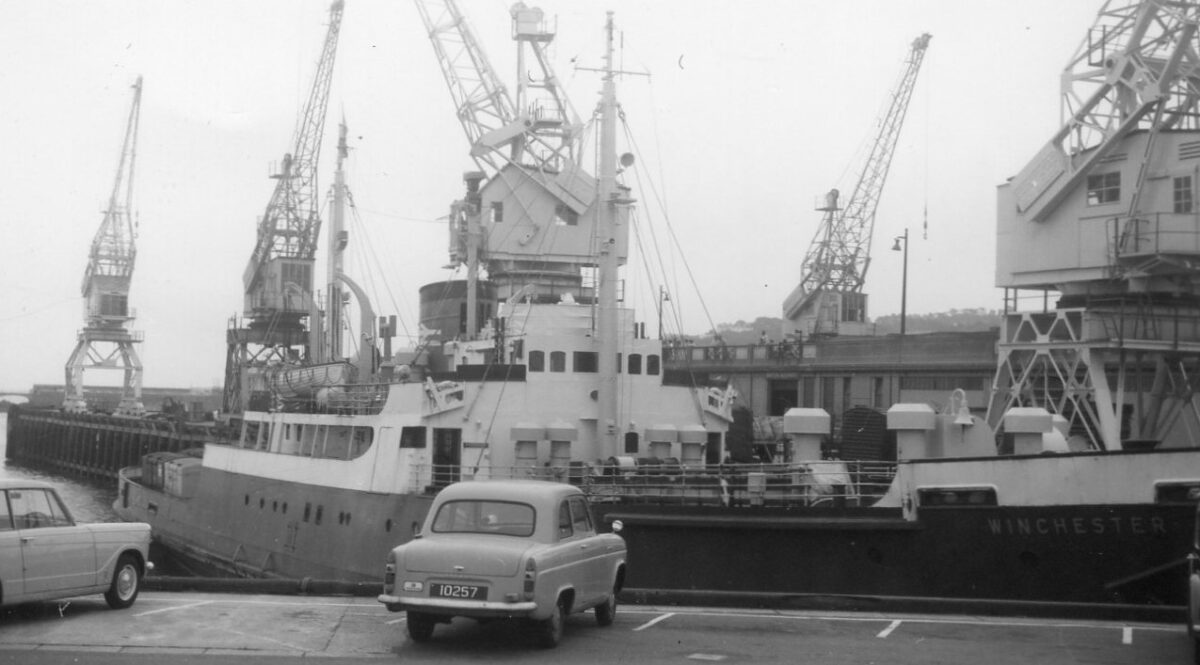
Arthur gained his first command filling in as relief master of the Winchester in May 1968. Between spells back as mate on the mailboats he commanded various other cargo ships in the fleet including the Selby and Colchester, which were brought in to provide extra capacity when needed, and were said to have been a bit of a handful in the confined waters of the harbours as they were single screw.
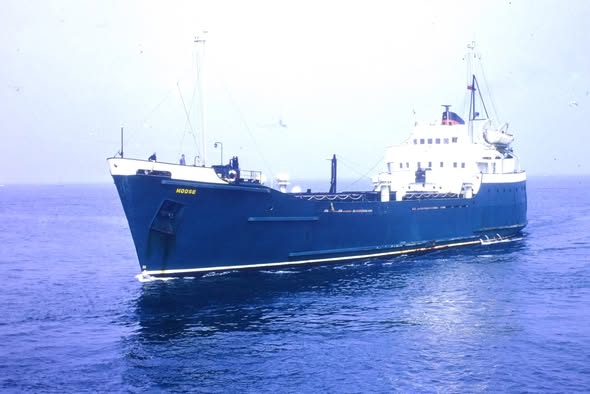
in 1972 he became master of the Moose. The mailboats could carry only a few cars craned aboard so as the market expanded for people wanting to take their cars with them for their holidays to the Channel Islands the Moose effectively became the islands’ car ferry before the introduction of roll on/roll off. Passengers went on the mailboats. Their cars, craned on and off, went on the Moose.
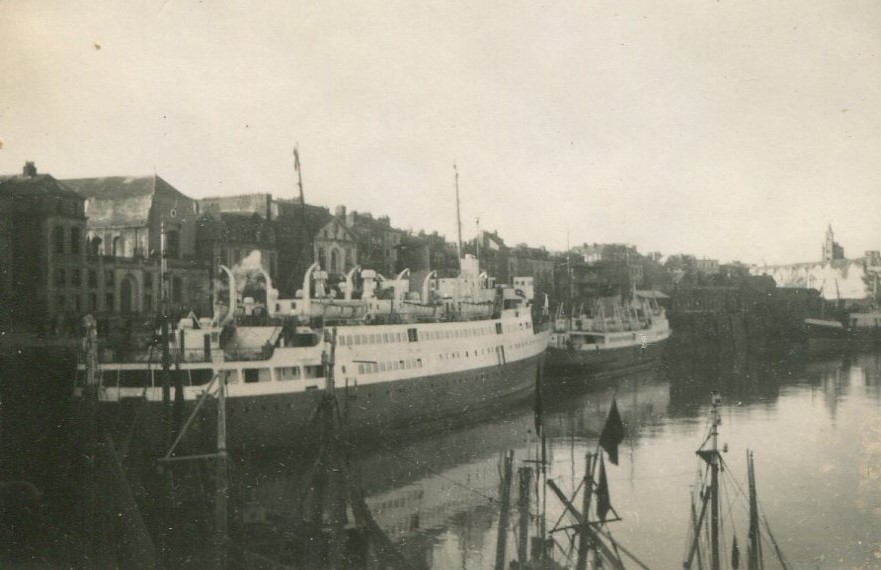
Then it was all change. In 1973 Falaise was brought in to start a new roll on / roll off car ferry service between Weymouth and Jersey. In 1974 Maid of Kent arrived to open a new car ferry service to Cherbourg. And in the same two years, five of the most senior Weymouth masters retired leaving the way open for lots of promotion both for those who had been waiting for years and also those who had joined more recently.
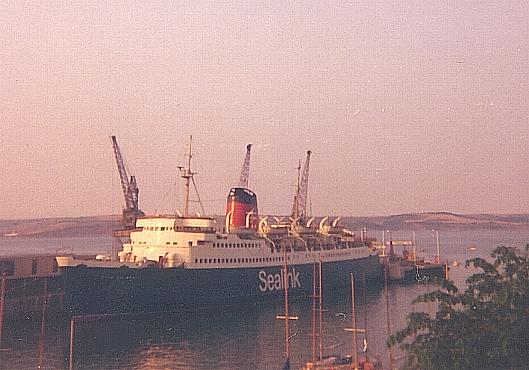
From 1975 Arthur became permanent master of Maid of Kent. She only ran in the summer so he sailed as master on other ships in the winter but he liked the Maid of Kent. And her service: away from Weymouth 10am, Cherbourg 2pm – 3pm with return to Weymouth for 6.45pm suited him. He used to say “Back just in time to watch Coronation Street”
After being promoted master, ships Arthur commanded in the fleet included Elk, Moose, Winchester, Colchester, Selby, Jersey Fisher, Falaise, Sarnia, Caledonian Princess, Earl Godwin and Maid of Kent as well as strangers to the port Maid of Orleans, which he collected from Folkestone, and Lord Warden on their brief visits.
He retired in October 1979. to live with Mary in a flat in a block called Compass South in Rodwell with a view looking out from their balcony onto Weymouth Bay and the Dorset Coast he so loved. He belonged to that generation of Channel Islands officers who carried the service through one of its most turbulent decades — steady hands in a world that changed beneath their feet.
Footnotes from a Life at Sea
Tiny Point of Detail 1: Almost immediately after joining the Channel Island service Arthur hit the news in a bizarre incident involving a pair of his uniform trousers. In those days there were no fences and gates around the cargo working stage at Weymouth. The shore gangway was rigged right next to the officers’ cabins on the deck of Roebuck. A 19 year old Irishman from Liverpool, chancing his luck, sneaked aboard, opened the first door he came to, which was to the second mate’s cabin, spotted a pair of trousers on the settee and promptly made off with them. He was chased, caught and found himself in the local court the next day. The youth, John Alcock, was of no fixed address and was said to have done casual work up and down the country. Inspector Goodchild for the local police said that “He lived in hostels and wandered about the country. He had nowhere to go and was a man to be somewhat pitied.” He was discharged on condition that he stayed in a hostel in Beaminster while a probation officer tried to find somewhere for him to work.
Tiny Point of Detail 2: I remember Arthur telling me that he started taking lemon in his tea when he was mate of the St Julien. In the days before fridges became universal they sometimes had an issue keeping the milk fresh.
Tiny Point of Detail 3: I also remember him saying that he planned to retire when he was sixty. In one sense the Channel Islands trade had a lot to commend it to Merchant Navy officers. But it could be stressful. In and out of difficult ports multiple times every day. Getting up in the middle of the night in the middle of January when it is freezing cold with driving rain to berth in Weymouth, St Peter Port or St Helier. And traversing one of the busiest shipping lanes in the world with each and every crossing in the doing of it. Sometimes there might be few if any ships to negotiate and avoid. Sometimes the shipping lanes could be chock-a-block for miles on end. And whilst the railway ships could of course use the engines to slow down if absolutely necessary this was to be avoided in a steam ship where possible as slowing down not only involves changing the engine speed but also damping the boilers to prevent the safety valves from blowing off. No officer of the watch wanted to hear the noise of that waking the captain from his nocturnal slumbers.
Tiny Point of Detail 4: He was master of the Falaise in 1974 when she broke down and had to be withdrawn causing a certain amount of passenger irritation. I remember watching him take her away from the Cargo Stage at Weymouth for the last time in August 1974. He gave the lanyard a tug to sound the whistle and nothing happened. The engineers had forgotten to open the valve on the boiler to put steam on it.
Tiny Point of Details 5: In March 1978 I took myself off on a trip from Weymouth to Cherbourg as a passenger. It should have been on Maid of Kent but she was late back from her refit so it was taken by Lord Warden, drafted in from Dover, instead. Arthur was her master. Walking around the deck he recognised me immediately, smiled and invited me up onto the bridge. Two things he said that day stuck in my mind. When we were coming back into Weymouth at the end of the trip he said to the helmsman “Tell me immediately if you can’t steer”. Weymouth then, and even more so now, doesn’t have much water at the bottom of a low tide for a ship with a 15ft draught. When a ship starts to run out of water and sniffs the bottom it looses steerage and wanders off any which way it wants. Arthur wanted to know if that started to happen before it spiralled into real difficulty. And after unloading, Lord Warden needed to vacate the berth to make way for the Channel Island car ferry later in the evening. I remember him saying “I am not taking her up the harbour. She hasn’t got a bow thrust. If we get her up there we will never get her back out without a tug. We will go out and anchor in the bay instead.” And there was the practical mariner who knew about ship handling. He knew what the ship could do and what it couldn’t in a harbour he had known intimately for twenty five years.
Tiny Point of Detail 6: Among the hundreds of thousands of passengers he carried during his twenty‑five years on the Channel Islands service there was the occasional famous face. One photograph shows him on the bridge of Maid of Kent with the French singer Sacha Distel, who was crossing from France to the UK.
Tiny Point of Detail 7: Arthur and Mary raised their family in Weymouth; one of their sons, Tim, even made several appearances as a footballer playing for the Terras’ Southern Premier League in the early 1970s — a small point of pride in a household already steeped in the rhythms of the town.
Tiny Point of Detail 8: I liked Capt Escudier. He was a genial man who had a quiet dignity about him. I was sorry to hear that he had died in 1998 aged 80.
Kingswear Castle returned to service in 2026 after the second part of a major rebuild which is designed to set her up for the next 25 years. The Paddle Steamer Kingswear Castle Trust is now fund raising for future rebuilds. You can read more and how you can possibly help here.
John Megoran