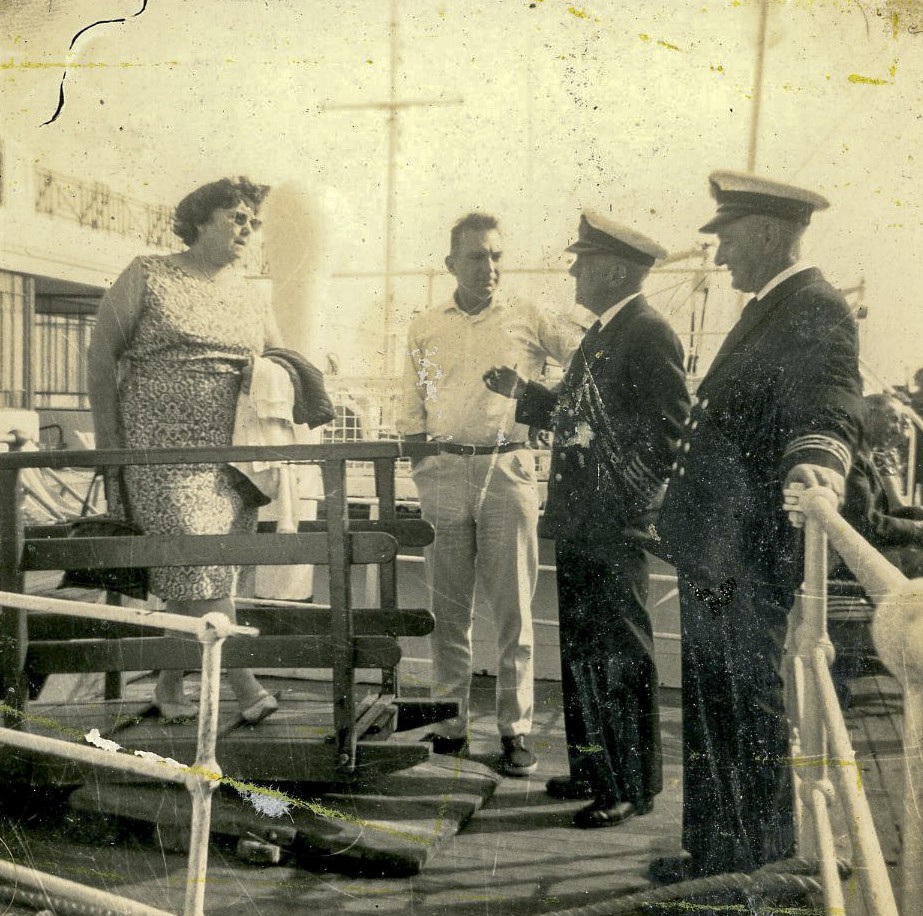
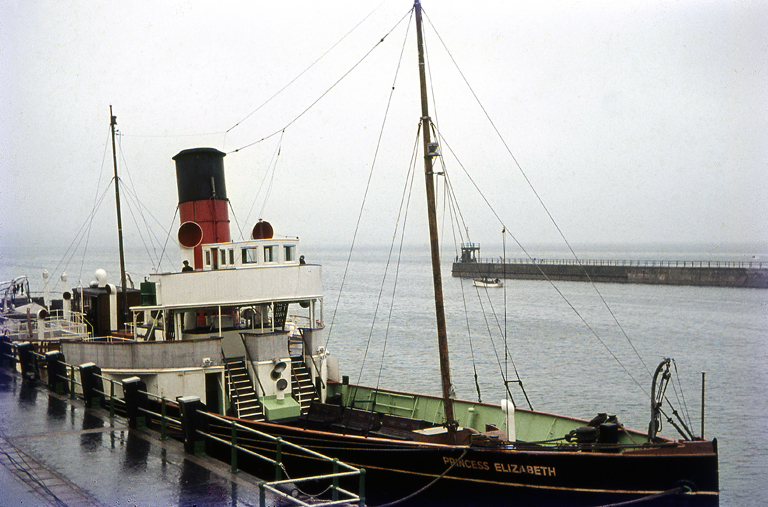
Note the eau de nil green paint. This was around the time that surgeons started to wear green gowns in operating theatres allegedly because it was a more soothing colour on the eyes. Capt Defrates noticed this and introduced this pale green paint for the bulwarks around the insides of the foredecks on both Consul and Princess Elizabeth in the 1960s allegedly as it was more soothing on his eyes on bright sunny days looking down from their bridges.
Capt Defrates was a lovely man and and a great supporter of paddle steamers. He has been well chronicled in these pages so today let’s take a closer look at the careers of the other two in the picture: Ken Moore and Fred Miller.
Ken was the son of Capt Pony Moore who was a master with Cosens from the early 1930s.
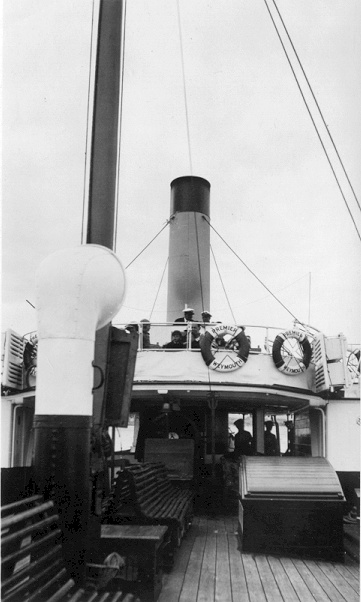
His first command Premier hit the national press when struck by a submarine in the North Ship Channel of Portland Harbour in June 1932 in which incident she was seriously holed on the starboard side near the bow. She was going in. The submarine was coming out. Bang! The damage was forward of a bulkhead which fortunately held and Premier made it back to Weymouth and was put on the Cosens’ slipway for repairs. Capt Moore also seems to have survived the altercation as he remained a master with Cosens and went on to command Victoria, Consul, Embassy and for a short period in the early 1950s, when Capt Rawle was ill, Emperor of India.

When Emperor if India was withdrawn at the end of the 1956 season there was a rearrangement of Cosens’ captains and mates and one of each of them had to go.

Capt Rawle moved onto Embassy. Embassy’s master Capt Haines moved onto Monarch and Monarch’s master Capt Defrates moved onto Consul.
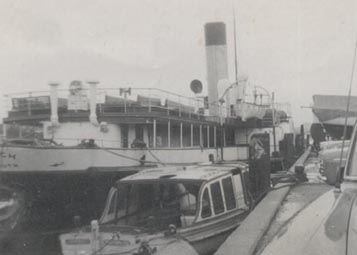
Consul’s Capt Moore drew the short straw and retired. To keep himself busy he bought Cosens’ 50 passenger motor launch Topaz which he ran, with his son Ken as crew, from a pitch near the end of the Weymouth Pleasure Pier on one hour trips to view HM Ships and Merchant Shipping in Portland Harbour .
Capt Moore stood in the bow of Topaz, which is where the wheel was, and communicated the engine movements he required to his son Ken who sat next to the engine back aft by ringing a bell. One ding stop. Two dings ahead. Three dings astern. That sort of thing. I can remember the pair operating Topaz when I was a little boy and being intrigued by this rudimentary but effective communication system. Topaz was very well turned out at that time and had a canvas dodger in the bow to protect Capt Moore rather like those around the wings of the bridges on Cosens’ paddle steamers.
Capt Moore died in 1960 and Topaz was sold to former Cosens Chief Engineer and licensee of Weymouth’s Swan Inn Bob Wills. Ken became bosun on Princess Elizabeth from 1963 to 1965. For berthing he always took his position on top of the paddle box to throw the heaving line for the stern rope before coming down to attend to the gangway.
In 1965 I remember witnessing a conversation between the Lizzie’s master that summer in which Capt Woods was trying to encourage Ken to bring the crew out on strike for extra pay during a Bank Holiday weekend. I remember Ken saying that he couldn’t support that as money was tight and he wanted Cdr Rhodes, the owner, to increase his chances of bringing the Princess Elizabeth out next year so there might a be a job then. So there was no strike and no extra Bank Holiday pay. In truth by that stage money really was tight and quite insufficient to do the sort of major structural work which the ship needed to satisfy the Board of Trade for further operation after 1965.
In October of 1965 Ken joined Alfie Le Page, Capt Woods and me flying up to Glasgow to join Jeanie Deans for her trip round to the Medway. I bumped into Ken around the town from time to time after that and he he always stopped for a chat. I don’t believe that he went to sea again after that.
Fred Miller first appears on my radar as mate in a crew picture taken aboard Embassy in 1948 when by coincidence she was under the command of Ken’s father Capt Moore. Fred is not captioned in the picture but it is clearly him. How long he stayed on Embassy I don’t know but as the 1950s wore on and the Cosens’ fleet diminished so also did the opportunities for employment as mate. We know that in 1953 Embassy’s mate was a Mr Dixon so either Fred had moved to another Cosens’ paddle steamer by then or he had left the company. We know for sure that he wasn’t employed by Cosens after 1957.
Fred popped up next in 1964 on Princess Elizabeth. That season started with Stanley Woods as mate but he left early on after a dispute. With two paddle steamers running from Weymouth that summer they constantly had to shift ship from the main Pleasure Pier berth to the lay by berth just upstream of it. Capt Defrates usually delegated this to the mate. He wanted to use the engines for the move. Management didn’t want the extra costs that would incur so he was told to warp her along instead. He didn’t like that so he left. Capt Defrates remembered Fred from his days with Cosens. At that stage Fred was driving a Weymouth taxi so was in the vicinity and available. He joined the LIzzie for the remainder of the season as mate.
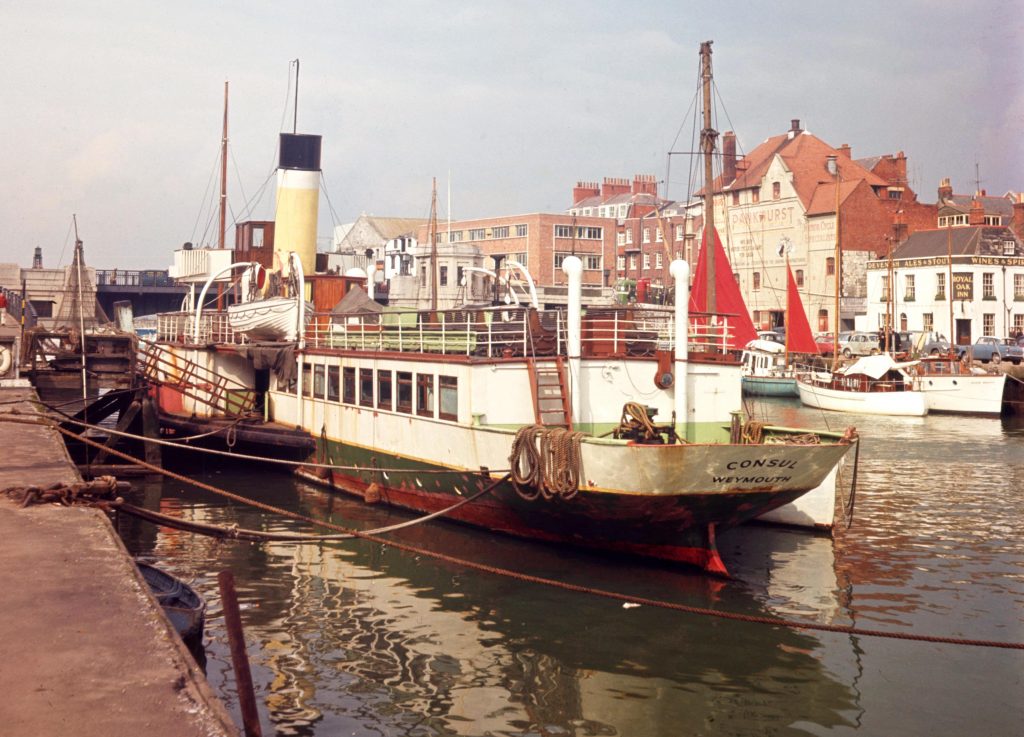
In February 1965 Tony McGinnity recruited Capt Defrates to steam Consul from Weymouth for a new life as a static base for a sailing school at Dartmouth. He once again recruited Fred as mate. Consul’s former engineer and owner of Topaz, Bob Wills, was the engineer for the trip.
Fred did not return as mate to Princess Elizabeth for the 1965 season. His place was taken by Arthur Drage, formerly mate of Monarch and Consul who had the Trinity House Pilotage Certificate for Weymouth and Portland, which at that stage Fred didn’t. Arthur was therefore of more use particularly given that Capt Woods, who Cdr Rhodes lured back to take command of Princess Elizabeth in 1965, had the pilotage for the Isle of Wight District but not the one for Weymouth and Portland. I remember Arthur one day that season being in a bit of a grump over his pay and pointing out that if he wasn’t there they would have to hire a pilot which would have been much more expensive.
Having run Topaz successfully after buying her from Capt Moore, Bob Wills joined forces with former Cosens’ apprentice Colin Horne, and initially Tony McGinnity, to buy Richard Bolson’s 150 passenger Bournemouth Belle which they renamed Weymouth Belle when the Princess Elizabeth was withdrawn after the 1965 season. They put her on local trips from Weymouth including to Portland Bill, Portland Harbour and Lulworth Cove from 1966.
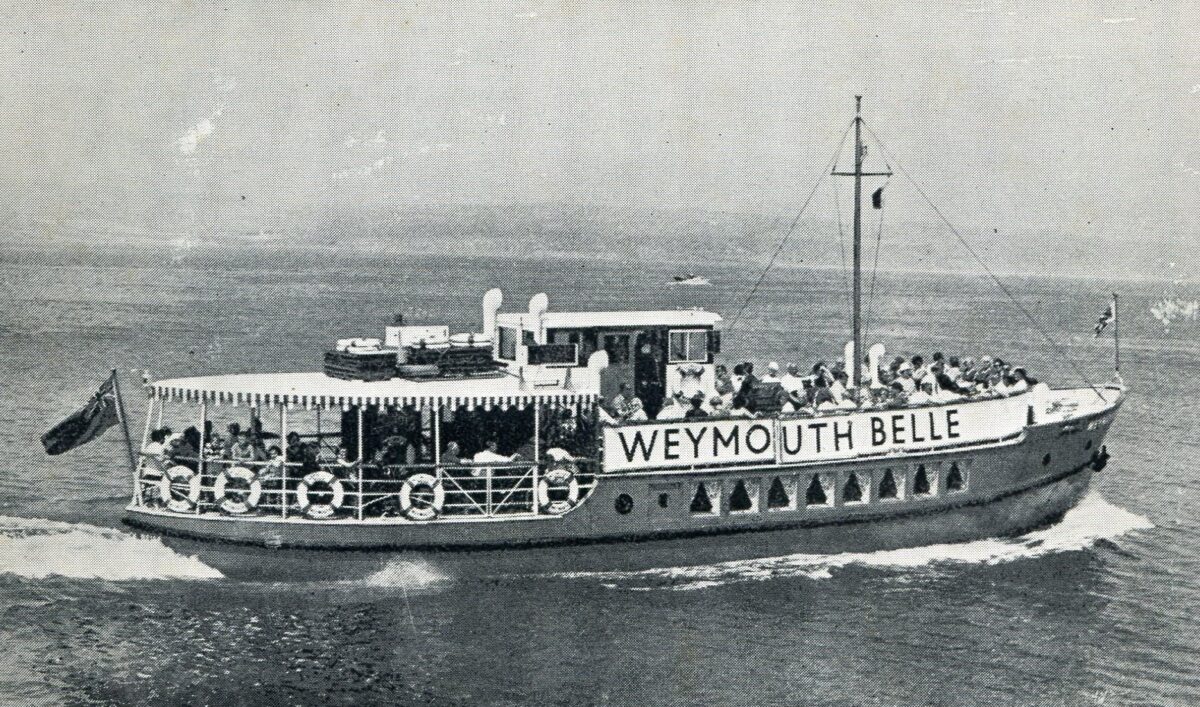
Her first skipper at the start of the 1966 season at Weymouth was none other than Fred Miller . Unfortunately things didn’t work out well for that and Fred left within a couple of weeks with Colin Horne taking over as skipper instead.
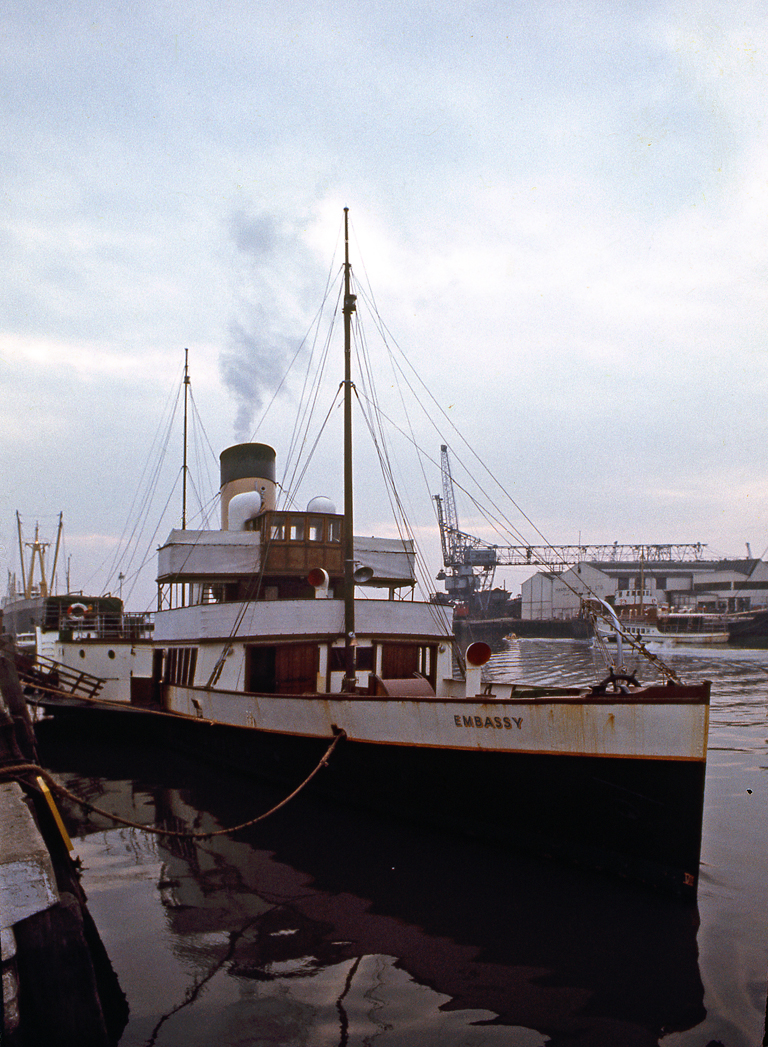
When Embassy was withdrawn after the 1966 season Richard Bolson bought Thornwick from Bridlington to take over her services from Bournemouth to Swanage and the Isle of Wight for1967.
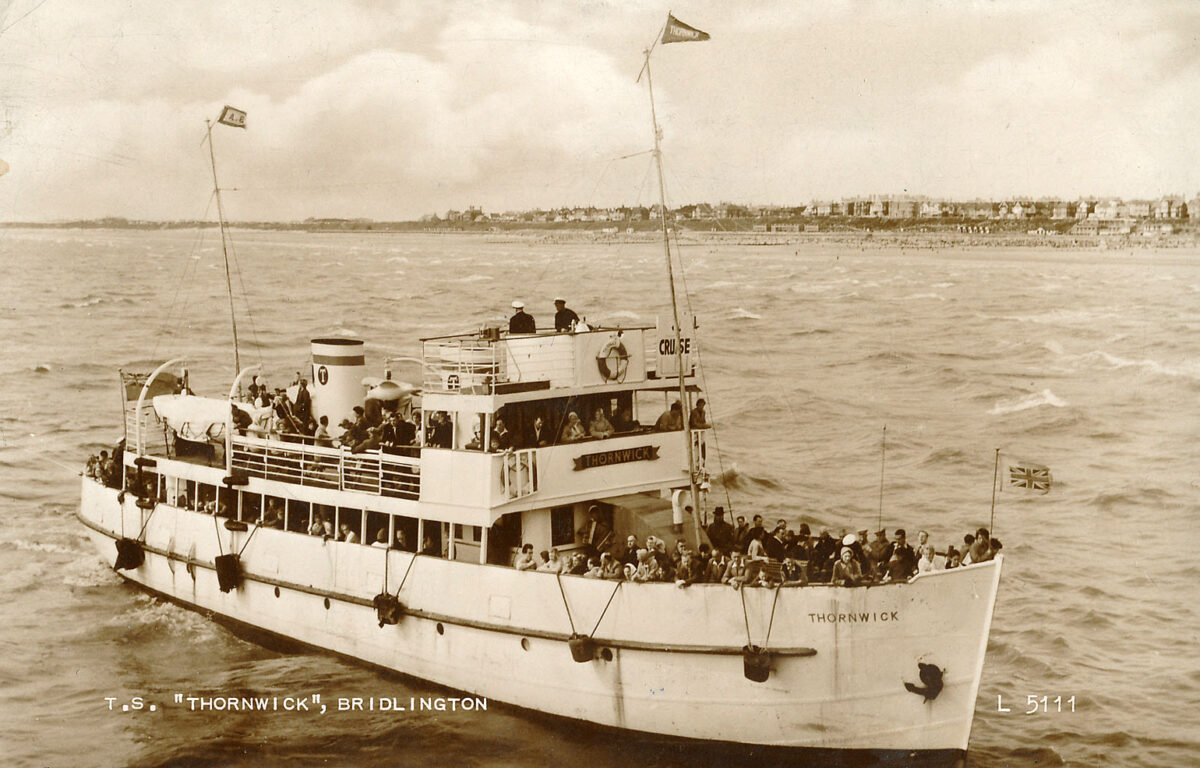
By then over seventy, the age at which Trinity House then withdrew Pilotage Certificates, Capt Defrates still had a valid Foreign Going Master’s ticket. He was ever looking for part time work and was on the books of Tony McGinnity’s agency so he was recruited to sail Thornwick round to Poole.
For her first season running from Bournemouth Fred Miller was hired as mate. I took an end of the day trip on her as a passenger later that summer from Bournemouth back to her overnight berth at Poole Quay. Fred remembered me from Princess Elizabeth at Weymouth in 1964 and invited me up onto her open bridge for the trip. After the huge disappointment of Embassy’s withdrawal it was good to see the service reintroduced by Thornwick which, whilst not a paddle steamer, still had a certain charm about her.
The following year Bolson did a lot of structural work to Thornwick, renamed her Swanage Queen primarily for the Swanage service and initially appointed Fred as her skipper. However that did not work out well either and Fred moved to the freshly arrived Bournemouth Queen as mate.

Bournemouth Queen ex Caronia had been bought from Scarborough by Richard Bolson primarily for the Isle of Wight run from Bournemouth from 1968. Fred continued as her mate under various masters until she was withdrawn in 1974 sailing sometimes as her master on Sundays when she was running on her Class V and VI Passenger Certificates on the Swanage service.
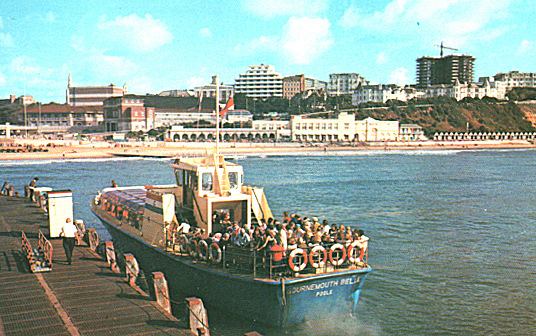
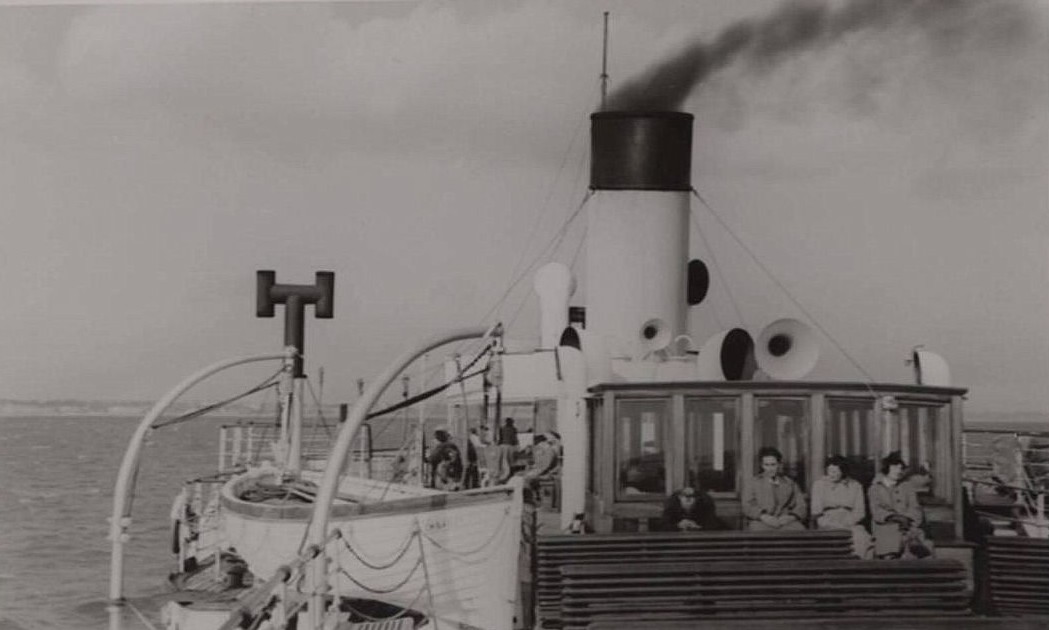
After Bournemouth Queen was withdrawn in 1974 her last master the genial Capt Cooke, Fred Miller and bosun Dennis Moss moved to the newly built Bournemouth Belle. She was fitted with multi directional Shottel propulsion units which made her very manoeuvrable but which could take some getting used to for those unfamiliar with their operating characteristics. It is all a matter of training I guess but undoubtedly some picked up the necessary techniques faster than others and some never quite mastered it at all.
As you can see in the above pic Bournemouth Belle has a dent in her stern. This was caused by her reversing into Poole Quay full tilt on one occasion with her throttles set at full ahead but with the needles on the dials pointing astern. This resulted in the fuel day tank being wrenched away from the inner hull fracturing the fuel lines to the motors and from the bunkers in the bilges. After that Dennis Moss took over as second man and he became a dab hand operating this machinery. He was encouraged by Richard Bolson to take the exam to become a Boat Master and the following season was promoted master of the new Poole Belle where he remained for many years.
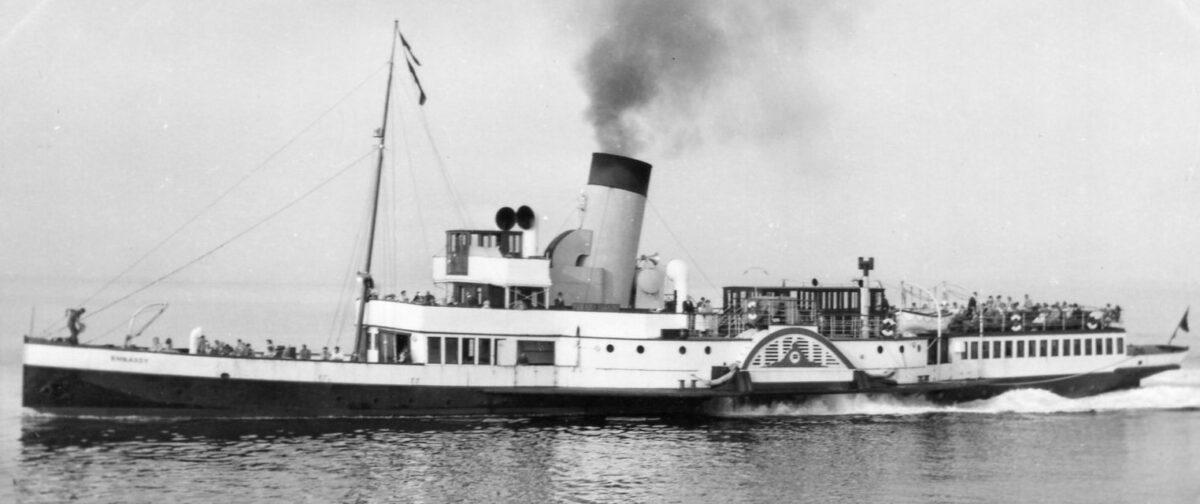
During his time working from Poole Fred lived on a houseboat at Cobbs Quay which is believed to have been an ex WW2 medical barge. Having started out as mate on Embassy in 1948, 1974 was Fred’s last season working on domestic passenger boats.
I always found Fred perfectly pleasant and polite but he did have a wry sense of humour. When Capt Defrates introduced my thirteen year old self to him on Princess Elizabeth in1964 he said something along the lines to me “I have had your mother in the back of my car many times”. Capt Defrates interrupted “I think Fred means that he has carried your mother as a passenger in his taxi”. Chris Wood, who knew him during his years at Poole recalls of him “To most crew he seemed a little aloof, (I wondered if his hearing was failing) but normally he had a wicked glint in his eye and I certainly never heard him raise his voice or complain.”
Working on excursion steamers each summer season was quite a sought after job for Home Trade mariners. The pay was never that great but the work was generally agreeable. There were of course difficulties to be overcome but the base line was that sea going excursion steamers only put to sea in summer between 1st April and 31st October and then only in daylight hours from one hour before sunrise to one hour after sunset and then only when the weather was settled and the sea such as to cause only moderate rolling and pitching. Apart from on rivers and estuaries there was no winter or night work.
This was a different way of life from the men on coasters with Home Trade tickets out day and night throughout the year in all but the most extreme weather conditions The coasters by the very nature of their trade were ever close to difficult and tricky navigational issues like rocky shores, extensive mud flats, shingle beaches or whatever. The only navigational instruments they had were the ship’s compass, a sextant for taking distances off known objects, a pair of binoculars for picking up marks and the trailing log to measure distances steamed. Woken in the middle of the night to go up on watch often on an open bridge in January when it was freezing cold, when rain was driving sideways, when the wind was blowing fresh from the east and the marks were not coming up when you expected them to was not to everyone’s taste.
They were in and out of different ports day after day after day unloading cargoes, loading cargoes. Sometimes it was wood. Sometimes it was coal. Sometimes it was cows or sacks of wheat or flour or this that or the other. Sometimes the holds had to be cleaned out completely between cargoes.
There was a great weight of responsibility too, making sure that the cargo was loaded sensibly and with a due eye to the stability of the ship as well as what needs to go out first or in last at the next port and the one after that.
I have with me a little mate’s text book from that era listing everything a mate should ever need to know about any cargo he might have to carry. It is jammed full of fascinating detail. The volume of a ton of coal. The volume of a ton of wheat or any other material a ship might reasonably carry. The specific gravity or density of this or that liquid. It is over a hundred pages packed with facts about all you need to know about carrying every conceivable cargo.
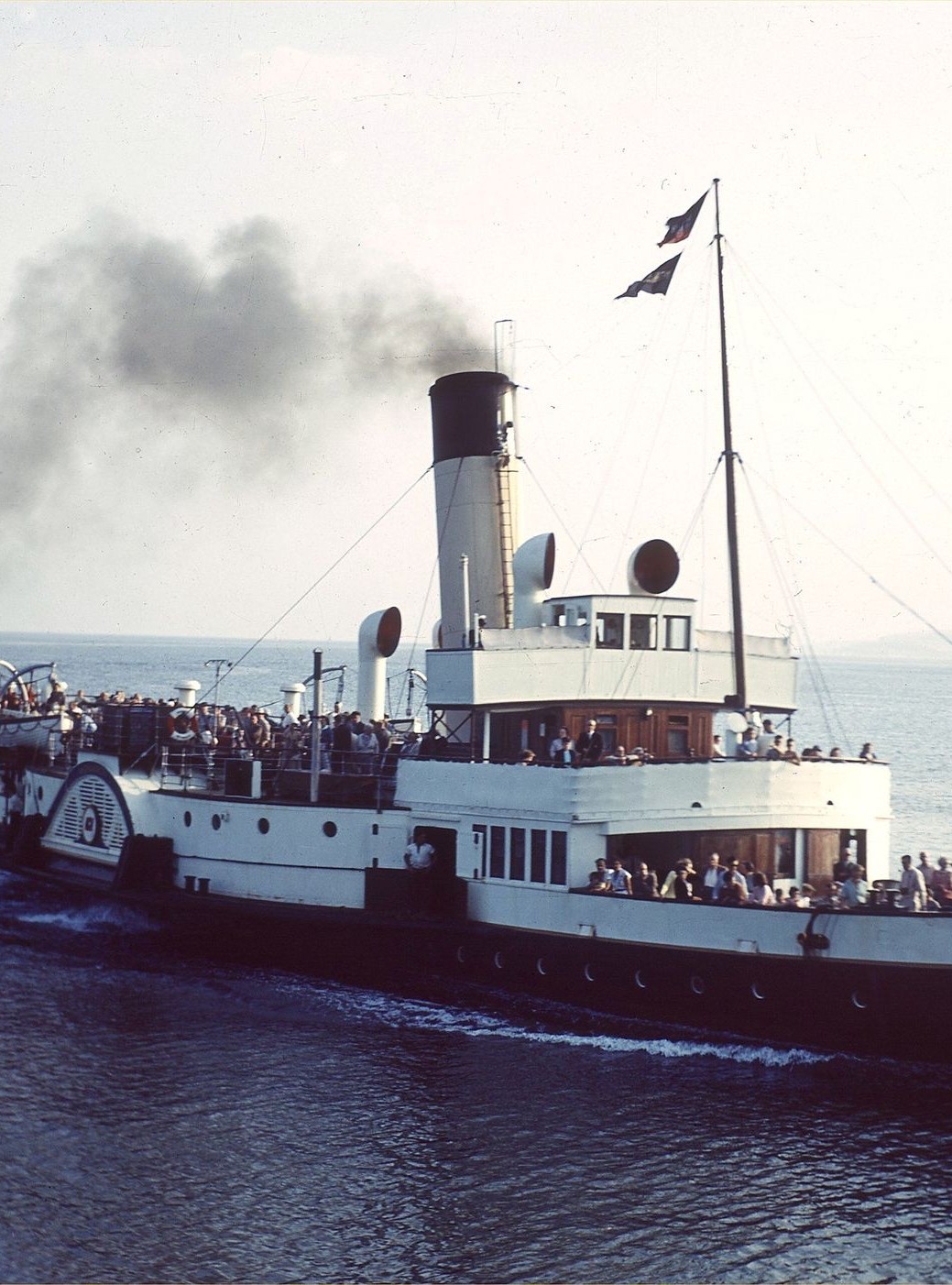
It was a different world from sailing backwards and forwards between Swanage and Bournemouth several times a day during the summer months only on, for example, Monarch.
However for those of Ken Moore’s and Fred Miller’s generation the sands of time were running out for the sea-going excursion trade they knew so well as the 1960s wore on into the 1970s.
Acknowledgement: My thanks to Victor Gray, Peter Lamb and Chris Wood for their input and pictures for this post. Victor Gray was a constant presence on Cosens’ paddle steamers in the 1950s and 1960s and worked in Cosens’ Bournemouth office in the summers of 1954 and 1955. Peter Lamb bought out Richard Bolson and ran the passenger boat business from Bournemouth for many years. As well as being a senior banker in another life Chris Wood also had a parallel part time career as a master on the passenger vessels at Mudeford, Boscombe and Bournemouth from the 1960s onwards.
All three are goldmines of information and recollections from that long gone era all those years ago.
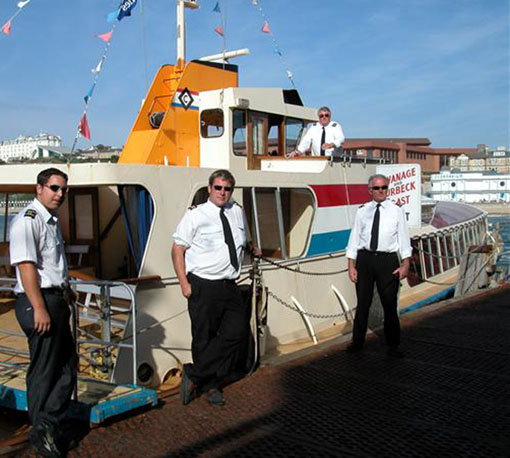
Kingswear Castle returned to service in 2023 after the first part of a major rebuild which is designed to set her up for the next 25 years running on the River Dart. The Paddle Steamer Kingswear Castle Trust is now fund raising for the second phase of the rebuild. You can read more about the rebuilds and how you can help if you can here.
John Megoran