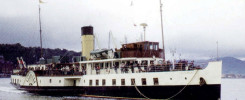
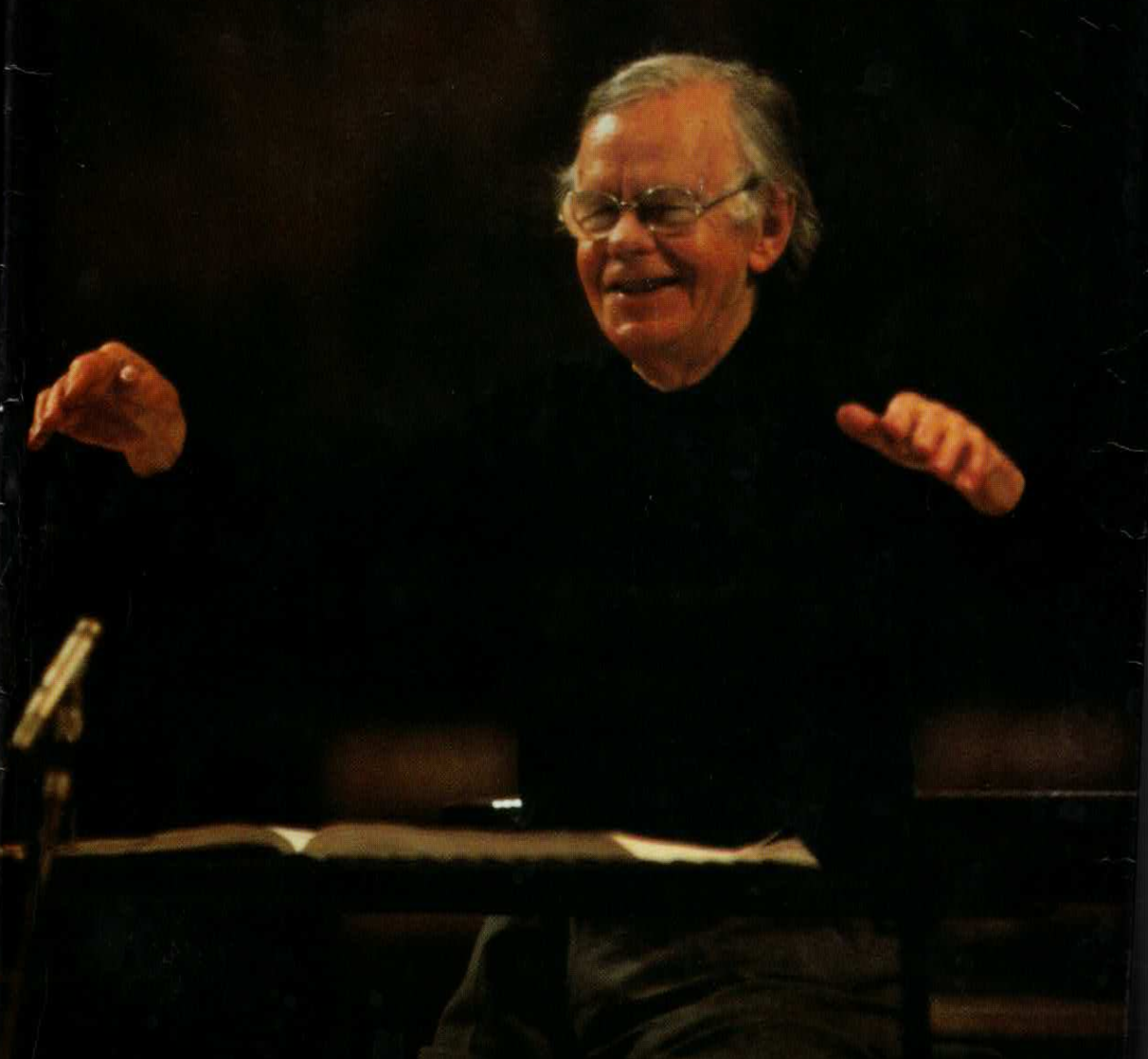
I first encountered the great Wagner conductor Sir Reginald “Reggie” Goodall on a train from London to Chatham in 1985, during my first season running Kingswear Castle.
At the time I lived in Tooting and commuted via Victoria Station. Reggie kept a bedsit in London for occasions when work kept him in town late. If he had nothing else scheduled the following morning, he would catch the train from Victoria to Canterbury, passing through Chatham on his way home to the west wing of Barham House, just outside Canterbury.
The early morning trains from London to Kent were usually very quiet, unlike those coming the other way, which were generally packed. I always sat near the front of the train to avoid any crowds. So did Reggie.
After the success of conducting the premiere of Benjamin Britten’s Peter Grimes at Sadler’s Wells shortly after the war, Goodall’s career seemed set for great things. He became a staff conductor at Covent Garden and initially conducted frequently. However, as the 1950s progressed, he was asked to conduct less and less. Some regarded him as difficult and demanding, particularly because of the amount of rehearsal time he required. While some singers adored working with him, others did not. Eventually he was given nothing to conduct at all.
Yet he remained on the payroll. Officially still a conductor, he spent much of his time coaching singers in a tiny room at the top of the opera house, a room that doubled as the amphitheatre cleaners’ store complete with mops, buckets and a large sink. A piano was squeezed in, and generations of aspiring, established and internationally renowned singers climbed the endless stairs to what became known as “Valhalla” for coaching sessions with him.
Goodall possessed extraordinary insights into Wagner. Every note had to be right. Every word had to be understood. Every phrase had to be thought through. Beyond that, singers were expected to understand how their vocal line fitted into the harmonic structure of the whole work.
Then, in 1968, Stephen Arlen invited him back to conduct at Sadler’s Wells, offering him The Mastersingers of Nuremberg. The result was a triumph and marked the beginning of an Indian summer that saw Goodall become one of the most admired Wagner conductors of his generation, much in demand at ENO, Covent Garden and elsewhere.
Away from music, Reggie had a passing interest in ships and boats. He frequently stayed at the White Cliffs Hotel in Dover, not only because he enjoyed the dinners but also because he liked watching the ferries coming and going across the Channel. I cannot claim that he had a great interest in Kingswear Castle, but he did occasionally join us, usually at quieter times, sitting right up in the bow on afternoon cruises from Chatham to Darnett Ness.
Reggie was a man who preferred to avoid the crowds.
Kingswear Castle returned to service in 2026 after the second part of a major rebuild which is designed to set her up for the next 25 years. The Paddle Steamer Kingswear Castle Trust is now fund raising for future rebuilds. You can read more and how you can possibly help here.
John Megoran