When airlines order new planes they often do so in batches. “We’ll have ten like that please.” And when they come all ten are the same in pretty much every detail. That makes it much easier for crews changing between different planes always finding the same kit in the same place and so on.
To some extent this was also true for ships where owners ordered several sisters for the same service around the same time and sometimes off the same plans.

For example, I don’t believe that any new plans were drawn up for Kingswear Castle when she was built in 1924. The River Dart Steamboat Company just asked Philip’s yard at Dartmouth to build another paddle steamer for them off the same plans used for Totnes Castle the previous year.
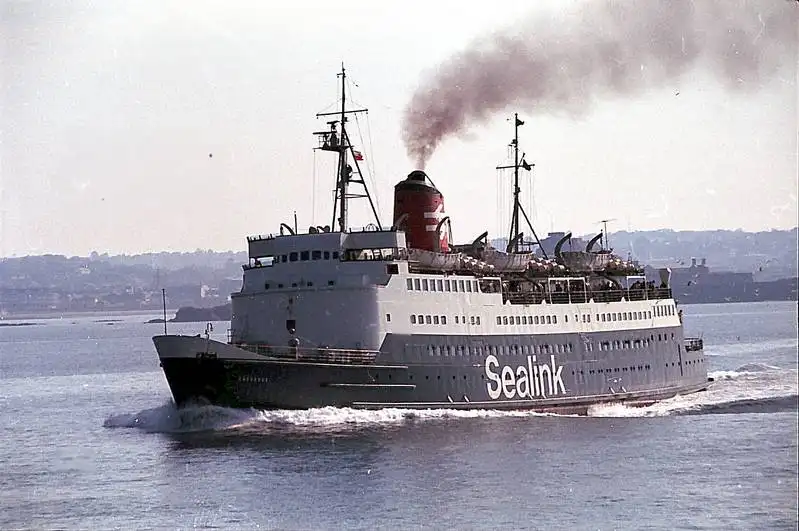
This could make it very hard distinguishing between sisters at a distance where they looked to be so very much alike. For example Caesarea and Sarnia built for the Weymouth Channel Islands route in 1960/61 by J Samuel White of Cowes really did look the same. They were also pretty much identical internally as well although not quite.
I somehow managed to wangle a summer job aboard them as a deck boy in my youth and there were minor differences in the accommodation. For example the galley for the deck crew on Caesarea was part of the accommodation on the lower deck aft on the starboard side where on Sarnia crew grub was sent down from the main passenger galley above.
And the bunk in the captain’s cabin on Caesarea was on one side of the cabin where on Sarnia it was on the other. I always felt this difference might have made it tricky for the relief masters. In 1966 Capt Newton was master of Caesarea. Capt Cartwright was master of Sarnia. That summer they each did two trips on and one trip off for which they were relieved mostly by Capt Walker and sometimes by Capt Caws who each did one trip on each ship and then had a trip off themselves. So for them it might have been a bit confusing when they woke up trying to remember on which side to get out of their bunk as they alternated between the two ships. Did they ever bump their heads on the bulkhead I wonder mistakenly thinking they were on the other ship?
Here are two paddle steamers which although not exactly sisters did rather look alike: Cosens’ Empress and Victoria.
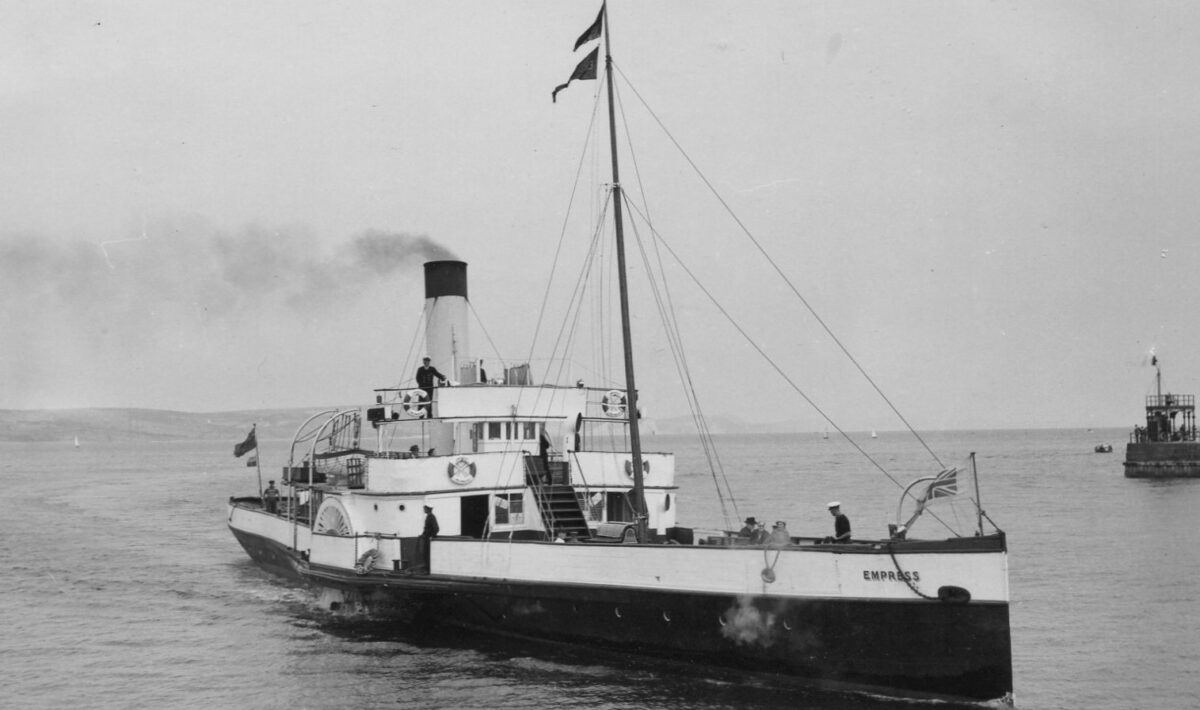
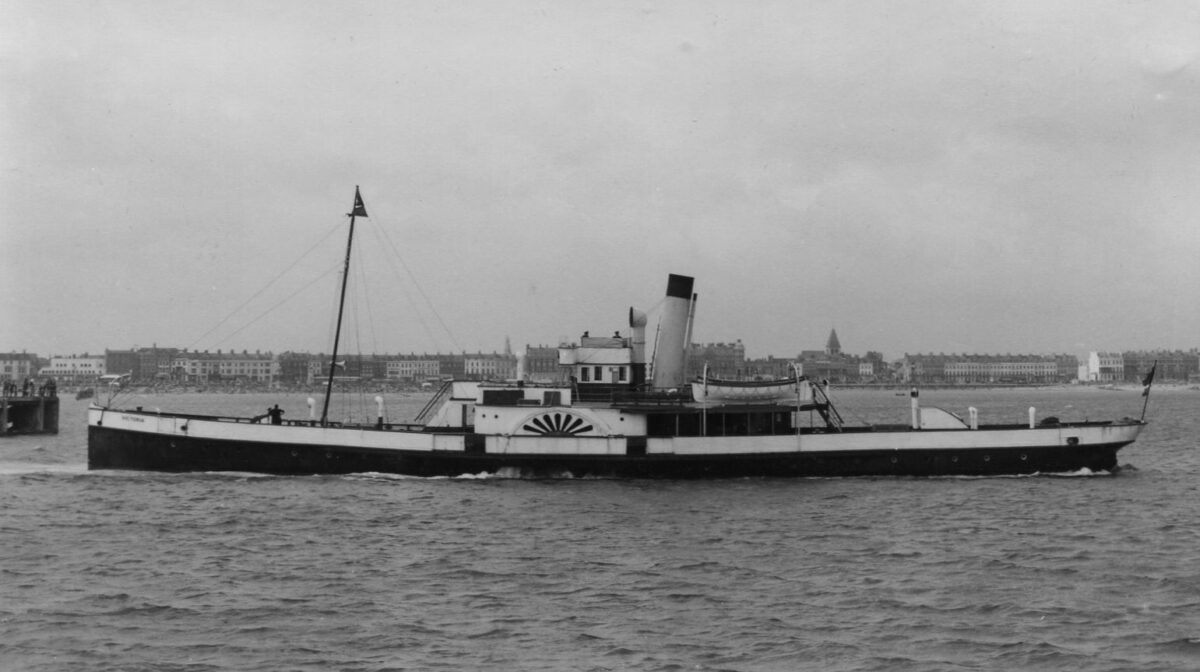
They do look alike don’t they? Yes they have different paddle box slats which makes it fairly easy to tell them apart but otherwise at a casual glance someone might take each for the other.
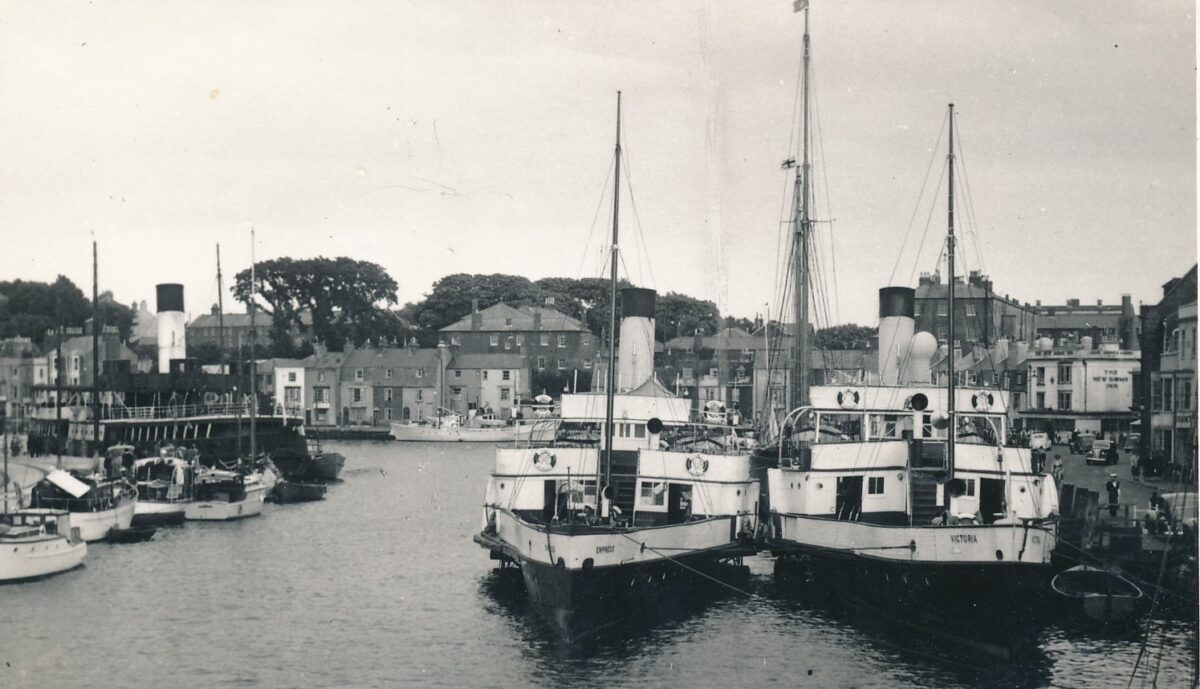
However put them together as in this pic in Weymouth Harbour and it is immediately apparent that Victoria was slightly bigger. There are other small differences too. For example the ventilating cowl forward of the bridge on Victoria is taller and more centrally positioned than on Empress where it is slightly offset. The life buoys were in different places. And even the anchor chain came through fairleads on different sides of their bows, port for Victoria and starboard for Empress.
Paddle steamers from this era were often built without hawser pipes to stow their anchor for ease of dropping. Instead the anchor chain came up from the chain locker through a spurling pipe onto the foredeck, was led around a gypsy under the capstan and then overboard through a fairlead in the bow from which the anchor dangled. This was unsatisfactory for a paddle steamer going to sea as the motion of the ship would have caused the anchor to bash against the hull causing damage so the anchors were raised over the forward bulwark with a davit and placed on the deck. For ships which did not need to use their anchors in the general course of their work this was fine but it was an issue if the anchor had to be dropped in a hurry.
The canvas dodgers were different around their bridges too, I guess because different captains ordered them differently each with their own individual ideas of what they wanted to help fend off the weather.
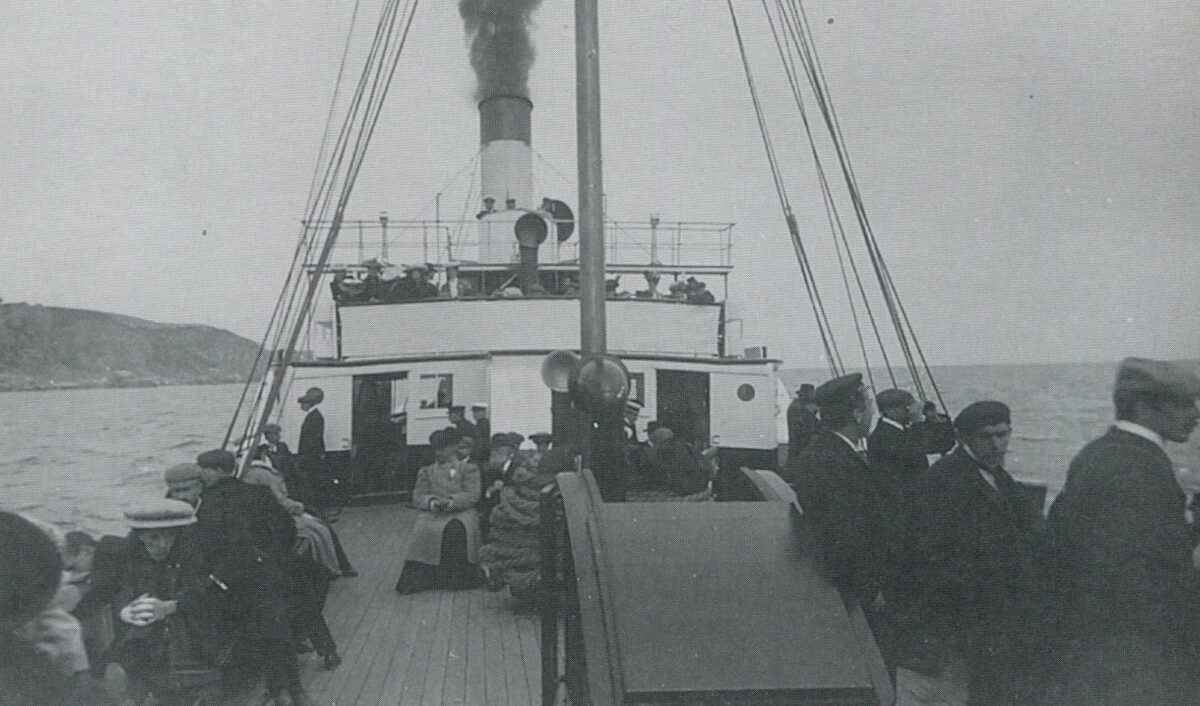
And as this pic shows how extensive the bridge dodgers were, and how they were arranged, also changed over the years with different captains imposing their own different requirements or maybe being constrained by management. “You can’t have that much dodger. That’s too dear. Do you really need it round the bridge wing ends? Make do with less”. Cosens were ever known to be parsimonious employers.
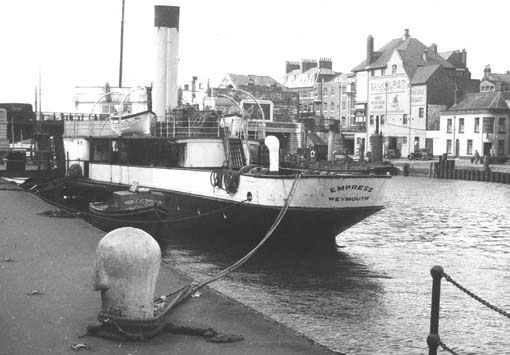
There were other differences too. For example Empress had just one ladder at the aft end of the promenade deck down onto the main deck.
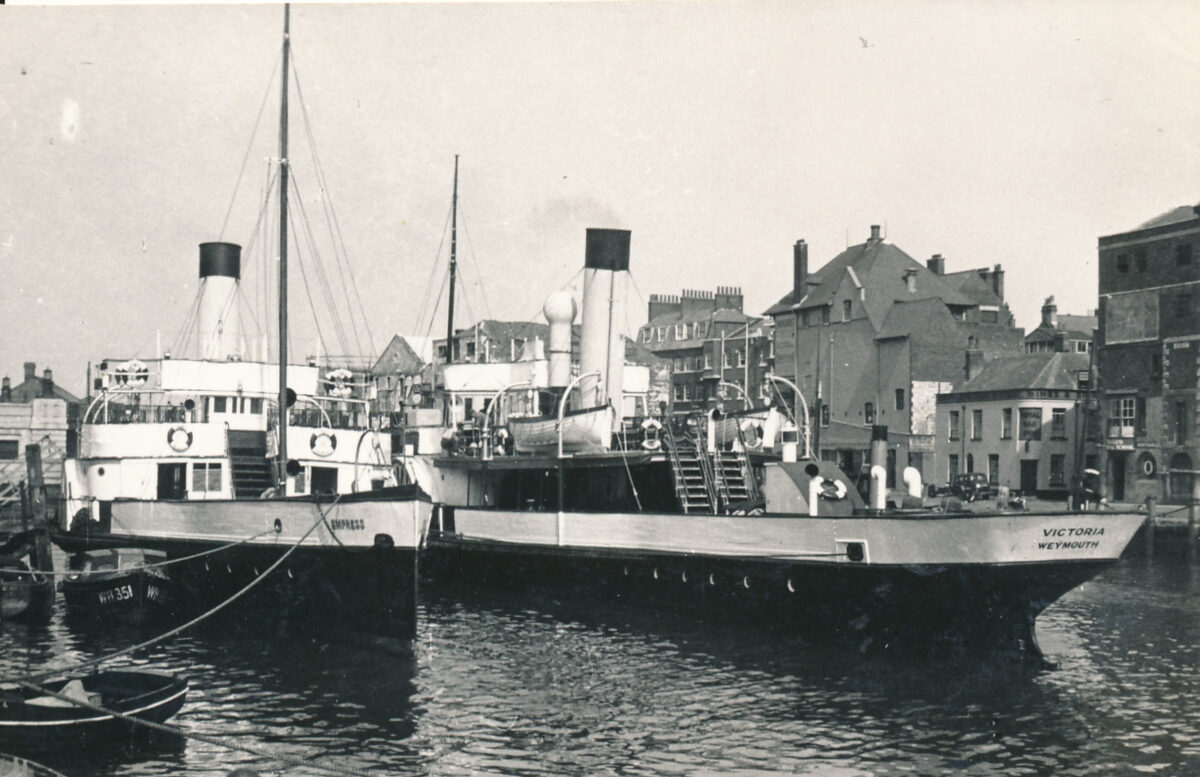
Victoria had two. And so on.
Although both Empress and Victoria were built for long distance excursions Empress, dating from 1878, latterly had the quieter life being much associated with the Bournemouth/Swanage service between the wars and in her last years after the war being based at Weymouth for local trips round Portland Harbour, to Portland Bill, The Shambles Lightship and Lulworth Cove. Her last season was 1955
Victoria was the younger of the two having been built for Cosens in 1884. She continued on longer trips throughout her career even up to her last season in 1952 when she was still sometimes rostered to run from Weymouth to Swanage, Bournemouth and Totland Bay, Isle of Wight.
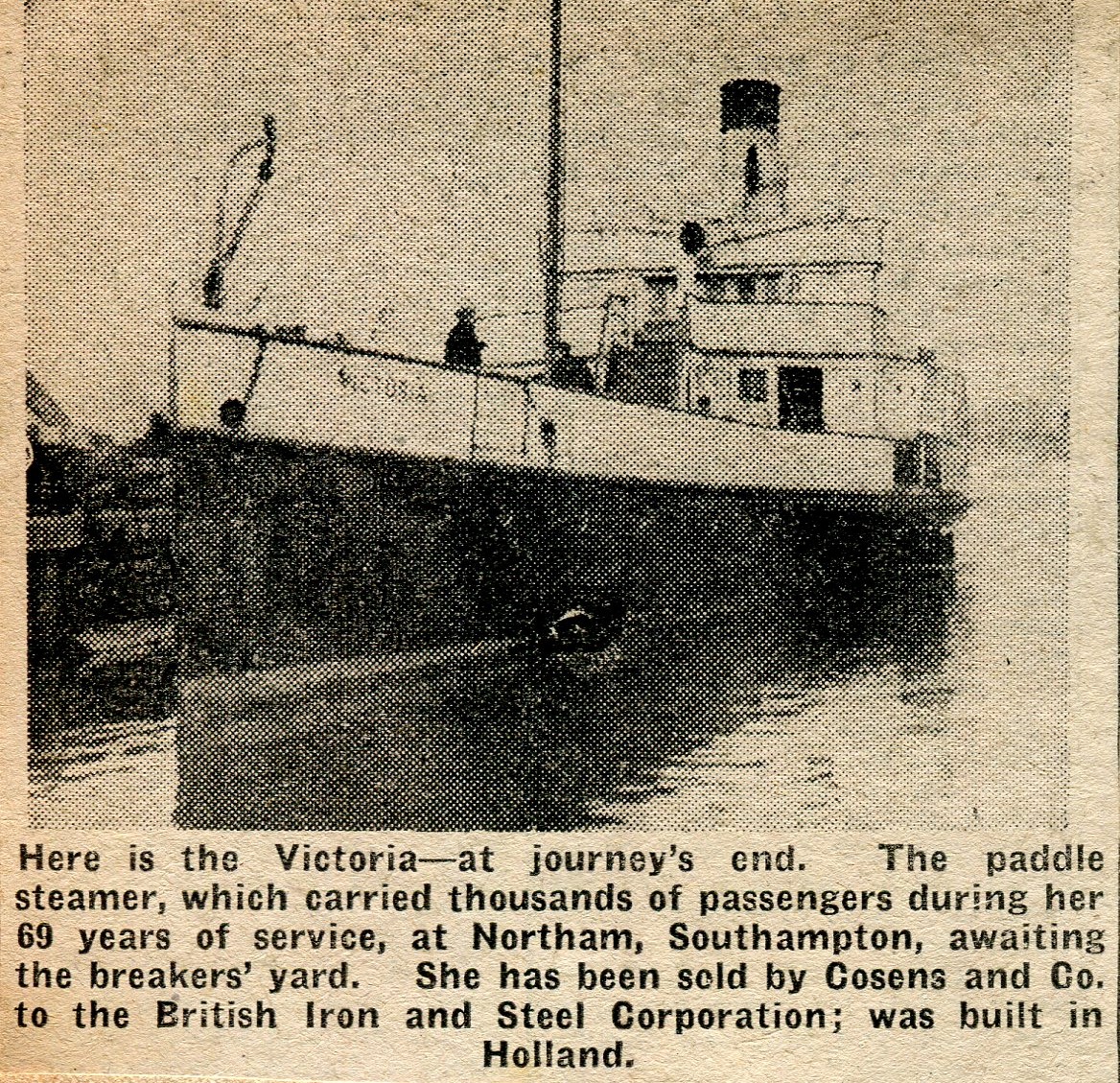
Victoria was broken up at Southampton early in 1953.
So there we are. Telling different sisters or similar paddle steamers apart is an intriguing pastime to while away endless hours in the dark depths of winter for all with a suitable supply of pics and a nice magnifying glass to hand.
Coda:
Both Empress and Victoria were powered by two cylinder oscillating steam engines.
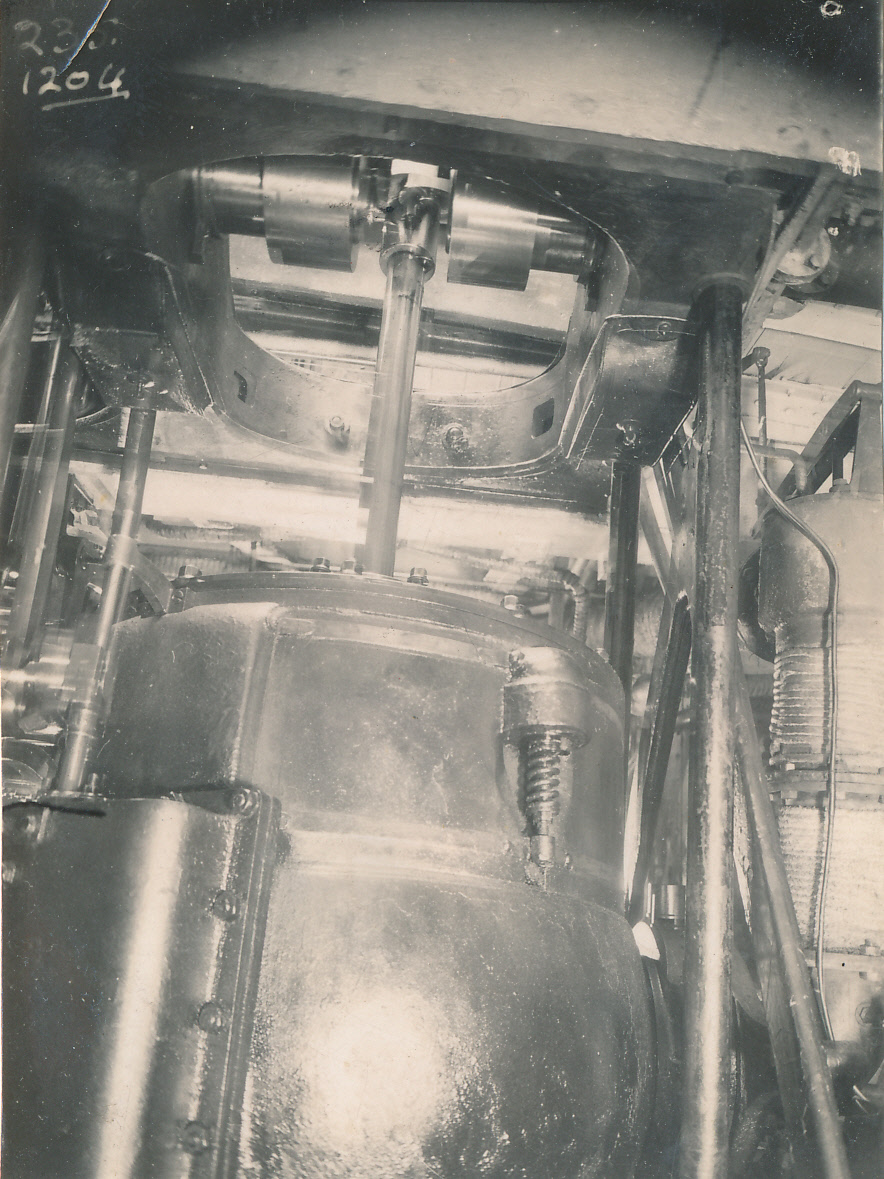
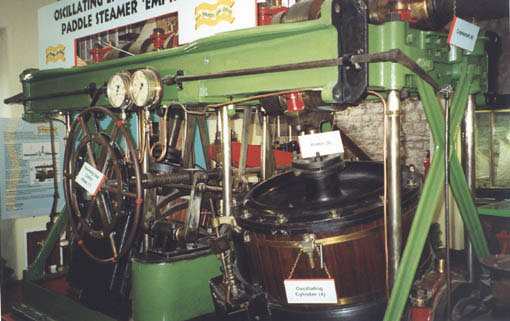
This is the one from Empress. This engine was taken from the ship when she was scrapped in 1955 and for many years it was the centrepiece of the Southampton Maritime Museum. Today it is at the Internal Fire Museum in Wales.
Kingswear Castle returned to service in 2026 after the second part of a major rebuild which is designed to set her up for the next 25 years. The Paddle Steamer Kingswear Castle Trust is now fund raising for future rebuilds. You can read more and how you can possibly help here.
John Megoran