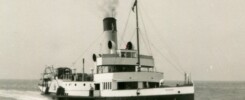
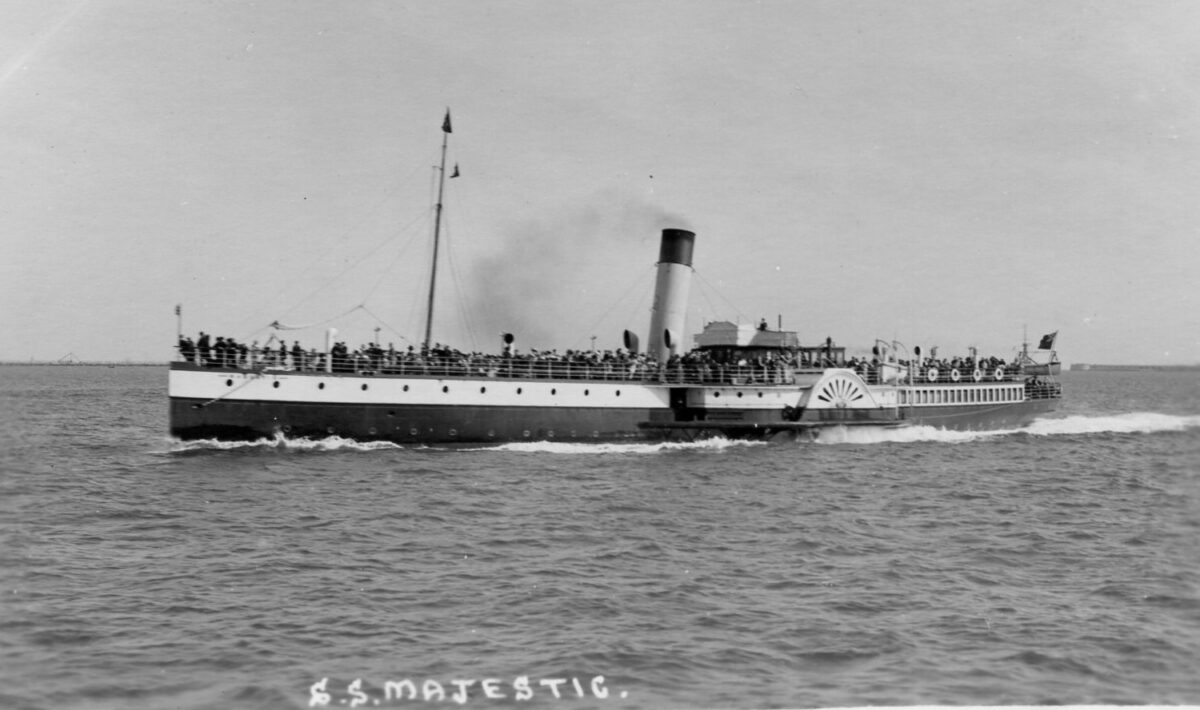
On Thursday 6th August 1914 Majestic — described by Cosens as “Second to none on the South Coast” — was re‑scheduled to run a day trip from Bournemouth, Boscombe and Swanage to view the “Warships Cleared for Action” in Portland Roads, with time ashore in Weymouth.
After the assassination of Archduke Franz Ferdinand on 28th June, the international situation had deteriorated with astonishing speed. On 1st August Germany declared war on Russia; on the 2nd it invaded Luxembourg; on the 3rd it declared war on France; and on 4th August Britain entered the conflict.
The South Coast felt the impact immediately. The Government closed the Needles Passage, Spithead and Portland Harbour to all but naval shipping, forcing Cosens to abandon their advertised landings at Totland Bay, Cowes and Southsea. They could still run to Ventnor and Shanklin by passing south of the Isle of Wight, and continue westwards to Swanage and Weymouth.
The steamer notice for Majestic’s revised schedule on 6th August made much play of the military activity at Portland, including “Possibly seeing the 5th Battle Squadron” — a cautious promise, as no one knew whether the fleet would have sailed. Portland Roads were said to be “in a state of siege”.
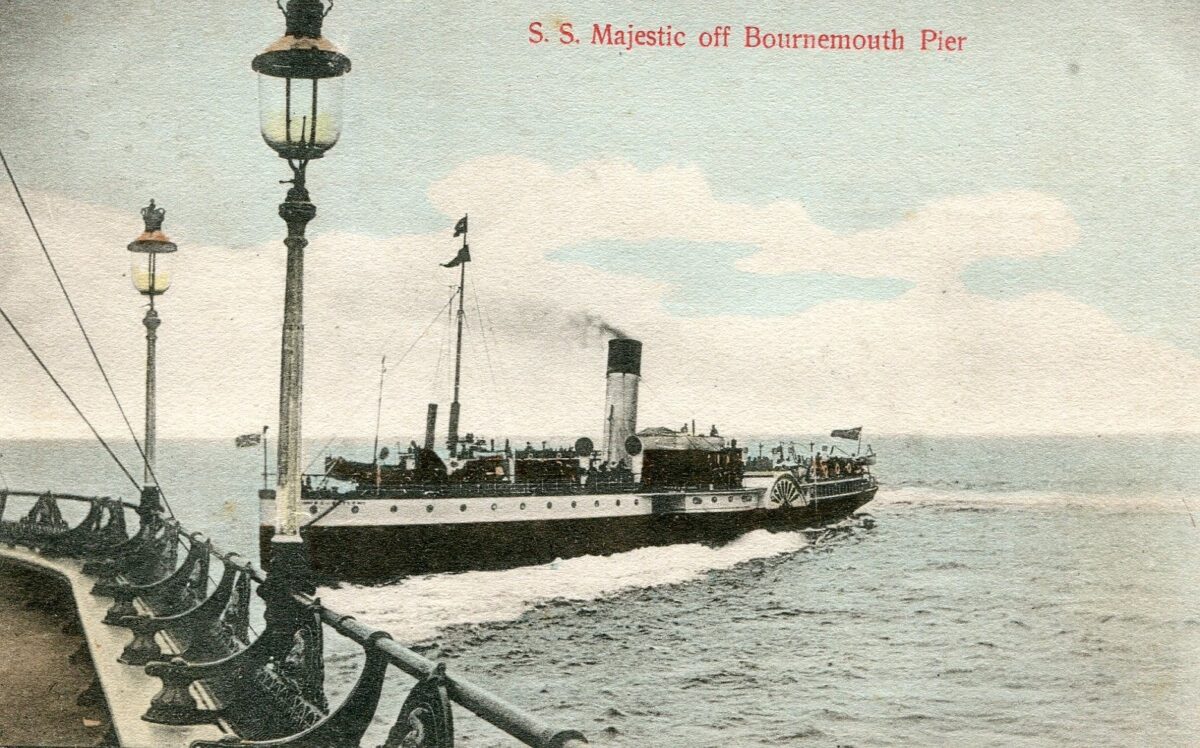
After returning from this adventure in the run‑up to war, Majestic was rostered for an evening cruise to Alum Bay and Totland Bay to “View the Searchlight Display at the Needles Passage”. All exciting stuff to draw aboard a patriotic crowd eager to witness the build‑up for an exciting war and support our boys — just days before Europe stepped into the abyss.
Tiny Point of Detail: After the devastation of the Napoleonic Wars, the Congress of Vienna (1815) created a diplomatic order that kept Europe free from general war for almost a century. It fostered a culture in which the great powers treated war as a last resort rather than a normal instrument of policy.
By the late 19th century, however, rising nationalism and a rapid arms race — especially in the years before 1914 — eroded that mindset. The Belle Époque’s confidence in endless prosperity and peace through alliances proved tragically misplaced. One measure of how unforeseen the coming catastrophe was: 1914 was a bumper year for building paddle steamers across Europe, intended to serve a booming international tourist trade that vanished almost overnight.
Kingswear Castle returned to service in 2026 after the second part of a major rebuild which is designed to set her up for the next 25 years. The Paddle Steamer Kingswear Castle Trust is now fund raising for future rebuilds. You can read more and how you can possibly help here.
John Megoran
This article was first published on 6th August 2021.