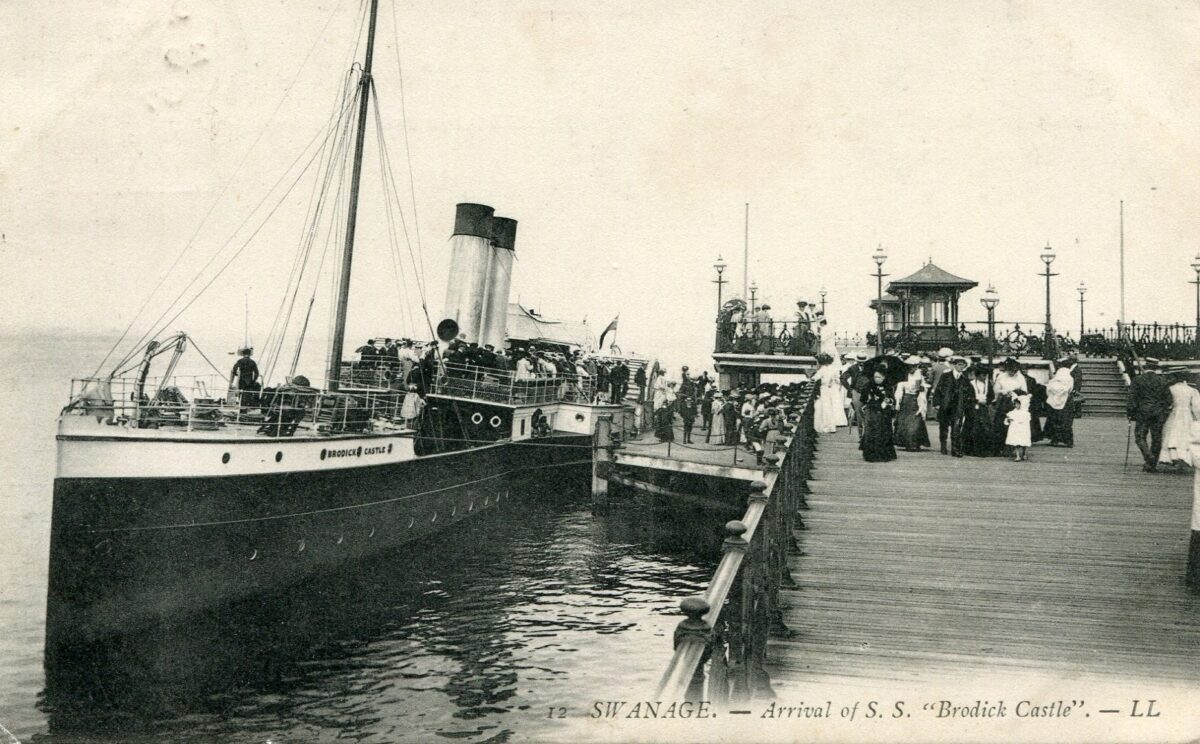
On Thursday 27th July 1899 Brodick Castle was scheduled to sail from Swanage (9.30am), Bournemouth (10.30am) and Boscombe (10.40am) for Totland Bay, Isle of Wight, (11.45am), Cowes (12.45pm) and Portsmouth (1,15pm).
For the return she was due away from Portsmouth (3.15pm), Cowes (4pm) and Totland Bay (5pm) for Bournemouth (6.15pm) and Swanage (7pm) where she generally lay over alongside the pier for the night.
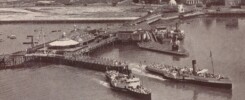
Brodick Castle was at this stage in her career owned by Bournemouth and South Coast Steam Packets Ltd which had initially been set up to run paddle steamers from the newly re-opened Bournemouth Pier in 1881 with the then five year old Lord Elgin which had previously run on the Firth of Forth. To understand why Brodick Castle was on this duty in 1899, we need to step back more than a decade.
The business did so well that by 1884 they were able to commission the building of a new paddle steamer appropriately named Bournemouth for the longer day trip market. Unfortunately she came to grief two years later on 27th August 1886 when she ran straight into the cliffs on the west side of Portland Bill in thick fog whilst on the return leg of a day trip from Bournemouth to Torquay.
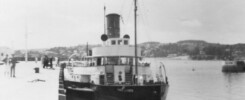
Needing a steamer to replace her at relatively short notice for the 1887 season they bought Brodick Castle which had been built for the year round service on the Lower Clyde to Arran in 1878.
Brodick Castle and Lord Elgin ran from Bournemouth in competition with Cosens & Co which had also kept up with all this new paddle steamer building by commissioning their own Victoria in 1884 and their larger and better appointed Monarch in 1888. She was the equal of, and Cosens said was better than, Brodick Castle.
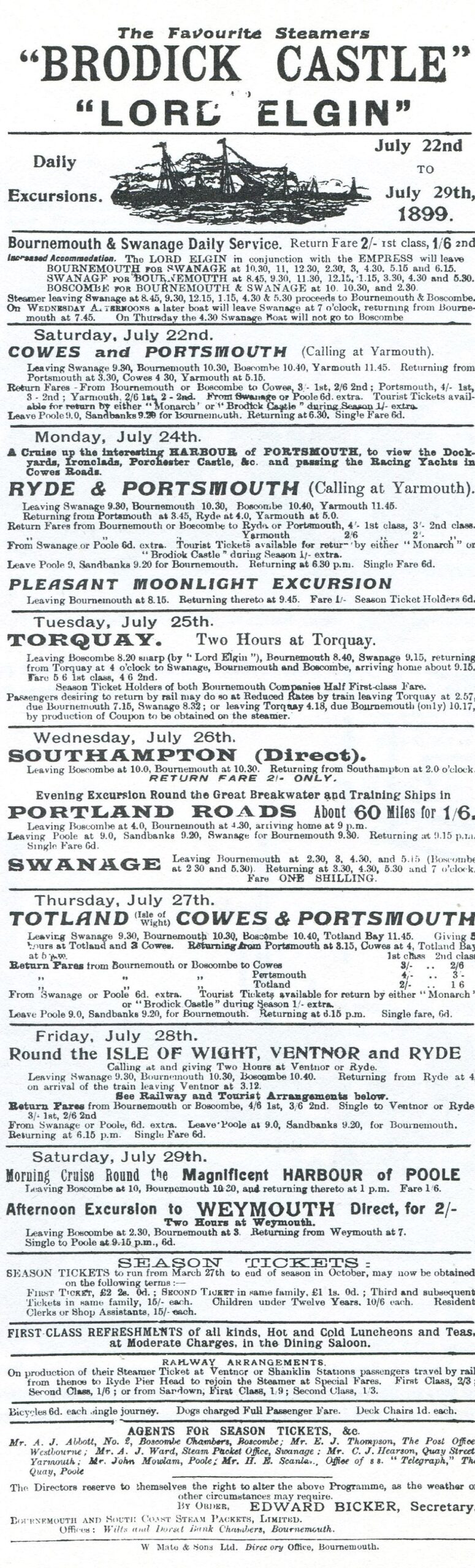
For the 1899 season both Brodick Castle and Monarch generally took the longer day trips from Bournemouth in competition with each other and advertised separately. However they also worked together with, for example, the opportunity being offered to go out on one steamer and back on the other for a supplement of 1/- extra.
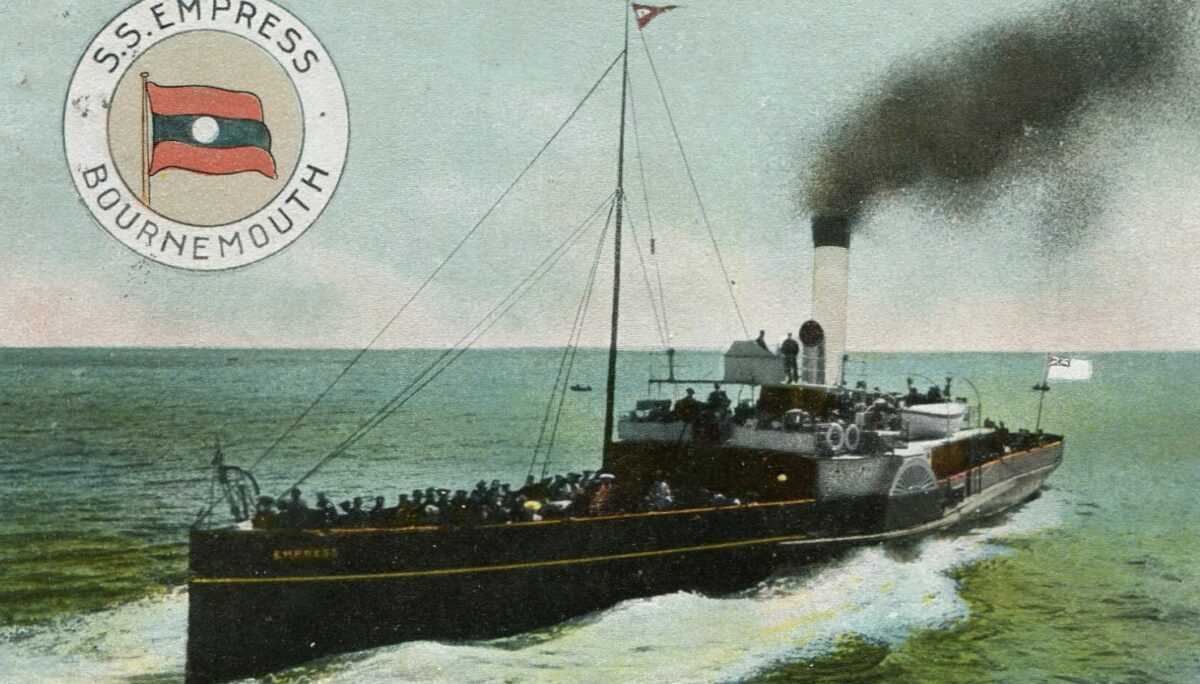
This was a period when Bournemouth’s excursion trade was booming so fast that two companies could run eight departures each way to Swanage daily and still find room to compete fiercely on the longer day trips. On the Swanage service Lord Elgin and Empress operated a timetable with departures from Bournemouth at 10.30am, 11am, 12.30pm, 2.30pm, 3pm, 4.30pm, 5,15pm and 6.15pm and from Swanage at 8.45am, 9.30am, 11.30am, 12.15pm, 1.15pm, 3.30pm, 4.30pm and 5.30pm. That’s eight departures each way every day. That’s a lot of business. That’s a lot of revenue being generated by two paddle steamers on a simple 45 minute trip each way formula.
The most expensive day trip this week was from Bournemouth, Boscombe and Swanage to Torquay on Tuesday 25th July for which the first class fare was 5/6 ( £35 in today’s money). The first class return fare on the Swanage service was 2/- (£13 today)
What happened to these four paddle steamers in the end?
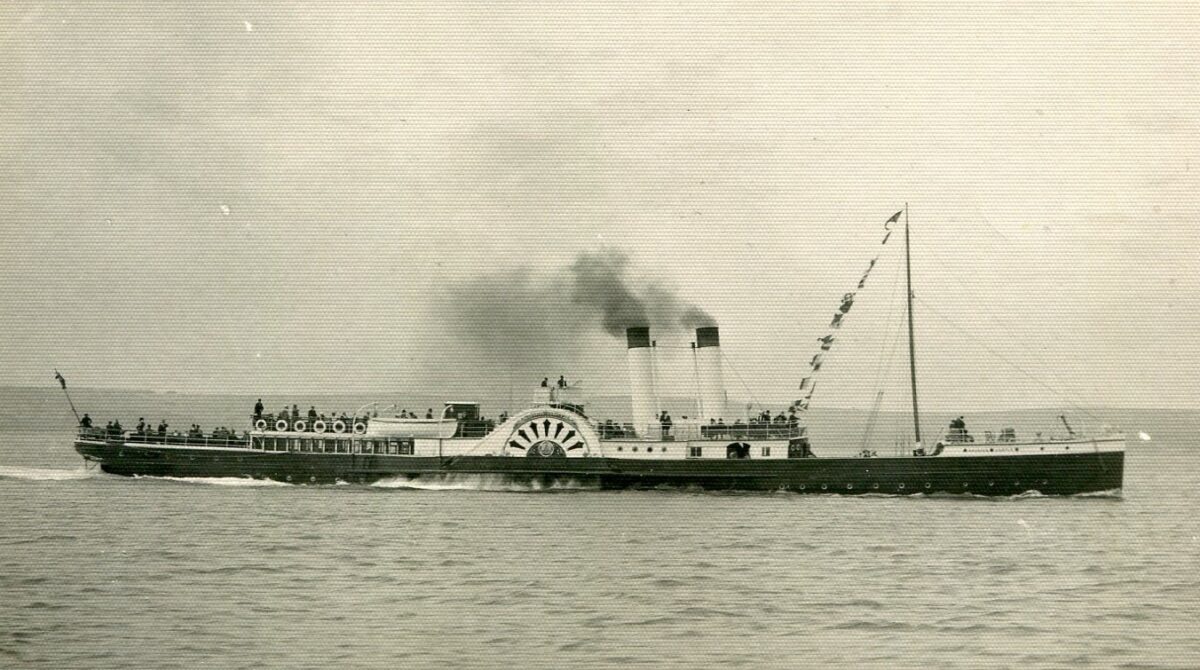
Brodick Castle had a career serving Bournemouth and Weymouth of 23 years from 1887 to 1909, latterly in the ownership of Cosens. After being withdrawn she was converted into a cattle barge for further service in Argentina but unfortunately she foundered on her delivery voyage on Monday 31st October 1910.
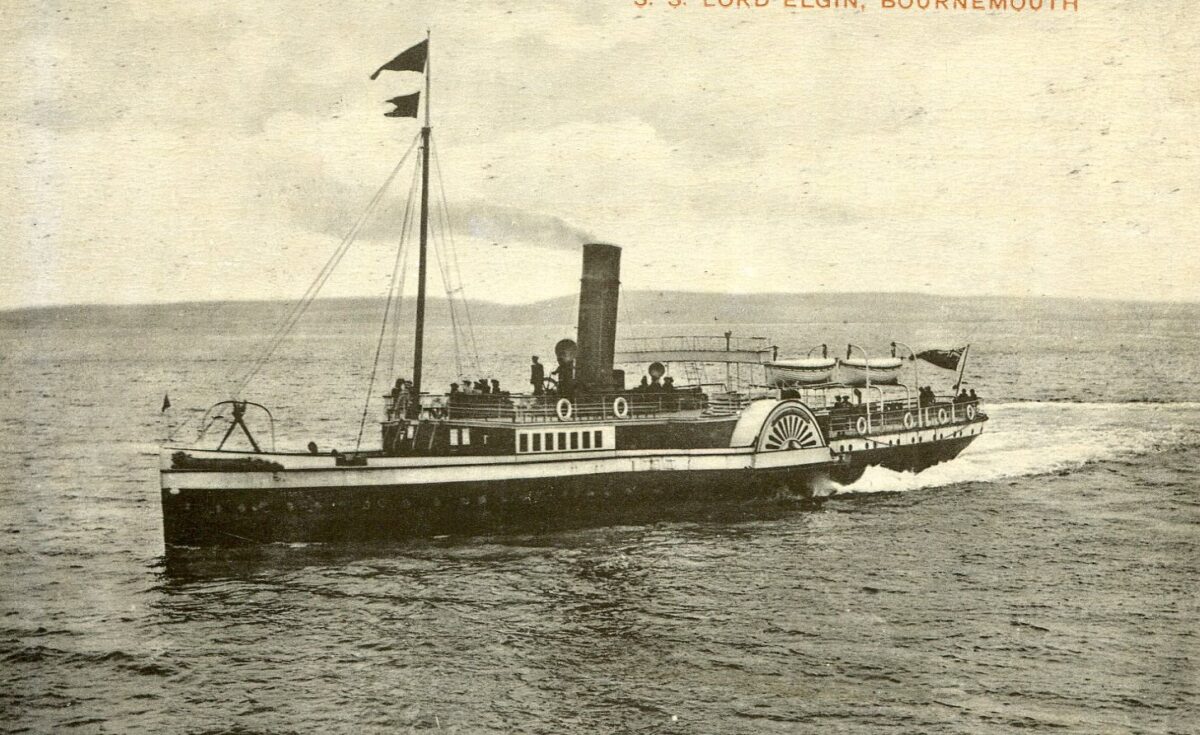
Lord Elgin ran from Bournemouth for 30 years from 1881 to 1910 latterly in the ownership of what became Red Funnel. For 1911 they converted her into a cargo paddle steamer for the Southampton to Cowes ferry service on which she continued to run right up to 1955.
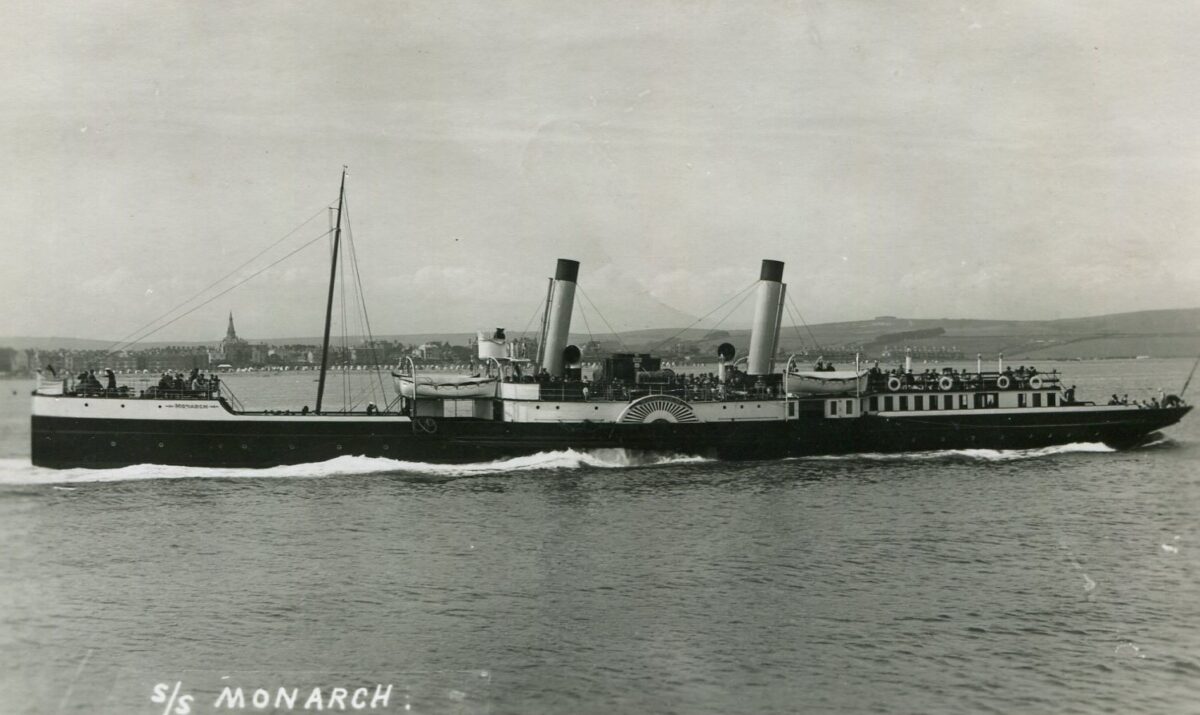
Monarch remained in the ownership of Cosens for her entire career and spent approaching 60 years running from Bournemouth until finally withdrawn and scrapped after the 1949 season. With their own engineering workshop at Weymouth they were able to do the necessary structural and rebuilding work along the way to keep such an antiquated ship in service long beyond her design life.
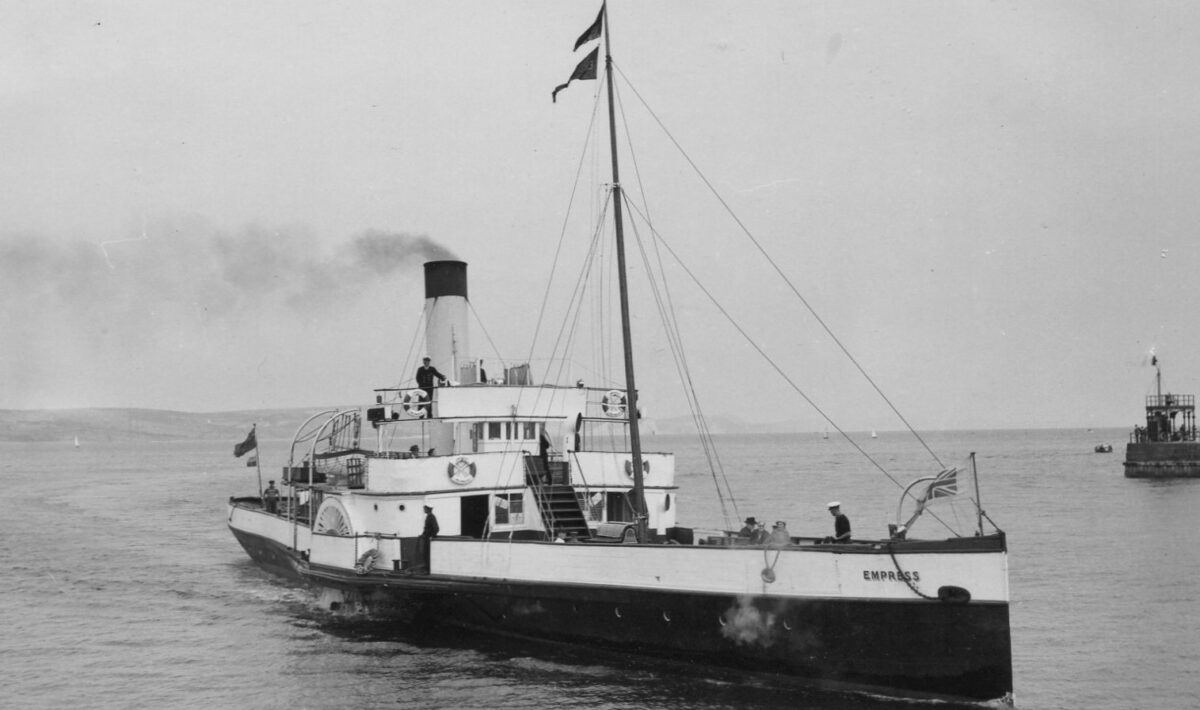
Empress also remained in the ownership of Cosens for her entire 76 year career. Latterly based at Weymouth she was withdrawn and scrapped in 1955.
Tiny Point of detail 1: Brodick Castle’s master for her last three seasons was Captain S J Shippick. After he had his ship sold from under him he set up on his own account running the paddle steamers Studland Belle and later Audrey from Poole and Bournemouth on trips round Poole Harbour also calling at Studland.
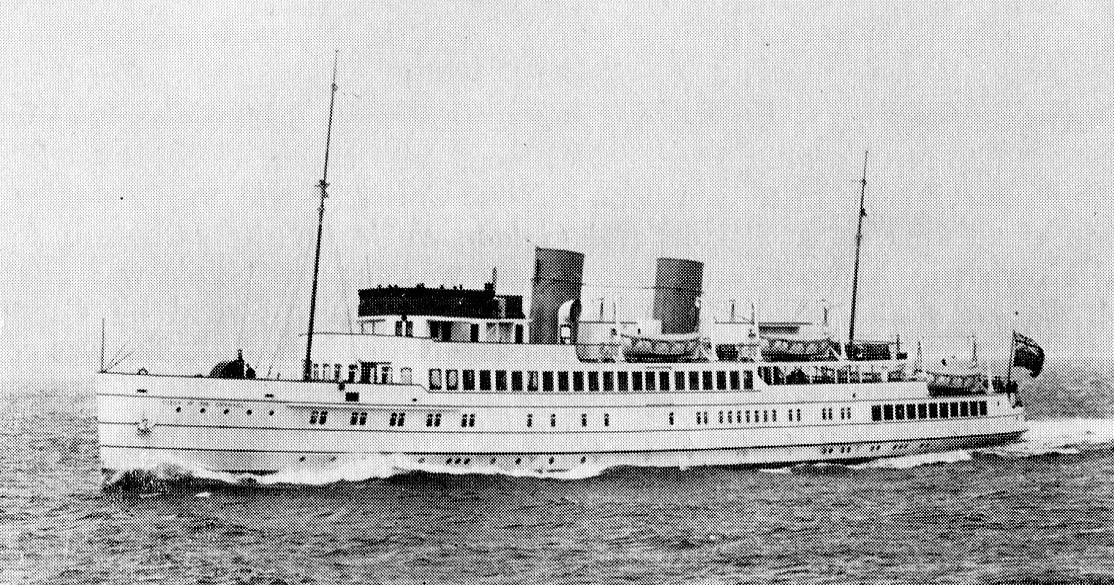
He took Audrey to run on the Medway on Government service during the First World War and with his great entrepreneurial skills set up the New Medway Steam Packet Company after the War, built Medway Queen in 1924 and developed the company through the 1920s and 1930s into a thriving business with such success that he was able to commission the first of the large Diesel Thames Excursion vessels Queen of the Channel in 1935. With her large amount of undercover accommodation, bars and restaurant facilities she was a far cry from Captain Shippick’s first command of Brodick Castle.
It is remarkable that a man whose early career was spent coaxing an ageing and spartan Clyde-built paddler on trips from Bournemouth before WW1 would go on to build Medway Queen and pioneer large diesel excursion vessels on the Thames. He retired to live between Bournemouth and Jersey and occasionally banged off letters to the local press not entirely complementary to Cosens which was still running paddle steamers from Bournemouth up to 1966.
Kingswear Castle returned to service in 2026 after the second part of a major rebuild which is designed to set her up for the next 25 years. The Paddle Steamer Kingswear Castle Trust is now fund raising for future rebuilds. You can read more and how you can possibly help here.
John Megoran
This article was first published on 27th July 2021.