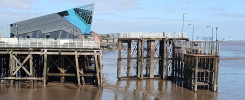
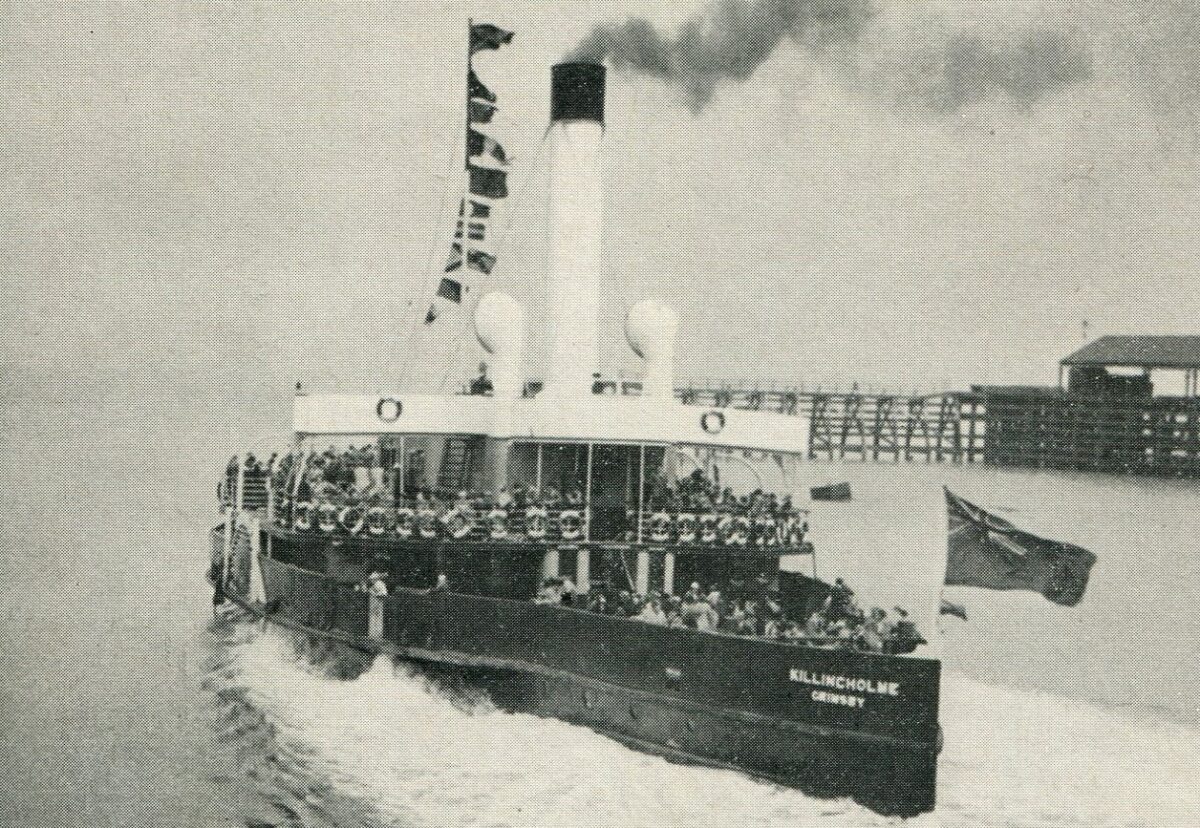
On Tuesday 23rd July 1935 Killingholme was scheduled to run a two hour afternoon cruise at 3pm from the Royal Dock Basin at Grimsby on the Humber to view the Spurn Peninsula and Spurn Head.
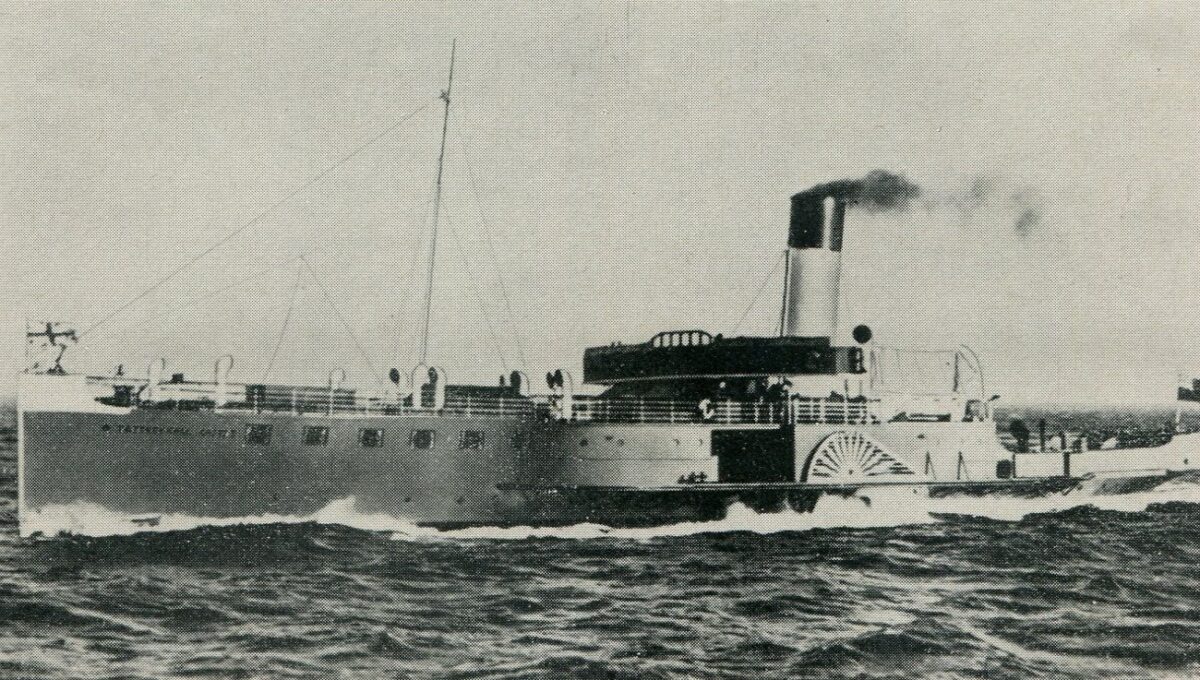
Built in 1912 for the Hull–New Holland ferry service, Killingholme and her sister Brocklesby worked that route for over twenty years. They were displaced in 1934 when the newly built Tattershall Castle and Wingfield Castle arrived from William Gray of West Hartlepool.
Brocklesby was sold to the Redcliffe Shipping Company for further service running trips on the Firth of Forth from Leith replacing the paddle steamer Cruising Queen which in an earlier incarnation had been the Humber ferry Cleethorpes. For this new role Brocklesby received a new and crimson painted funnel and a new name: Highland Queen. The venture, which was said to have featured “booze cruises” never prospered and she was sold on for scrap in Germany later in 1936.
Killingholme was retained as back up vessel for the ferry service with added revenue to justify her continued place with the railway company coming from an excursion programme which, in the peak weeks of 1935, included sailings from Grimsby every day.
For these excursions she usually came down from Hull in the morning, offering a full‑day trip with a return at 7pm. Sundays brought two‑hour cruises from Grimsby across the estuary to Spurn Head at 2pm and 4pm. From Monday to Friday there was a single afternoon sailing at 3pm. On Saturdays she left Grimsby at 10am for Hull, returning passengers at 6pm and reaching Grimsby again by 7.30pm.These excursions were popular with Killingholme carrying around 44,000 passengers on them in 1935 – an impressive total for a paddle steamer relegated to ‘back-up’ status.
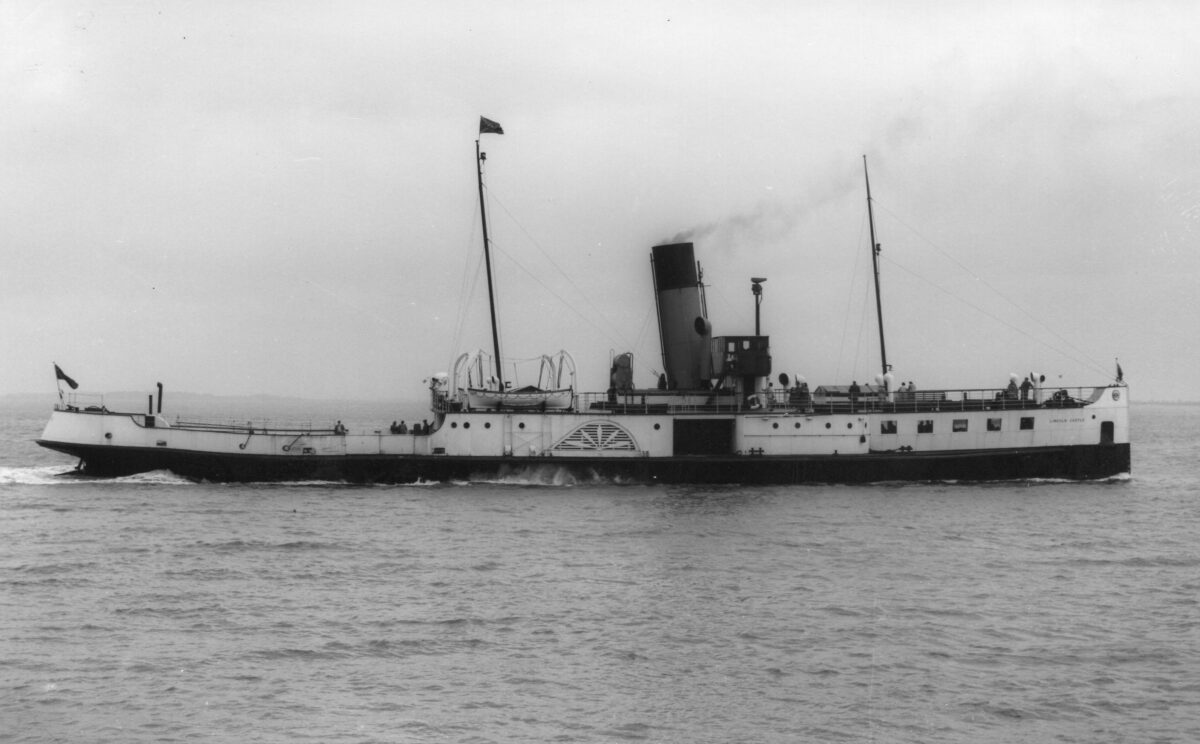
Lincoln Castle arrived from the yard of A & J Inglis on the Clyde in 1941 and replaced the need for Killingholme as relief ferry. Instead she was put to work on the Humber as a barrage balloon vessel. This involved floating a large balloon at some height above the vessel attached by a steel cable which posed a serious threat of collision to incoming enemy aircraft and therefore obstructed their approach on bombing raids.
She was scrapped at Paull on the north bank of the Humber Estuary in 1945 — thirty‑three years after her launch, and thirty‑three years after the day she carried King George V to open Immingham Dock.
Tiny Point of Detail 1: All boilers need a good draught through them to make them work well. This can be done by forced draught: having an enclosed stokehold with fans to push air into it, so into the furnace and up the funnel. It could be done by induced draught: with a fan to suck the smoke out of the furnace and so up the funnel. Some modern boilers have fans which inject air straight into the furnace. Or it can be done by natural draught and for this the taller the funnel the better the draught. Looking at pictures of Killingholme she does seem to have an almost comically tall funnel. But that must have given her a really good draught through her boiler.
Tiny Point of Detail 2: The builder’s plans for Tattershall Castle and Wingfield Castle show enclosed stokeholds and forced draught fans. Yet in the 1970s, when I sailed on them, the stokeholds were open and no fans were present. Were the fans ever fitted? Were they removed as unnecessary? Or was the design altered before commissioning? If anyone knows for certain, I’d be delighted to hear.
Tiny Point of Detail 3: Not far from Grimsby Docks lived the great contralto Norma Procter, who throughout her career sang with leading and international orchestras and conductors and appeared at Covent Garden yet always returned home to Grimsby. Her presence is one of many small reminders that this busy corner of the Humber was not only a working port but also a place where notable musicians and artists quietly made their lives, even as paddle steamers like Killingholme came and went. She was born in 1928, so may very well have sailed on Killingholme as a child, and would certainly have crossed the Humber from time to time aboard Tattershall Castle, Wingfield Castle or Lincoln Castle.
Kingswear Castle returned to service in 2026 after the second part of a major rebuild which is designed to set her up for the next 25 years. The Paddle Steamer Kingswear Castle Trust is now fund raising for future rebuilds. You can read more and how you can possibly help here.
John Megoran
This article was first published on 23rd July 2020.