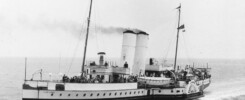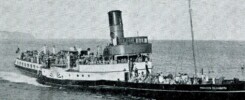
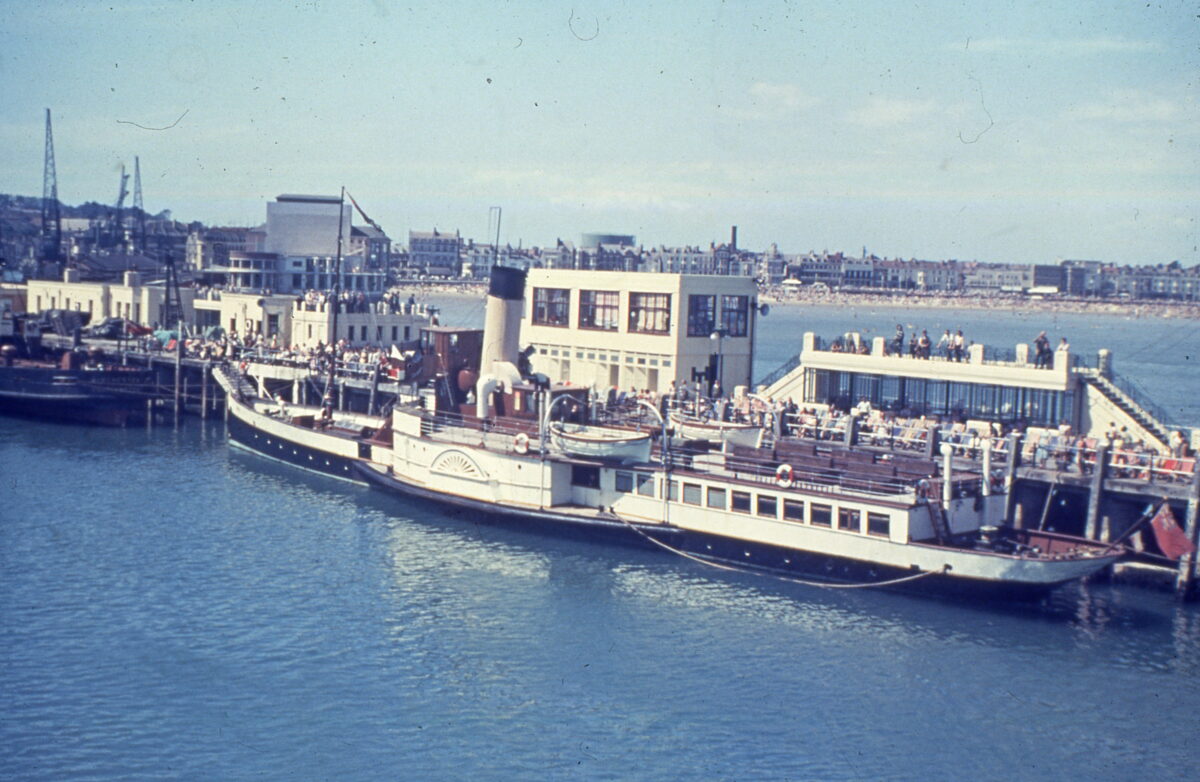
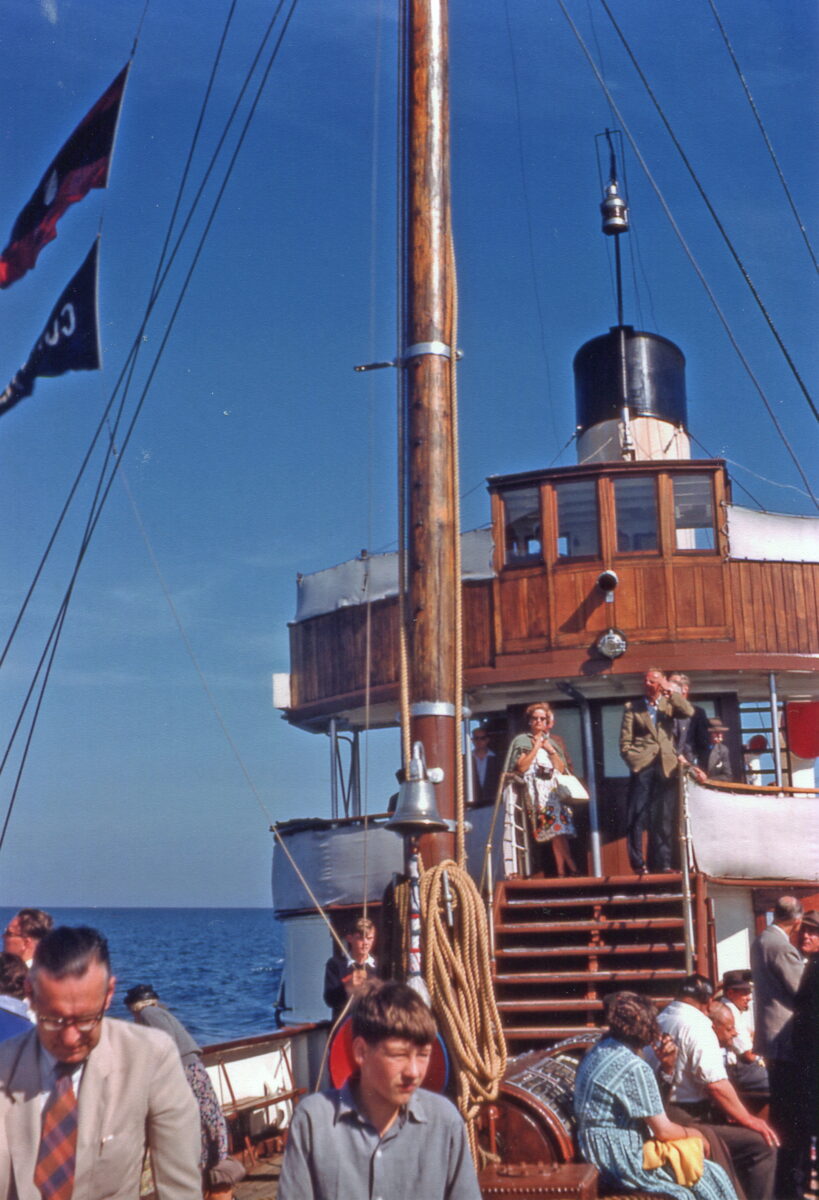
Friday 15th July was Consul’s first scheduled trip of the season from Weymouth to Totland Bay, Isle of Wight in 1960.


She was due away from Weymouth at 10am for the cruise along the Dorset Coast to Swanage for 12.15pm. Then it was off on a heading of 075 degrees for the 15 nautical mile run across to the Needles Channel for arrival at Totland at about 2pm.
Departure was scheduled for 4pm with another call at Swanage at 5.30pm for Weymouth where she was due back at 8.15pm.

1960 was Capt J C W Iliffe’s first season in command of a paddle steamer. After leaving the Royal Navy, in which he had latterly served aboard an aircraft carrier, he served as Consul’s mate in 1959. For 1960 he was promoted master. Friday 15th July 1960 was the first occasion on which he berthed a paddle steamer at Totland Bay.
All piers have their own tidal quirks — back eddies, sets and cross‑flows that vary through the tidal cycle — and these can tax even experienced masters who know a pier well.
At this stage in his career Capt Iliffe was unaware of the back eddy at Totland. He went in expecting the tide to set him onto the pier and was surprised to find that instead it set him off. A second go proved no more successful so the Trinity House pilot cutter, which was berthed on the other side of the pier, kindly stood off to allow Consul to come in up tide on the back eddy.
Consul was not a fast paddle steamer. She had a service speed of about 11 knots so punching adverse tides could knock her back particularly around exposed headlands like St Albans Head and in the approaches to the Needles Channel where the tide can be very fierce indeed at some points in the tidal cycle knocking on at 3 or 4 knots. That is great if it is going with you and so boosting your speed over the ground but not at all good if it is against you and knocking you back.
Cosens only rostered Consul for these 36 nautical mile voyages from Weymouth to Totland Bay in the peak weeks in July and August and then only once a fortnight to try take advantage of broadly favourable tides. On this day 15th July 1960 HW at Weymouth was at 12.35pm. Looking at the tidal atlas which gives the direction and strength of tide along her route, when she left Weymouth at 10am the tide was just starting to run from west to east carrying Consul with it and increasing in strength as the morning progressed.
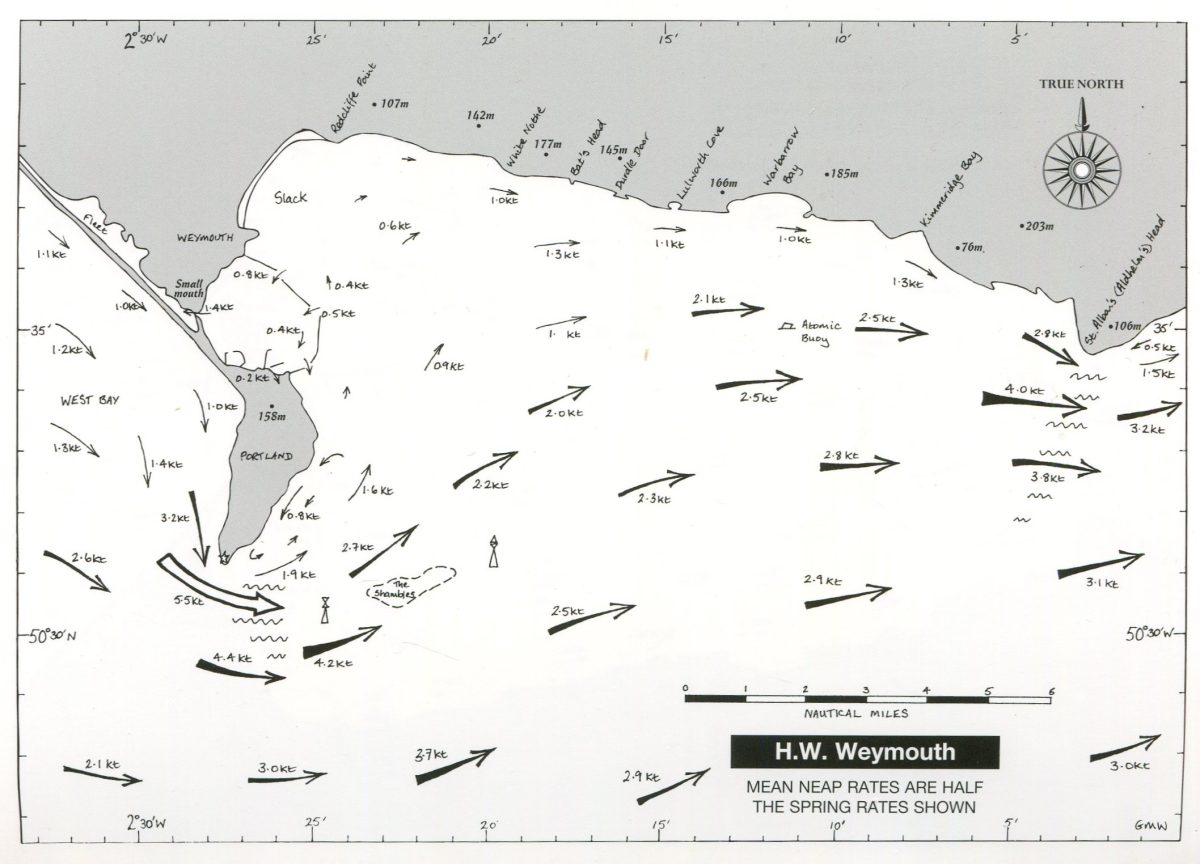
The tide turned at Totland at about 4pm, just as she was due to sail, giving the tide with her all the way back to Swanage and Weymouth. So 15th July had favourable tides for Consul both ways.
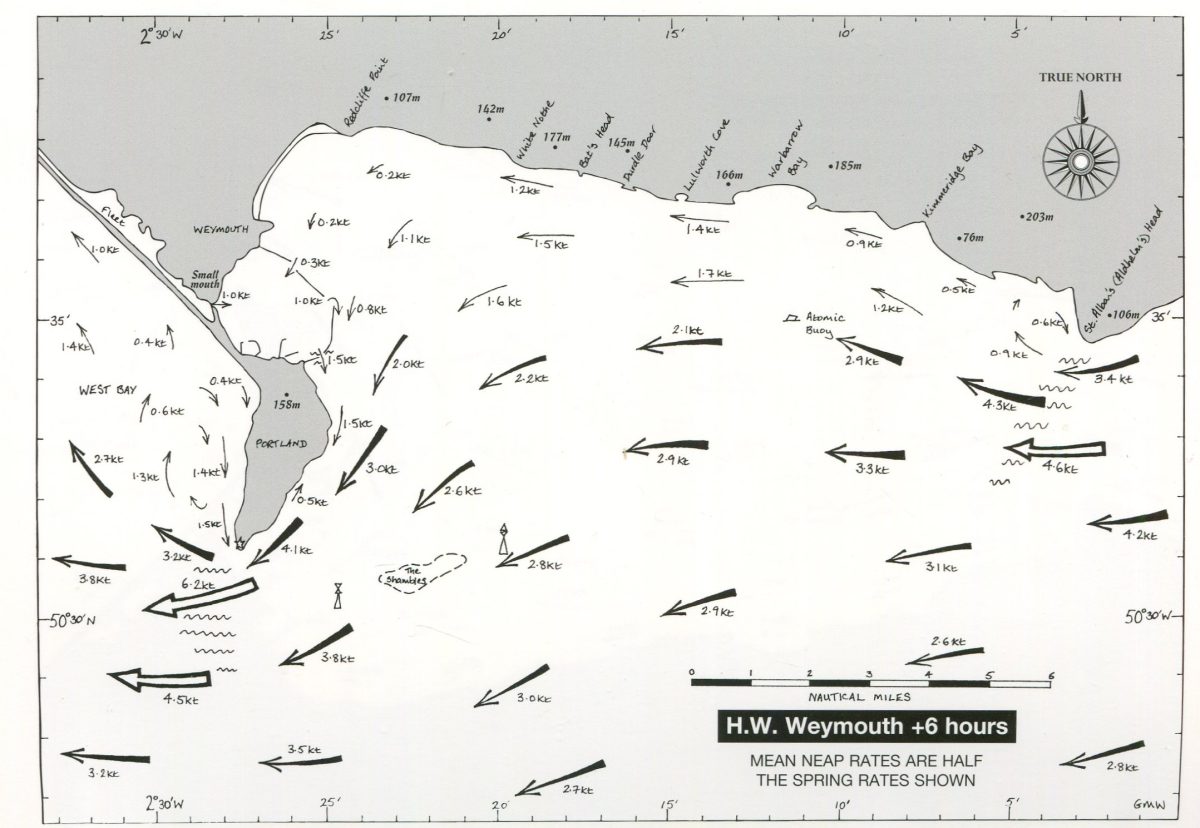
In 1960 Consul ran just four of these trips from Weymouth to the Isle of Wight with the other three on Fridays 29th July HW Weymouth 11.12pm, Friday August 12th at 11.44pm and 26th August at 10.24. So the tides were broadly similar helping her along both ways on each of these days. On the intervening Fridays the tides would have been very unfavourable, and she would have been punching the current both ways.

In 1961 Consul was rostered for only two trips to Totland Bay. In 1962 there were none.
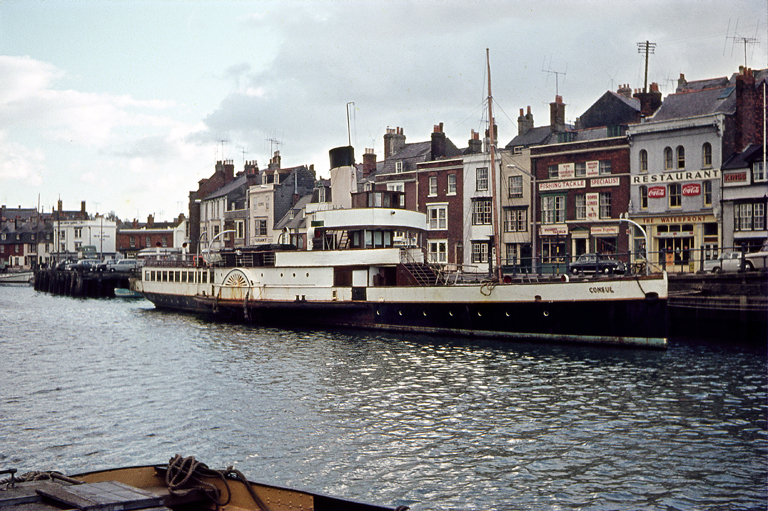
1962 was Consul’s last season with Cosens, and she spent that summer confined to Weymouth Bay. By now the Board of Trade had begun to express concerns about her structure, restricting her operations and insisting that at her next refit all the cement wash be removed from the bilges to allow a full examination of the hull plating. Removing cement wash was a major undertaking, often revealing extensive steelwork deterioration that required expensive renewal.
Cosens decided against undertaking this work and put Consul up for sale at the end of the season.
Kingswear Castle returned to service in 2026 after the second part of a major rebuild which is designed to set her up for the next 25 years. The Paddle Steamer Kingswear Castle Trust is now fund raising for future rebuilds. You can read more and how you can possibly help here.
John Megoran
This article was first published on 15th July 2020.